Skip to content
Search

Latest Stories

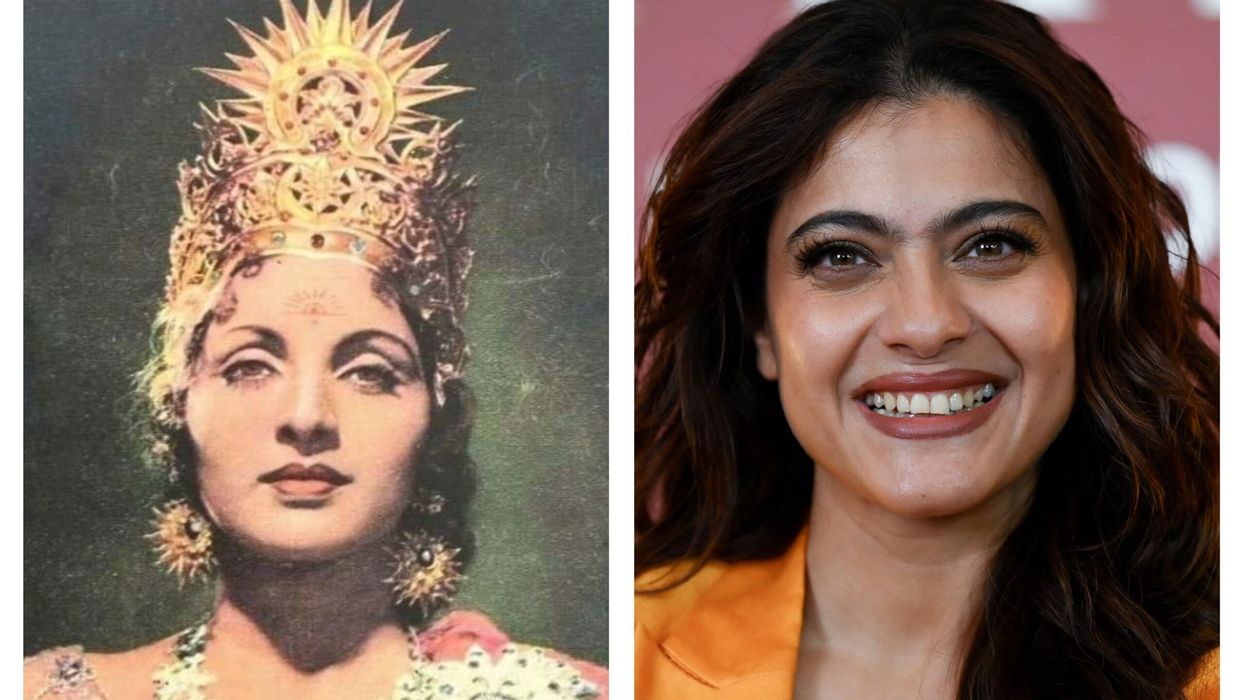
Kajol pays homage to grandmother Shobhna Samarth

Samarth was an actress and director, who worked extensively during the golden era of Indian cinema.

Kajol pays homage to grandmother Shobhna Samarth

A true feminist and one of the "sharpest and most forward-thinking" women of her time, is how Kajol remembered her grandmother, cinema legend Shobhna Samarth, on her 107th birth anniversary.

Samarth was an actress and director, who worked extensively during the golden era of Indian cinema.


She made her debut with the 1935 film Nigahe Nafrat and went on to feature in several films such as Bharat Milap (1942) and Ram Rajya (1943), in which she played Sita.

She also launched her daughters Tanuja and Nutan into the film industry.

Kajol, daughter of Tanuja, shared a 1944 magazine cover featuring her grandmother as Sita on Instagram alongside a post on how she was way ahead of her time.

"On her 107th birthday, here we have the OG Sita who was at one point and still is to my way of thinking one of the most beautiful women in the world. One of the sharpest and most forward-thinking women of her time,” she wrote.

The actress continued, “Who bought her own filters from the United States when they were not available here for her close-ups in films! Who knew and managed not only her own finances but her daughters as well and with great success I might add. And yes, also had a huge hand in raising her seven granddaughters. This is true feminism! For all those who ask me what it means and where I get my attitude from.”

Samarth passed away in 2000 in Pune.
More For You

Samir Zaidi

Two Sinners marks Samir Zaidi’s striking directorial debut

Samir Zaidi, director of 'Two Sinners', emerges as a powerful new voice in Indian film

Indian cinema has a long tradition of discovering new storytellers in unexpected places, and one recent voice that has attracted quiet, steady attention is Samir Zaidi. His debut short film Two Sinners has been travelling across international festivals, earning strong praise for its emotional depth and moral complexity. But what makes Zaidi’s trajectory especially compelling is how organically it has unfolded — grounded not in film school training, but in lived observation, patient apprenticeships and a deep belief in the poetry of everyday life.

Zaidi’s relationship with creativity began well before he ever stepped onto a set. “As a child, I was fascinated by small, fleeting things — the way people spoke, the silences between arguments, the patterns of light on the walls,” he reflects. He didn’t yet have the vocabulary for what he was absorbing, but the instinct was already in place. At 13, he turned to poetry, sensing that the act of shaping emotions into words offered a kind of clarity he couldn’t find elsewhere. “I realised creativity wasn’t something external I had to chase; it was a way of processing the world,” he says. “Whether it was writing or filmmaking, it came from the same impulse: to make sense of what I didn’t fully understand.”

Keep ReadingShow less