
IRAN said on Tuesday that no oil would be exported from the Gulf while its war with the United States and Israel continues, rejecting president Donald Trump's claim that the conflict could end soon.
Iran's Revolutionary Guards Corps (IRGC) said oil exports from the region would be halted during the conflict.
"The Iranian armed forces... will not allow the export of a single litre of oil from the region to the hostile side and its partners until further notice," the IRGC said in a statement carried by Iranian media.
"It is we who will determine the end of the war," the IRGC said. "The equations and future status of the region are now in the hands of our armed forces. American forces will not end the war."
Iran's foreign minister Abbas Araghchi also said Tehran would continue attacks.
ALSO READ: Mojtaba Khamenei takes over as Iran’s supreme leader
"We are well prepared to continue attacking them with our missiles as long as needed and as long as it takes," Araghchi told PBS News.
Araghchi also said talks with Washington were unlikely after recent developments.
"I don't think talking with Americans anymore would be on our agenda," he said.
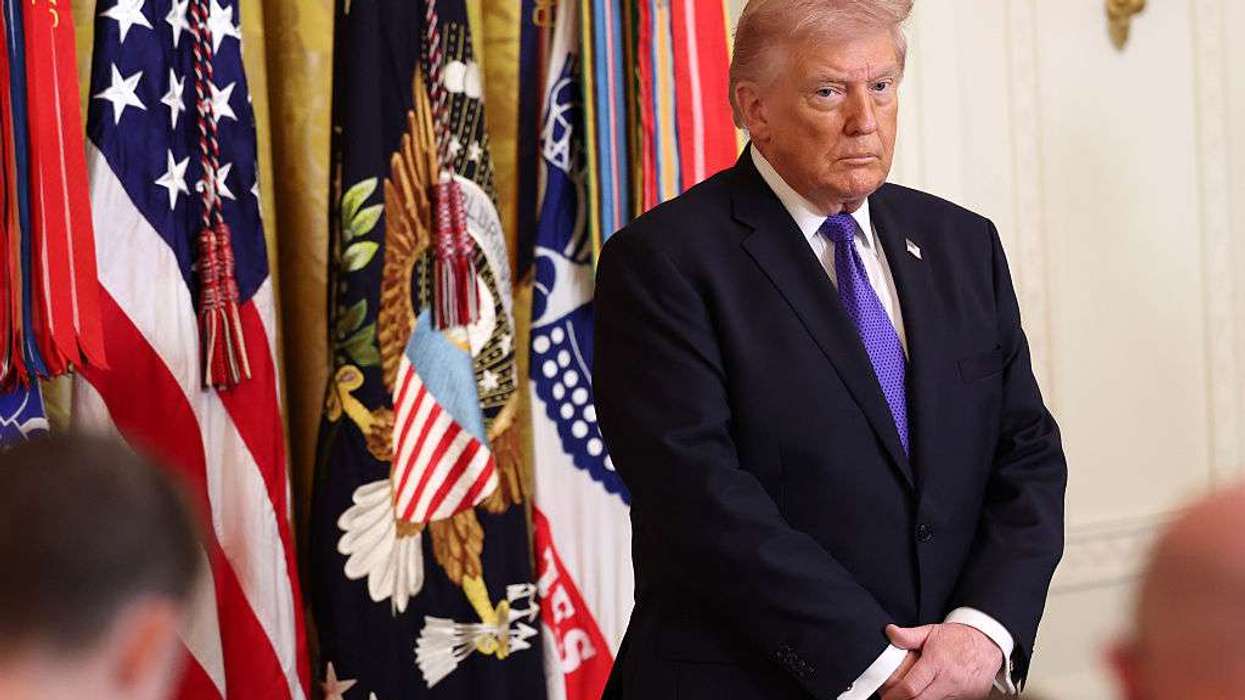
Trump had earlier said the war could end soon.
"It's going to be ended soon, and if it starts up again they'll be hit even harder," Trump said at a news conference in Florida.
"We've already won in many ways, but we haven't won enough," he said.
Later, in a message on social media, Trump warned Iran about interfering with oil exports.
"Death, Fire, and Fury will reign upon them — But I hope, and pray, that it does not happen!" he wrote, warning the US military could strike Iran in a way that would "make it virtually impossible for Iran to ever be built back, as a nation, again."
ALSO READ: Starmer and Trump speak after tensions over Iran war
Israel's prime minister Benjamin Netanyahu said the conflict could continue and called on Iranians to challenge their government.
"Our aspiration is to bring the Iranian people to cast off the yoke of tyranny. Ultimately, it depends on them. But there is no doubt that, with the actions taken so far, we are breaking their bones, and we are not done yet," Netanyahu said during a visit to the National Health Command Centre.
Oil markets reacted sharply to the conflict. On Monday, prices rose above 100 dollars a barrel and briefly increased by 30 per cent before falling after Trump's comments.
European gas prices opened 15 per cent lower and Asian stock markets recovered from losses.
Egypt raised fuel prices by up to 30 per cent and Pakistan said it would provide naval escorts to commercial shipping.
Iran has targeted vessels travelling through the Strait of Hormuz, through which nearly 20 per cent of the world's crude oil usually moves from the Gulf to markets in Asia and Europe.
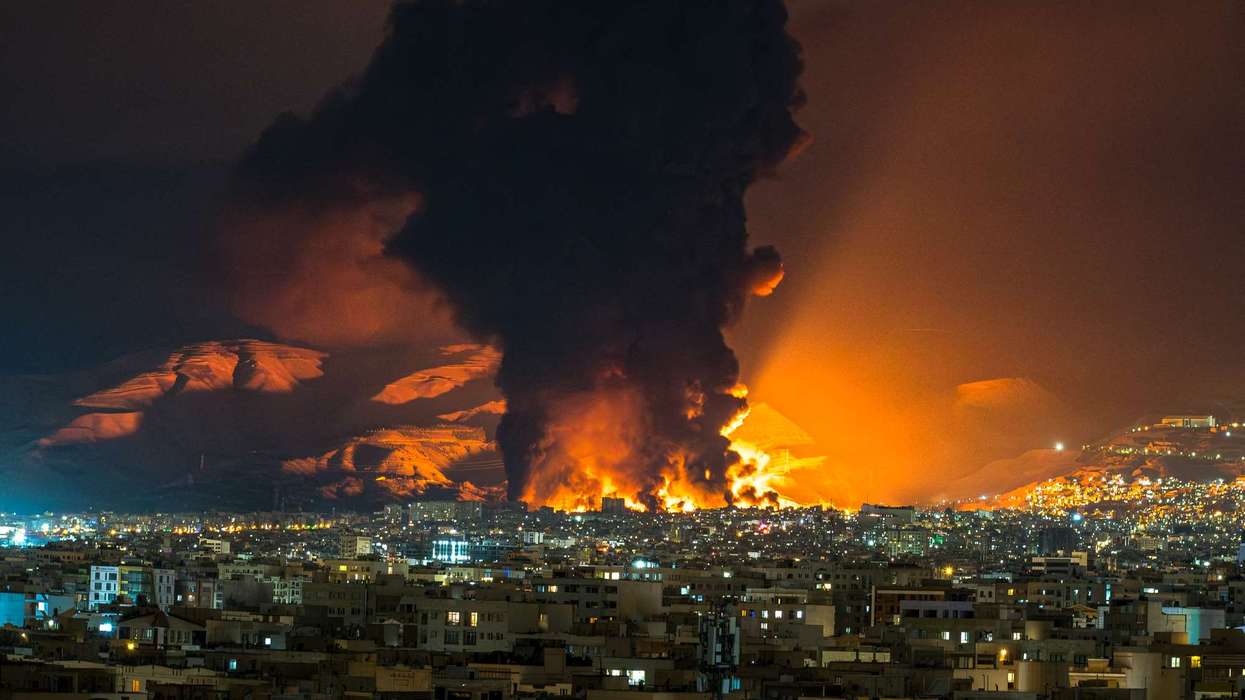
Strikes were also reported on an oil depot in Iran and on oil infrastructure in Saudi Arabia and Bahrain.
French president Emmanuel Macron said France and its allies were working on a mission to reopen the Strait of Hormuz.
The mission would escort ships "after the end of the hottest phase of the conflict", Macron said.
The conflict has spread beyond Iran's borders. Four fighters from the Tehran-backed Kataeb Imam Ali group were killed in air strikes in northern Iraq on Tuesday.
The group said the fighters were killed in "American aggression" against their position in the Debs district of Kirkuk province.
Israel also carried out strikes in Lebanon on Tuesday.
Meanwhile, Britain said its warplanes had begun defensive operations in the Middle East.
British Typhoon aircraft shot down two drones, one over Jordan and another heading towards Bahrain, Defence Secretary John Healey told MPs.
"The UK is now conducting defensive air sorties in support of the UAE," Healey said.
"Typhoons successfully took out two drones, one over Jordan, the second heading to Bahrain."
More US B-52 bombers also landed at the Royal Air Force base in Fairford in southwest England on Monday after the first arrived on Friday.
Fairford and the Diego Garcia base in the Indian Ocean have been made available for "specific defensive operations into Iran" to destroy missiles, Healey said.
The British government said dependants of embassy staff in the United Arab Emirates would be temporarily withdrawn "as a precautionary measure".
The UK's embassies in Abu Dhabi and Dubai will "continue to operate as normal", the foreign office said.
Thousands of British citizens are believed to be stranded in the UAE due to flight disruptions caused by the conflict.
More than 170,000 people in the Middle East have registered their presence with the UK government and three charter flights have departed so far, Healey told MPs.
Wildcat and Merlin helicopters have also been sent to Cyprus and the warship HMS Dragon will sail to the eastern Mediterranean "in the next couple of days", Healey said.
Downing Street said there was no decision to deploy the aircraft carrier HMS Prince of Wales.
"HMS Prince of Wales has always been on very high readiness," a spokesman for prime pinister Keir Starmer said.
"The MoD is increasing the preparedness of the carrier, reducing the time it would take to set sail for any deployment, but there is no decision taken to deploy her," he said.
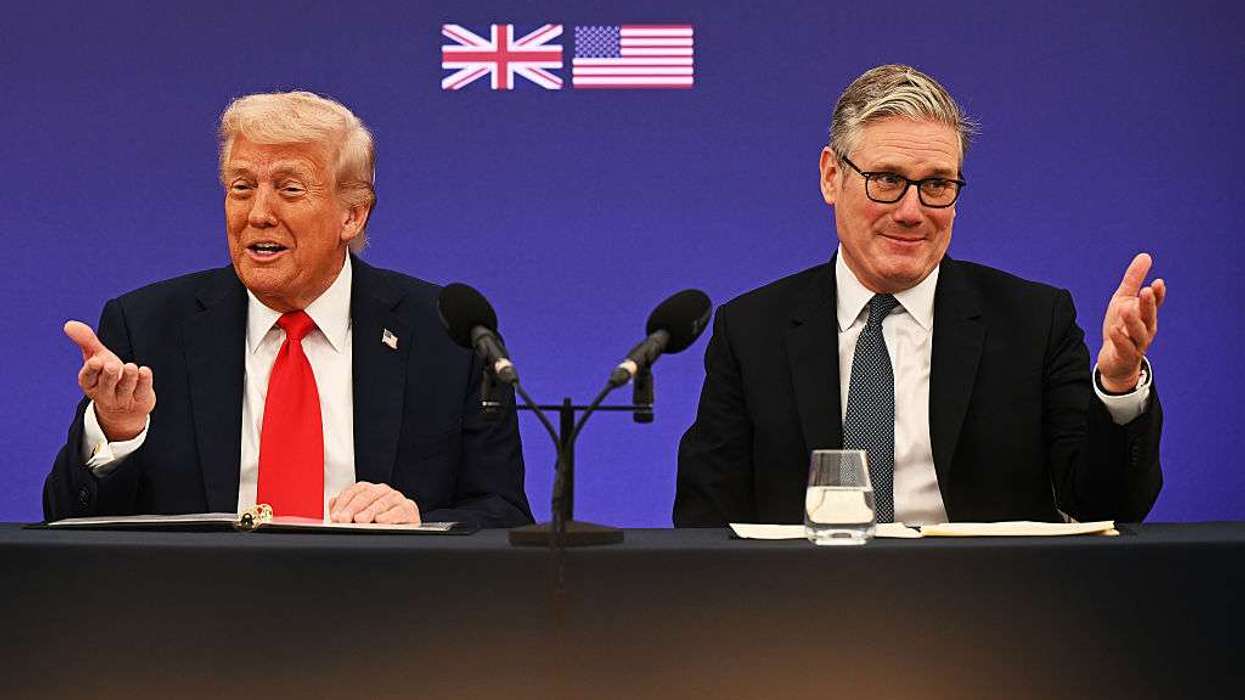
Starmer and Trump held a call on Sunday to discuss the conflict after the US president criticised Britain's response to the war, which began on February 28.
(With inputs from agencies)