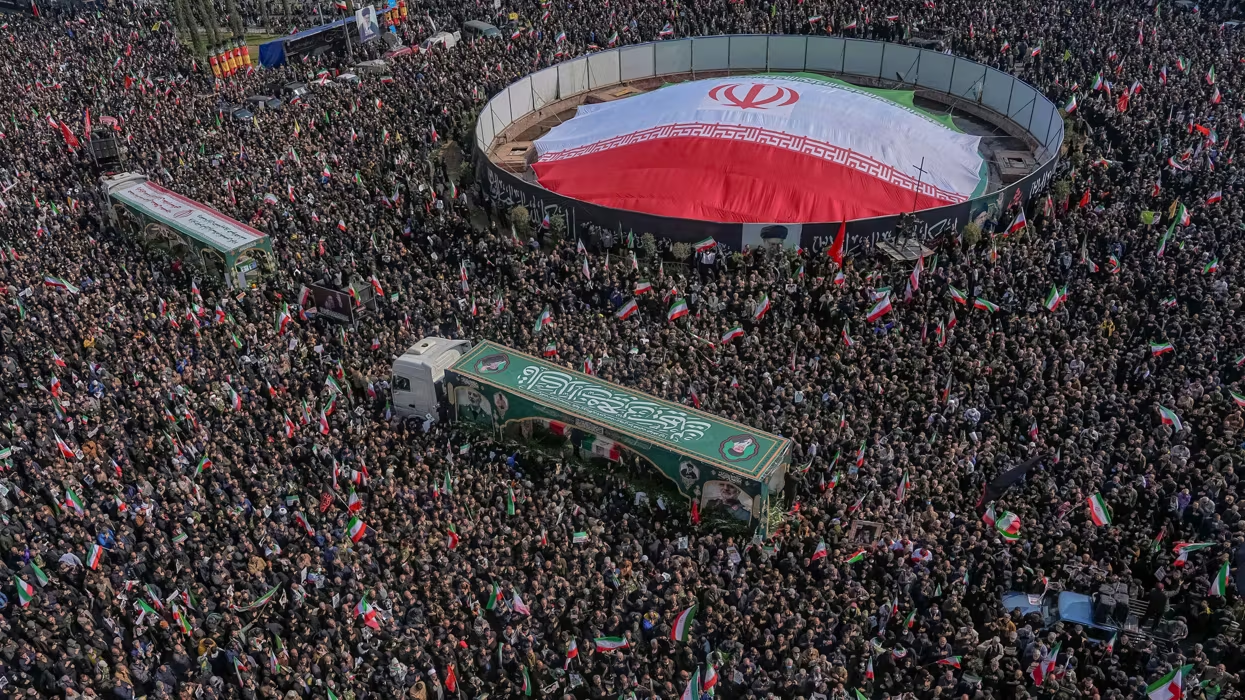

LARGE explosions were heard in central Tehran on Friday, according to Iranian state television, which said strikes had hit an area not far from where a pro-government demonstration was being held.
State TV had earlier broadcast images of crowds gathering in Tehran and other major cities to mark Quds Day, the last Friday of Ramadan, in support of the Palestinian cause.
Blasts were also reported across the Iranian capital, with explosions rumbling homes several kilometres apart in the north and centre of Tehran, according to AFP journalists.
Iran’s Fars news agency said US and Israeli strikes hit parts of Tehran, adding that homes shook from the blasts.
The developments came as fighting across West Asia continued into its third week, with strikes, missile launches and drone attacks reported in several countries.
ALSO READ: Iran attacks oil and shipping targets as global crude prices jump
The Israeli military said it struck more than 200 targets in western and central Iran over the past day, including missile launchers and defence systems.
It also said it launched a new wave of strikes in Tehran on Thursday evening and targeted checkpoints set up in the capital by the Basij paramilitary force of Iran’s Revolutionary Guards.
Iran fired a new barrage of missiles toward Israel, the Israeli military said, while emergency services reported that two people were injured in the country’s north.
Iran’s Revolutionary Guards warned that if protests broke out in the country, their response would be “stronger” than in January, when thousands were killed.
Iran’s new supreme leader Mojtaba Khamenei vowed to avenge Iranian casualties in the war, according to a statement read by a presenter on state television on Thursday.
ALSO READ: Iran fires missiles across region as G7 weighs oil reserve release
Khamenei, whose father and other family members were killed in the opening strikes of the war on February 28, was also wounded in the attacks, according to some Iranian officials and state TV. His whereabouts and details of his condition are unknown.
In his first public comments since succeeding his father four days ago, Khamenei said the Strait of Hormuz must remain effectively shut.
“The lever of blocking the Strait of Hormuz must definitely be used,” Khamenei said in a message read by an anchor on state television.
He also said “studies have been conducted into opening other fronts where the enemy has little experience and would be highly vulnerable, and their activation will take place if the state of war persists”.
ALSO READ: UK warplanes intercept drones as Iran warns oil exports will stop
The conflict has also affected energy markets. Oil prices held above $100 on Friday and equity markets fell after Khamenei’s comments and continued attacks across the Gulf.
Tehran has targeted energy facilities this week across the region, with ships hit near Iraq, fuel tanks attacked in Bahrain and drones fired at oil fields in Saudi Arabia.
Iran warned on Thursday that it would “set the region’s oil and gas on fire” if its own energy infrastructure and ports were targeted.
Crude rose more than nine per cent on Thursday, with Brent ending above $100 for the first time since 2022, when Russia launched its invasion of Ukraine. Brent is up around 40 per cent since the West Asia war began on February 28.
ALSO READ: Mojtaba Khamenei takes over as Iran’s supreme leader
The International Energy Agency said the war “is creating the largest supply disruption in the history of the global oil market”.
Pepperstone analyst Chris Weston said: “With crude closing near its highs, markets are increasingly pricing in a longer duration for the conflict and the continued impact of a potential closure of the Strait of Hormuz.
“Donald Trump may continue to explore the idea of assisting vessels through the strait, and if that were to materialise the market could see a strong relief rally.
“For now, however, the dominant features are higher energy prices and extremely elevated volatility markets.”
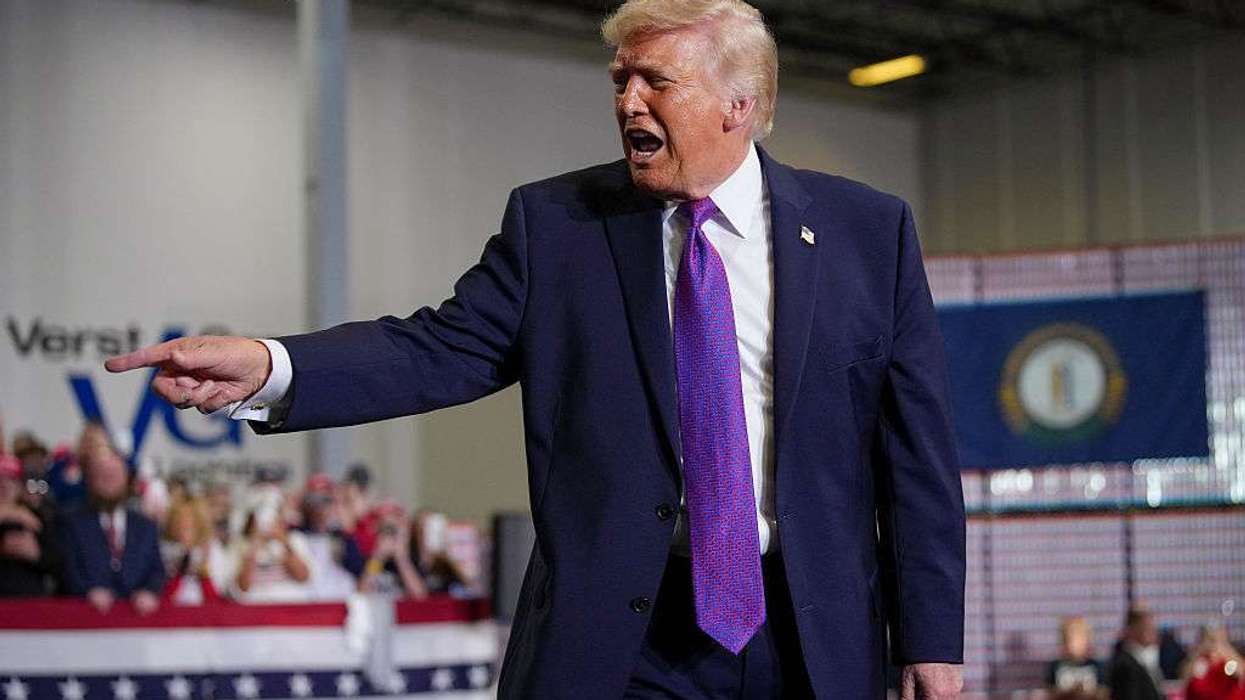
US President Donald Trump defended the US position in a social media post.
“The United States is the largest Oil Producer in the World, by far, so when oil prices go up, we make a lot of money,” Trump wrote.
“BUT, of far greater interest and importance to me, as President, is stopping an evil Empire, Iran, from having Nuclear Weapons, and destroying the West Asia and, indeed, the World.”
Matt Weller, head of market research at City Index, said: “Those trends have reversed, and the default assumption, as long as the Strait of Hormuz remains functionally closed, is that stocks will be under pressure, oil prices will trend higher, and interest rates will tick up in unison.
ALSO READ: Starmer and Trump speak after tensions over Iran war
“Unless or until we see meaningful progress toward a ceasefire in the West Asia, traders should shift their expectations that the coming weeks and months will look different than the past couple of years, weighing on risk appetite at an accelerating rate.”
Equity markets across Asia and Europe fell, including Tokyo, Hong Kong, Shanghai, Singapore, Seoul, Mumbai, Bangkok, Wellington, Manila and Jakarta. London, Paris and Frankfurt also opened lower.
Elsewhere in the region, two people died in Oman after security forces intercepted a drone near an industrial area in the north of the country, state media said.
Saudi Arabia said it intercepted drones entering its airspace as attacks continued across Gulf countries. “Twelve drones were intercepted and destroyed after entering Saudi airspace,” a defence ministry spokesperson posted on X, after authorities reported that at least 16 other drones were also shot down.
Saudi forces also intercepted a drone targeting Riyadh’s diplomatic quarter housing foreign embassies, the defence ministry said.
In the United Arab Emirates, debris from an intercepted attack hit a building in central Dubai, according to the government media office. Explosions rattled buildings and a cloud of smoke was seen over part of the city, AFP correspondents said.
In Lebanon, the Israeli military said a strike hit a member of the Iran-backed Hezbollah group in Beirut. Israel also continued strikes on the Lebanese capital early Friday and warned it could expand operations and seize territory if Hezbollah did not stop its attacks.
Air strikes also killed at least 11 Iran-backed fighters in Iraq near the Iraqi-Syrian border and in Baghdad, according to security and armed faction officials. Iraqi authorities denounced the “blatant attacks” on bases belonging to the Hashed al-Shaabi.
A French soldier was killed in an attack in Iraq’s Kurdistan region, President Emmanuel Macron said. It was the first French military death in the war.
The US military also said a KC-135 aerial refuelling aircraft crashed in western Iraq, while a second aircraft involved in the incident landed safely.
“One of the aircraft went down in western Iraq, and the second landed safely. This was not due to hostile fire or friendly fire,” US Central Command said.
Separately, an explosion was heard overnight near the Incirlik military base in southern Turkey where US troops are stationed, according to a Reuters witness and social media footage.
Social media footage appeared to show a projectile flying in the night sky near the Incirlik Air Base in Adana province.
Turkey’s state-owned Anadolu news agency said sirens were heard at the base early Friday, without giving details. Ankara has not commented and the cause of the explosion was not immediately clear.
NATO air defences in the eastern Mediterranean intercepted two ballistic missiles fired from Iran toward Turkey in the past week. The alliance has since deployed a US Patriot air defence system to the southeastern Turkish province of Malatya to increase defence at a radar base there.
Turkey has said Washington has not used the Incirlik base in its air assault with Israel against Iran, which triggered Tehran’s missile and drone attacks.
(With inputs from agencies)