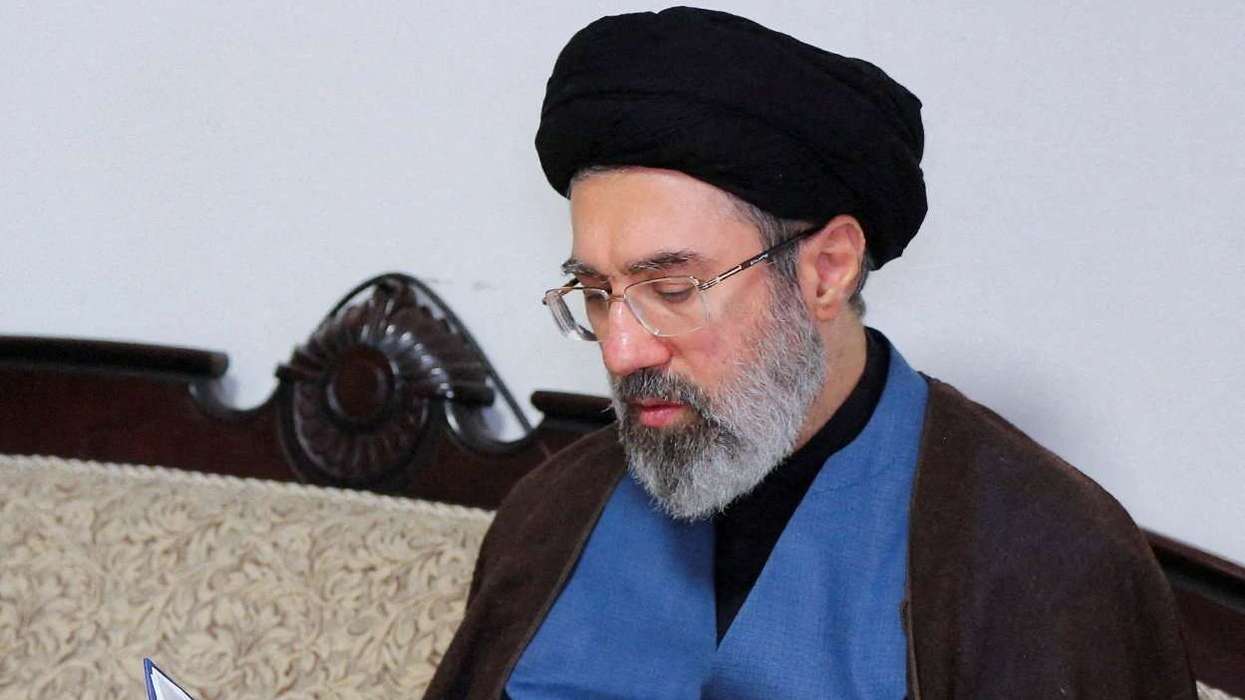

IRAN marked the appointment of Ayatollah Mojtaba Khamenei as its new supreme leader with a new barrage of missiles against Israel and Gulf states on Monday, as the West Asia war pushed oil prices sharply higher.
Iran’s Assembly of Experts appointed Mojtaba Khamenei after his father and predecessor, Ayatollah Ali Khamenei, was killed in the first wave of US-Israeli strikes.
Iranian state media said the clerical body did not hesitate in choosing a new leader despite what it called “the brutal aggression of the criminal America and the evil Zionist regime”.
State media broadcast images of a missile ready for launch bearing the slogan “At your command, Sayyid Mojtaba”.
The conflict entered its 10th day as attacks spread across the region. Saudi Arabia said it intercepted a drone targeting the Shaybah oil field in the east near the Emirati border.
Bahrain reported damage and a fire at the Al Ma'ameer oil facility after an Iranian strike, and the state energy company Bapco declared force majeure, warning that events beyond its control could affect export targets.
Qatar, the United Arab Emirates and Kuwait also reported new attacks. Several explosions were heard in Doha, AFP journalists said.
The escalation pushed energy markets higher. The benchmark price for crude rose above $100 a barrel for the first time since Russia’s invasion of Ukraine four years ago. Since the start of the war, the benchmark oil contract WTI has risen more than 75 per cent and Brent more than 60 per cent.
European gas prices also surged by as much as 30 per cent. The Dutch TTF natural gas contract, considered the European benchmark, rose to 69.50 euros ($80) before easing slightly.
Stock markets fell as the crisis spread. Japan’s Nikkei closed down more than five per cent and South Korea’s Kospi fell nearly six per cent. European markets opened lower as energy prices climbed.
Motorists in the Philippines queued to buy fuel and Vietnam prepared to scrap tariffs on fuel imports.
Finance ministers from the G7 group of rich countries were due to meet later in the day to discuss the crisis. A French government source said they were to discuss releasing strategic oil reserves to ease pressure on energy prices and protect the global economy.
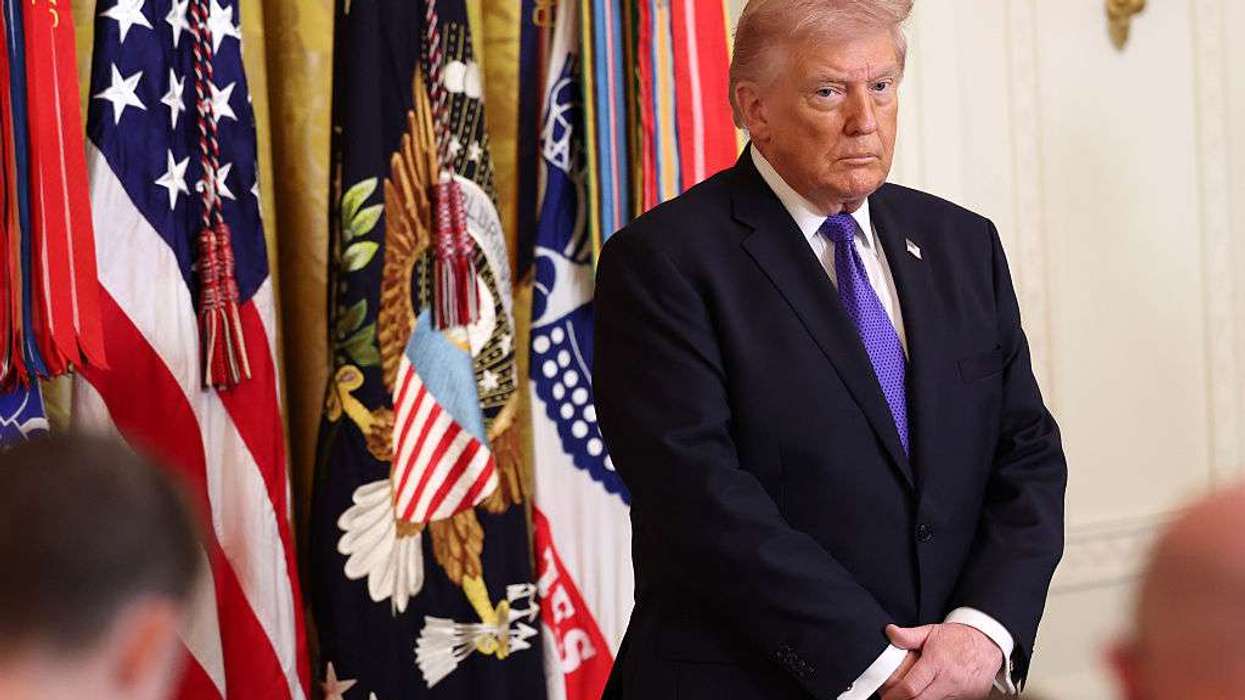
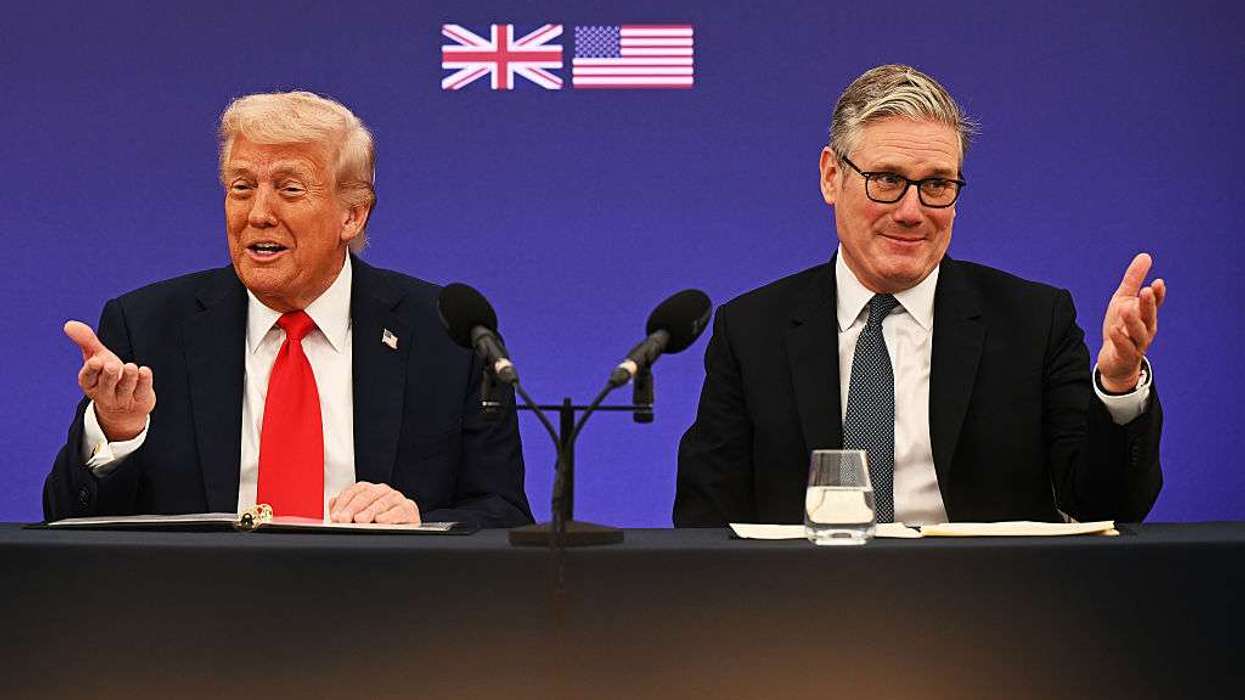
US President Donald Trump dismissed the rise in oil prices as a “small price to pay” for removing what he called the threat from Iran’s nuclear programme.
The United States also ordered non-emergency staff to leave Saudi Arabia days after a drone struck the US embassy.
Trump earlier dismissed Mojtaba Khamenei as a “lightweight”, and said Sunday on ABC News: “If he doesn't get approval from us he's not going to last long.”
Asked about the war’s duration, Trump told the Times of Israel that decisions on ending hostilities would be made with Israeli Prime Minister Benjamin Netanyahu.
“I think it's mutual... a little bit. We've been talking. I'll make a decision at the right time, but everything's going to be taken into account,” Trump said.
Russia’s President Vladimir Putin pledged his “unwavering support” to Iran’s new leader.
“At a time when Iran is confronting armed aggression, your tenure in this high position will undoubtedly require great courage and dedication,” Putin said.
China also reacted after Israel threatened to target any successor to the slain leader. Foreign ministry spokesman Guo Jiakun said Beijing opposes such actions and that “Iran's sovereignty, security, and territorial integrity should be respected.”
Iran also blamed European countries including France for creating conditions that led to the United States and Israel attacking the Islamic republic, accusing them of failing to stand up to Washington’s “bullying”.
Mojtaba Khamenei, a cleric close to Iran’s Islamic Revolutionary Guard Corps, replaces a leader who ruled the country for nearly four decades. The Guards pledged support for him, saying they were “ready for complete obedience and self-sacrifice in carrying out the divine commands”.
Iran’s allies also expressed support. The Badr organisation in Iraq said the new leadership represented “blessed continuity of the path of the Islamic revolution”.
The conflict also intensified in Lebanon. Iran-backed Hezbollah said its fighters were engaging Israeli forces who landed in eastern Lebanon on 15 helicopters across the Syrian border.
Lebanon’s National News Agency reported “fierce clashes” near the town of Nabi Sheet, where an Israeli operation over the weekend killed 41 people.
An Israeli air strike also hit Beirut’s southern suburbs after the military warned it would target branches of Al-Qard al-Hassan, a financial institution linked to Hezbollah. Live footage showed large plumes of smoke rising from the area.
Hezbollah said combat was continuing after its fighters “engaged the helicopters and the infiltrating force with appropriate weapons”.
Lebanon entered the conflict last week after Hezbollah attacked Israel following the killing of the elder Khamenei.
Lebanon’s health minister said Israeli strikes have killed at least 394 people since the start of the war, including 83 children and 42 women.
Human Rights Watch also accused Israel of “unlawfully” using white phosphorus over residential areas of the southern Lebanese town of Yohmor last week.
Heavy explosions were also reported in Tehran on Monday, AFP journalists said, though it was not immediately clear what was targeted.
Israel reported new missile attacks from Iran. First responders said a man was killed by shrapnel in central Israel as several blasts were heard. AFP journalists reported more than 10 explosions in Tel Aviv.
Iran’s health ministry said at least 1,200 civilians had been killed and around 10,000 wounded since the war began, figures AFP could not independently verify.
In Israel, authorities said Iranian missile attacks have killed 10 people. The Israeli military also said two soldiers were killed in Lebanon.
In Bahrain, the health ministry said 32 civilians were wounded in an Iranian drone attack on the island of Sitra overnight. Those injured included a 17-year-old girl who suffered head and eye injuries and a two-month-old baby.
Saudi Arabia said two people were killed and 12 wounded after a projectile landed in Al-Kharj province.
Authorities in Qatar said more than 300 people had been arrested for sharing images and what the interior ministry called “misleading information” during days of attacks by Iran.
(With inputs from agencies)