
IRAN fired missiles at Israel on Tuesday, damaging buildings in Tel Aviv and injuring people, as uncertainty continued over possible talks to end the war.
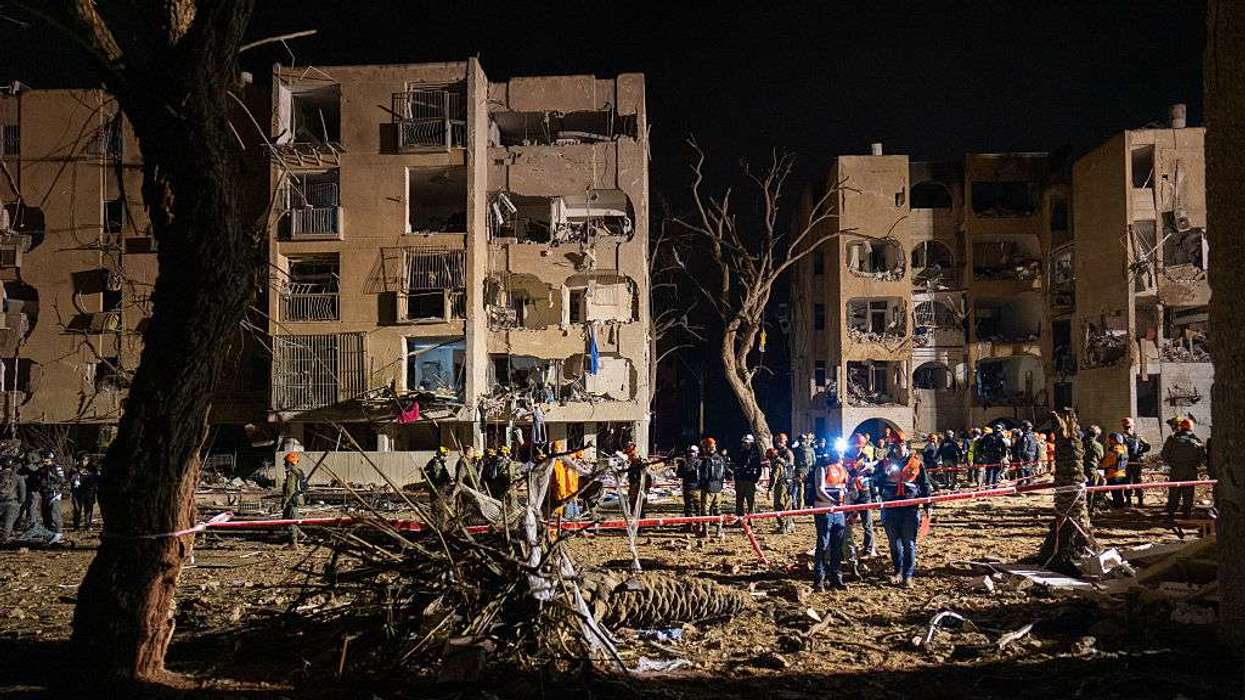
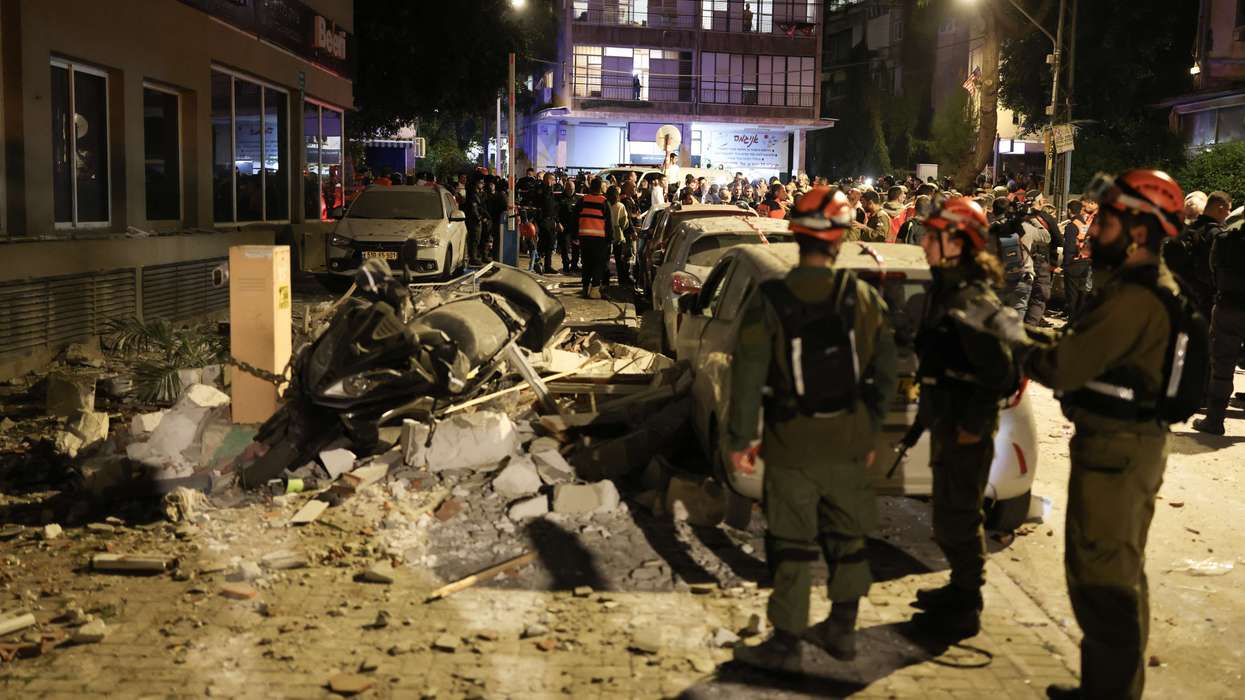
Images showed debris on streets and damage to buildings in the city. First responders treated at least four people who were lightly injured at four locations. Police reported several impact sites, and six people were wounded in Tel Aviv after warnings of incoming missiles.
Tel Aviv mayor Ron Huldai said a “direct strike” hit a building in an upscale neighbourhood. Video showed the facade of a three-storey building torn open. Israeli media reported police believe a cluster munition missile with three to four warheads, each carrying about 100 kilograms of explosives, caused the damage.
ALSO READ: Starmer, Trump call focuses on Hormuz as oil prices rise amid war
Iranian state media said a fresh salvo of missiles was launched towards Israel on Tuesday morning. An earlier barrage hit a building in the north.
Iranian media also reported that US-Israeli strikes targeted two gas facilities and a pipeline, hours after US President Donald Trump stepped back from his threat to attack power infrastructure. In an interview with state TV, Energy Minister Abbas Aliabadi said Iran has 150 power plants across the country and is less vulnerable to such attacks.
Trump said his administration was speaking with an unidentified “top person” and warned that if talks failed within five days “we'll just keep bombing our little hearts out”. He had earlier said there were “very good” talks.
Tehran denied negotiations. Parliamentary speaker Mohammad Bagher Ghalibaf said “no negotiations” were underway and accused Trump of trying “to manipulate the financial and oil markets”. Foreign ministry spokesman Esmaeil Baqaei said messages had been received from “some friendly countries indicating a US request for negotiations aimed at ending the war”, but said no talks had taken place.
ALSO READ: US, Israel target Natanz; UK allows base use for Hormuz operations
US media reported that US negotiators Steve Witkoff and Jared Kushner could meet an Iranian delegation in Pakistan, possibly joined by Vice President JD Vance. White House spokeswoman Karoline Leavitt said “speculation about meetings should not be deemed as final until they are formally announced by the White House.”
Pakistan Prime Minister Shehbaz Sharif said he spoke with Iranian President Masoud Pezeshkian and offered help to bring peace.
Israeli Prime Minister Benjamin Netanyahu said he had spoken with Trump, who believed a deal was possible, but said Israel would continue strikes. “Trump believes there is a chance to leverage the tremendous achievements of the IDF and the US military... in an agreement,” he said.
Israel continued strikes in Lebanon. An attack on Bshamoun, south of Beirut, killed two people, according to Lebanon’s health ministry. Strikes also targeted sites linked to Hezbollah, including service stations. Israel’s attacks in Lebanon have killed more than 1,000 people and displaced more than a million, the ministry said.
ALSO READ: Israel, Iran exchange fresh strikes as conflict widens across region
The war has killed at least 3,230 Iranians, including 1,406 civilians, according to the US-based Human Rights Activists News Agency. AFP said it could not independently verify tolls in Iran.
Elsewhere, a rocket attack in northern Iraq killed six Iraqi Kurdish security personnel, with two missing and 22 wounded, an official said. In western Iraq, a strike killed 15 fighters, including Saad Dawai al-Baiji of the Popular Mobilisation Forces.
Syria’s army said a base in the northeast was hit by a missile from Iraq. An Iraqi official said “an Iraqi faction fired seven Arash-4 rockets... towards a base in the Hassakeh region”.
Israel said it struck a site in Tehran belonging to Iran’s Revolutionary Guards used to direct Basij forces. It also confirmed a malfunction in its “David’s Sling” system allowed two Iranian ballistic missiles to hit the south, wounding dozens.
The conflict has affected energy markets. Iran has restricted traffic through the Strait of Hormuz and targeted regional energy sites. International Energy Agency chief Fatih Birol warned a prolonged war could lead to a crisis worse than the 1970s oil shocks and Russia’s invasion of Ukraine. Oil prices rose above $100 a barrel before falling after Trump’s comments.
Garret Martin of American University said, “Trump has been a master of sudden pivots and switches. So it's sometimes hard to know if there is a strategy or if it's just always improvisation.”
ALSO READ: Energy markets react as Iran hits Qatar LNG site, Trump threatens response
The US is sending thousands of Marines to the region amid speculation about possible ground operations.
The UK said it is sending short-range air defence systems to the Gulf. Prime Minister Keir Starmer said, “We're deploying short-range air defence systems to Bahrain at speed,” and added the UK was “doing the same with Kuwait and Saudi Arabia”.
Defence minister John Healey said the UK would deploy its Rapid Sentry system to Kuwait, calling it a “battle-tested ground-based air defence missile system that has already proved highly effective for UK forces taking down drones in the region”.
He said a British warship, HMS Dragon, had reached the eastern Mediterranean to defend Cyprus. The UK has increased military jets in the region and added 500 personnel in Cyprus. UK pilots have flown nearly 900 hours “in defence of Cyprus, Jordan, Bahrain, Qatar and the United Arab Emirates”.
ALSO READ: Iran vows response after Larijani killing as Israel hits Beirut
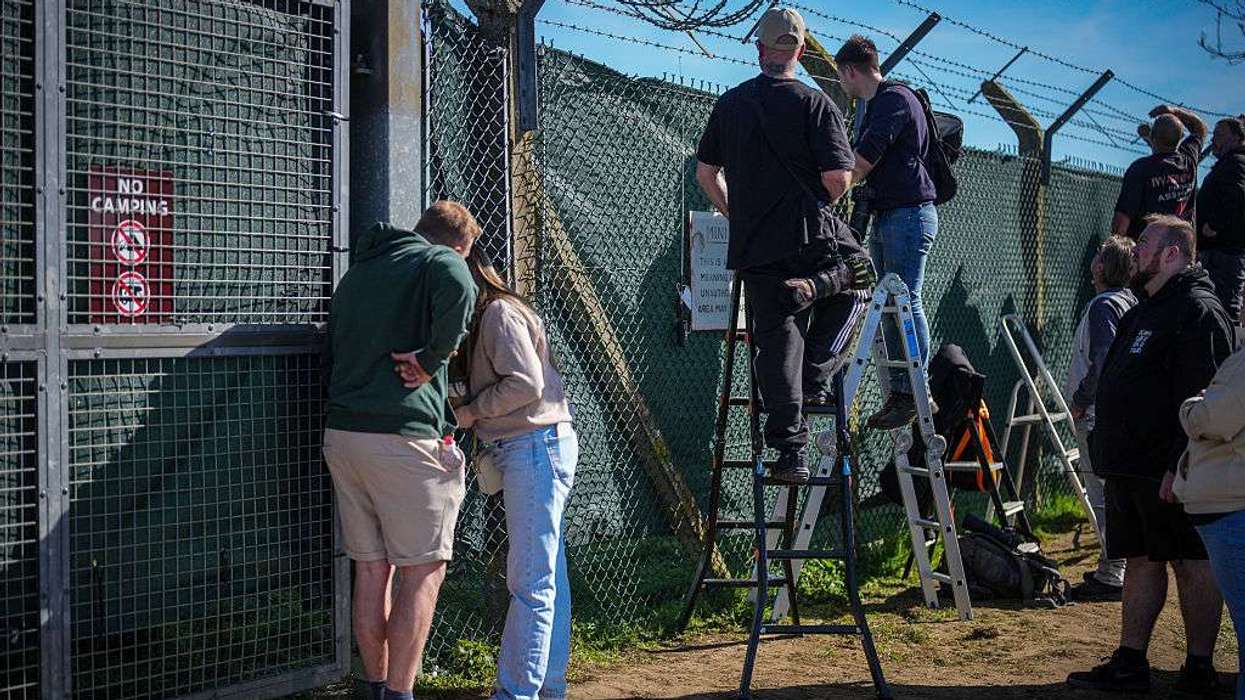
Healey said the UK is allowing US forces to use bases in Diego Garcia and Fairford for strikes on Iranian “missile sites and capabilities being used to attack ships in the Strait of Hormuz”.
Iran launched two missiles towards Diego Garcia, but neither hit the target and “normal operations continue”, he said.
“I totally condemn Iran's reckless attacks. Iran must stop, it must de-escalate. We want to see this war end now,” Healey said.
He added, “There is no assessment that we are being targeted in the UK” and said, “We have the resources, we have the alliances in place in order to keep the United Kingdom safe from any kind of attacks.”
(With inputs from agencies)