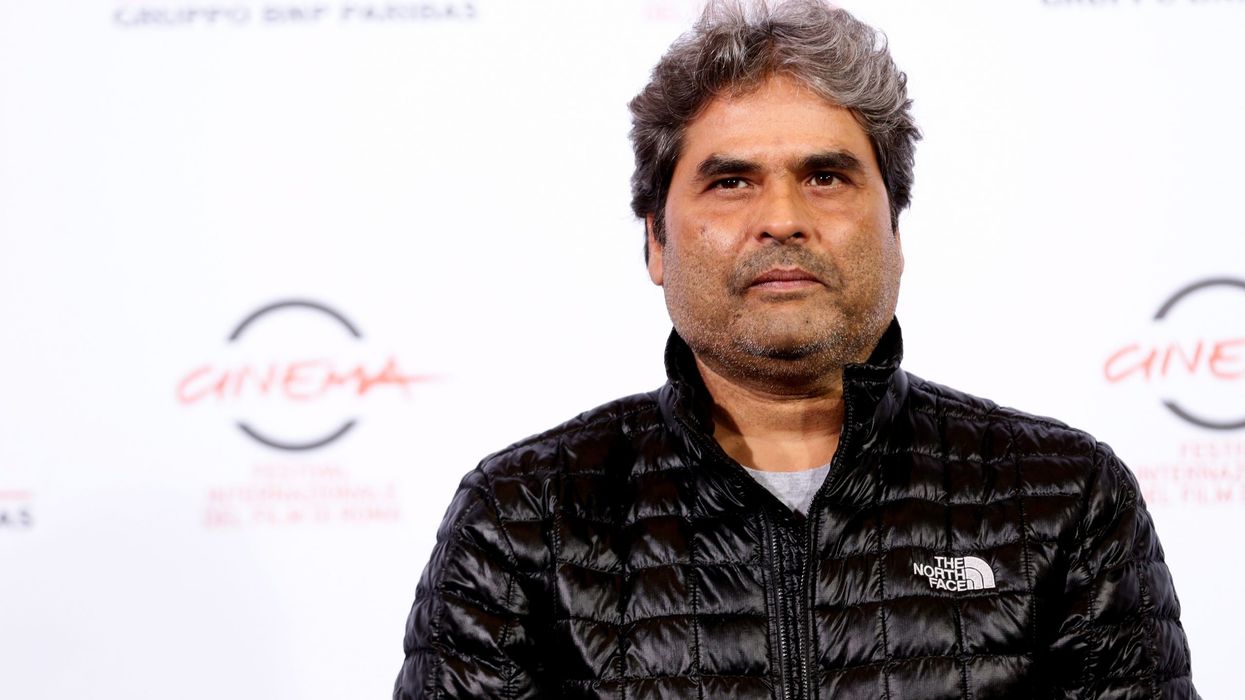

National award-winning filmmaker Vishal Bhardwaj says he didn’t watch movies like The Kashmir Files and The Kerala Story as he wanted to stay out of such sensitive subjects.
Both The Kashmir Files (2022) and The Kerala Story (2023) were huge commercial hits but kicked up a political storm with many in the Opposition calling them propaganda films.
"I didn’t see The Kashmir Files, The Kerala Story and I didn't see them consciously. The kind of things I was hearing about these films, I didn’t want to get impacted by it. I was hearing that they are propaganda films from my friends and people I know...
"So, I just wanted to stay out of it because, for me, it is a very sensitive subject. If there’s so much negativity I want to remain out of this negativity, I love my peace. So, I didn’t want to see them,” the filmmaker, who won critical acclaim for depicting the Kashmir conflict in his Shahid Kapoor and Tabu-starrer Haider, told PTI in an interview.
The Kashmir Files, starring Anupam Kher, Darshan Kumar, Mithun Chakraborty, and Pallavi Joshi in major roles, revolved around the exodus of Kashmiri Pandits from the Valley in the 1990s. It was directed by Vivek Agnihotri.
The Kerala Story, helmed by Sudipto Sen, depicts how women from Kerala were forced to convert and recruited by the terror group Islamic State (IS).
Bhardwaj urged his fellow filmmakers to deal "sensitively" with stories that are inspired from real-life tragic incidents.
"I want my community of filmmakers to treat such stories sensitively and not use it as propaganda,” he added.
Asked whether the objective of filmmaking has changed over the years in Hindi cinema, the 58-year-old writer-director said it is bound to as society is also changing.
"Cinema is such a thing that you can use it the way you want. If people are accepting it and seeing it, then we should accept that people are changing. We are changing as a society," he added.
Citing numerous tragic lynching incidents that have occurred in the country, Bhardwaj said people now don't seem as affected by them as they would earlier.
"Did we ever think that we will get used to the news of lynching? Earlier, when it happened, we were like, ‘How can this mobocracy happen? How can some people gather and kill someone? Where is law enforcement? Where is the law?’ "Now, we are used to this. Now, it is like, ‘Lynching has happened here or there’. It doesn’t affect us because we are accepting it. We are not reacting to it anymore,” he said.