
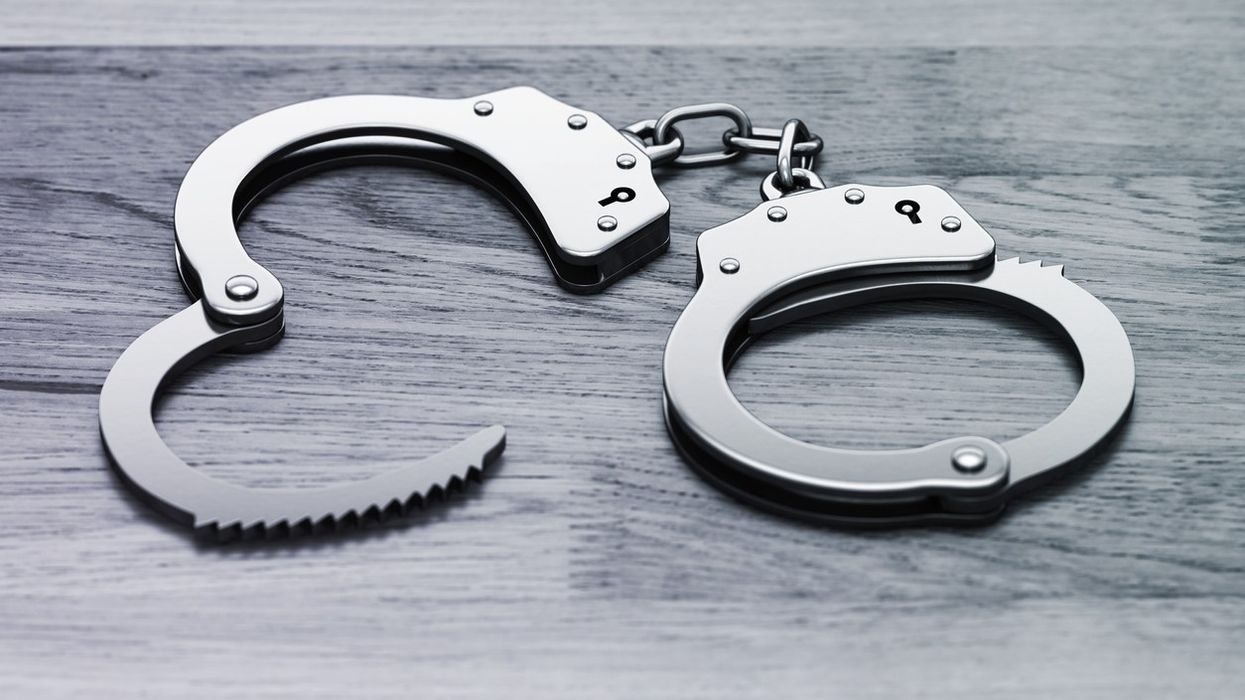
Five Greek border police officers were arraigned Tuesday (29) as suspected accomplices of a smuggling network that illegally brought migrants into the country from Turkey.
The five men appeared before a prosecutor in the northeastern city of Orestiada, a day after the police department's internal affairs division said they had been arrested on suspicion of taking bribes and breach of duty.
They are accused of helping to smuggle an unknown number of migrants on at least 12 occasions in the Didymoteicho area in northeastern Greece, the police said in a statement.
"An investigation so far has shown that the officers had been in contact with networks operating in a neighbouring country at least since October, and allegedly carried out actions or omissions aimed at facilitating the entry of (non-EU) nationals into our country," it said.
Evidence linked to the case includes nearly 60 cellphones, Turkish lira and banknotes from a number of Asian countries, the police said.
Thousands of migrants, mainly from Syria, Afghanistan and Pakistan, have in recent years crossed into Greece from Turkey in the hope of making it to western Europe.
With the stepping up of patrols in the Aegean Sea making it harder for migrants to reach Greek islands, more are taking their chances by crossing the River Evros, Greece's natural border with Turkey, and having traffickers take them from there by road.
Athens has decided to extend by 35 kilometres (22 miles) a five-metre high steel fence which runs along the river.
The fence is currently 38 kilometres long, and Athens aims to carry out the extension within a year, adding a total of 100 kilometres by 2026.
(AFP)
Five Greek border police accused of smuggling migrants
Thousands of migrants, mainly from Syria, Afghanistan and Pakistan, have in recent years crossed into Greece from Turkey in the hope of making it to western Europe






 Curator Emma Slocombe with ikat robes and arabachi coats in the Peter the Great Room in Blickling Hall Amit Roy
 View of the entrance to Blickling Hall on a rainy autumn dayAmit Roy
 Kente cloth from Ghana in the Long Gallery in Blickling Hall
 Decoration in the Great Hall at Blickling Hall Amit Roy
 Palampore fragment made in coastal south-east India in the Brown Room in Blickling Hall Amit Roy
 Bed valance dating from early 1700s in the Italian Print Room at Blickling Hall Amit Roy
 Indian inspired fabric draped on sofas in the South Drawing Room in Blickling Hall Amit Roy
 Indian inspired fabric draped on sofas in the South Drawing Room with Indian carpet in Blickling Hall Amit Roy
 Karun Thakar has picked out the geometric patterns in the bookcase and the Kente cloth in the Long Gallery in Blickling Hall Amit Roy
 Large tapestry depicting Peter the Great defeating the Swedish army at the Battle of Poltava in 1709 Amit Roy
 ikat robes and arabachi coats in the Peter the Great Room in Blickling Hall Amit Roy
 Baghs and kanthas made by women provide contrast to the men only portraits in the Great Hall at Blickling Hall Amit Roy
 Baghs and kanthas in the entrance Great Hall at Blickling Hall Amit Roy
 Baghs and Kanthas in the Great Hall in harmony with stained glass window at Blickling Hall Amit Roy
 Kimonos reflect Japanese influence in Upper Ante Room in Blickling Hall Amit Roy
 Kimono in Upper Ante Room in Blickling Hall
 A view of the Palace and fort at Agra shows romantic side of India Amit Roy
 Blickling Hall Amit Roy
 Table carpet, European 1670-1680 Amit Roy
 Unfinished 17th century Italian embroidery in the Print Room at Blickling Hall Amit Roy
 Picture of Kashmir shows a romantic view of India Amit Roy
 A panel of Ashburnham bed hangings made in Gujarat for sale in Europe in the Brown Room in Blickling Hall Amit Roy
 Colcha made in the 1600s by women in Bengal for the Portuguese market in the Long Gallery at Blickling Hall Amit Roy




