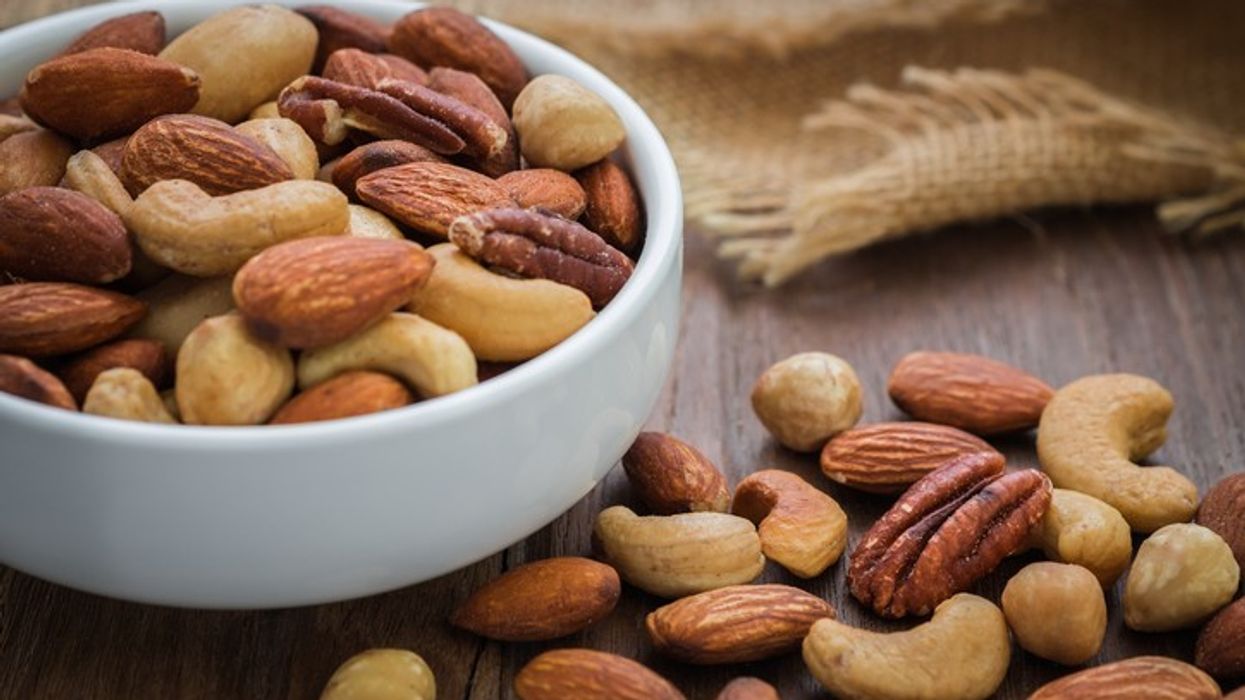

In a study published online this week in the journal Nutrients, researchers discovered that eating a variety of tree nuts, including almonds, Brazil nuts, cashews, hazelnuts, macadamias, pecans, pine nuts, pistachios, and walnuts, improved tryptophan metabolism in overweight and obese people. In particular, serotonin, a neurotransmitter, and cardioprotective tryptophan metabolites both increased.
In a previous study, researchers at UCLA demonstrated that consuming 1.5 ounces of tree nuts per day (versus pretzels) during 24 weeks of weight loss and weight maintenance, resulted in weight loss, increased satiety, decreased diastolic blood pressure, and decreased heart rate. Tryptophan (found in tree nuts) has been indicated as an important factor in cardiovascular disease (CVD). It is metabolized in the gut, producing many bioactive metabolites that are important in immune regulation affecting chronic diseases such as diabetes and CVD.
The current study looked at whether tree nut snacks, as part of a hypocaloric diet, could modify the gut microbiome, resulting in increased levels of cardio-protective tryptophan microbial metabolites.
Plasma and stool samples were collected from 95 overweight or obese participants and were evaluated in the current study for tryptophan metabolites and for gut microbiota. "We've known for a long time that tree nuts can help decrease CVD risk, and these findings provide some possible explanations,"
Lead researcher, Zhaoping Li, MD, PhD, Professor of Medicine and Chief of the Division of Clinical Nutrition at UCLA said, "We discovered some new associations between tryptophan metabolites and blood pressure, heart rate, and satiety in overweight/obese subjects, suggesting a broader impact of tryptophan metabolism in overall health, including cardiovascular health."
Another interesting finding was the significant increase in blood serotonin levels (60.9 per cent and 82.2 per cent increase from baseline at week 12 and 24, respectively) in both the weight loss and weight maintenance phases, in those who consumed mixed tree nuts. "This is the first time we've seen mixed tree nut consumption associated with an increase in serotonin levels in the body," explained Dr Li.
"While more research is needed, this is exciting since serotonin can have an important impact on mood and overall mental health."
Research has shown that people get about 25 per cent of their calories each day from snacks and a large proportion come from desserts, sugar-sweetened beverages, sweets and salty snacks.
"Replacing just one of those snacks with 1.5 ounces of tree nuts may help improve overall health and reduce the risk for various chronic diseases," stated Maureen Ternus, M.S., R.D.N, Executive Director of the International Tree Nut Council Nutrition Research & Education Foundation.
- ANI