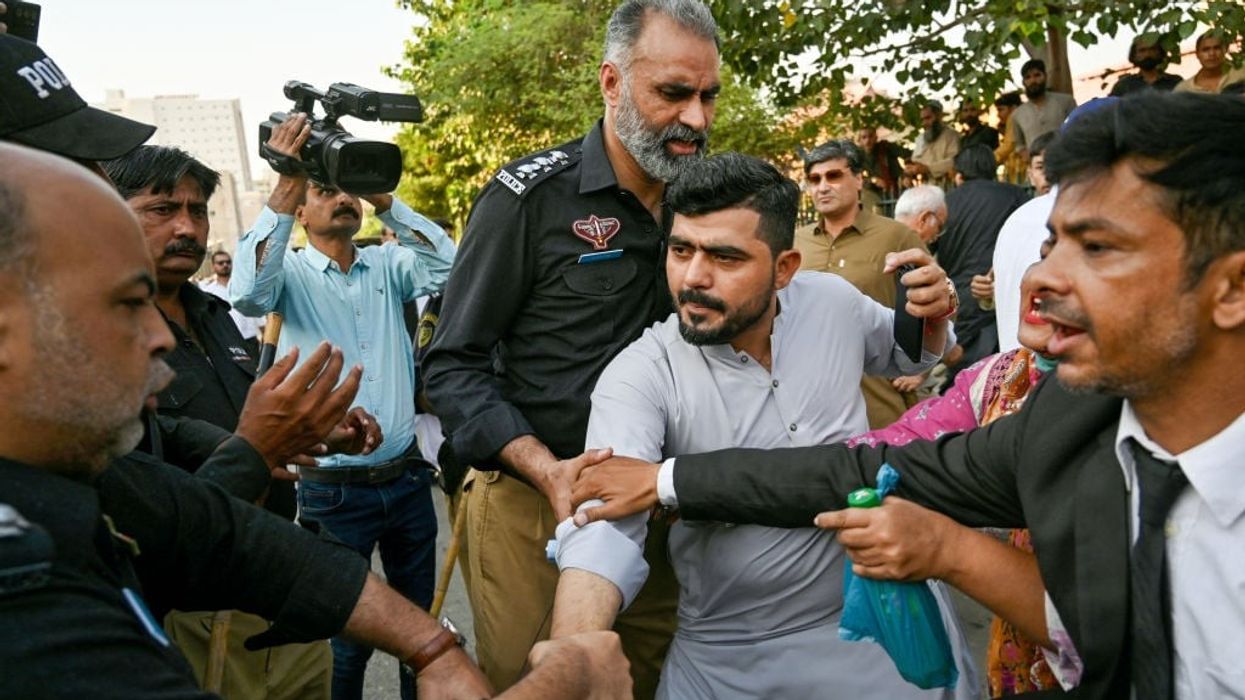

PAKISTAN's government narrowly passed constitutional amendments on Monday (21) giving lawmakers more power to appoint top judges, who have issued a series of recent decisions favouring opposition chief Imran Khan.
Since February elections marred by rigging allegations, relations have soured between Islamabad and the top courts as rulings litigating results have backed the party of jailed ex-prime minister Khan.
The 72-year-old former cricket star had been barred from running and his Pakistan Tehreek-e-Insaf (PTI) party previously claimed the courts were used to sideline their hugely popular campaign.
Under the judicial reforms passed during an early morning session of parliament, Pakistan's chief justice will now be selected by a parliamentary committee and have a fixed term of three years.
The amendments come just days before Supreme Court chief justice Qazi Faez Isa is due to retire.
Under the previous law he would have been automatically replaced by the next most senior judge -- currently Mansoor Ali Shah, who has consistently issued verdicts deemed favourable to Khan and his party.
New benches will also be formed of senior judges from across the country to weigh exclusively on constitutional issues, at the core of disputes between the government and PTI in the Supreme Court.
"This was a deliberate attempt to undermine the independence of the judiciary," said Sardar Shahbaz Ali Khan Khosa, a senior member of the Supreme Court Bar Association.
"They attempted to strip away the core fundamental principles of Pakistan's constitution. We reject this and will fight it at every bar association," he said.
But as the bill passed, prime minister Shehbaz Sharif said it was "a historic day... affirming the supremacy of Parliament".
PTI's Omar Ayub Khan, leader of the opposition in the National Assembly, told the session that "these amendments are akin to suffocating a free judiciary".
"A government formed through rigging cannot amend the constitution," he said.
Sharif's Pakistan Muslim League-Nawaz party scraped together a two-thirds majority with the backing of its long-time rival turned supply and demand partner, the Pakistan People's Party.
The government clinched 225 votes of the required 224 with the crucial support of a handful of rebel MPs from PTI, state media broadcasting the session showed.
PTI, the largest bloc in parliament, had refused to back the package despite offers to water down the amendments and settle a consensus deal, analysts said.
Analyst Bilal Gilani, who heads Pakistan's leading polling agency, said the amendments have some wins –- including bringing balance to activism by the judiciary.
"A more sinister side of this amendment creates a judiciary that is more pliant with the concerns of the government," he added.
On Monday, the English-language newspaper Dawn predicted the law could heighten the confrontation between branches of state.
"Given the long-running feuds and divisions... the changes being made could trigger a new stand-off between the legal fraternity and the government," read an editorial.
Sharif heads a shaky coalition government that has the backing of the powerful military -- despite Khan's MPs winning the most seats in February's election.
In July, the Supreme Court ruled that the Election Commission of Pakistan was wrong to have sidelined Khan's party in the campaign by forcing its MPs to stand as independents over a technical violation.
It also awarded Khan's party a handful of non-elected seats reserved for women and religious minorities, which would give Khan's party the largest number of parliamentarians.
Other courts have also rolled back Khan's personal convictions or sentences.
This year, six Pakistan high court judges accused the nation's intelligence agency of intimidating and coercing them over "politically consequential" cases.
Khan remains wildly popular and continues to challenge the establishment with frequent protests, despite languishing in jail on charges he says are politically motivated.
He was ousted from power in a no-confidence vote in 2022 after analysts say he fell out of favour with the generals.
He waged a defiant campaign against the military -- a major red line in a country that has seen decades of army rule -- which was met with a severe crackdown against his leadership and supporters.
(AFP)