
Highlights:
- A clear ranking of twelve major Austen adaptations across cinema and television
- Balances period accuracy, cultural impact and critical consensus
- Includes modern re-settings such as Clueless and Bridget Jones’s Diary
- Notes why some divisive versions remain important
- Anchored in historical legacy in an Austen anniversary year
It has been two and a half centuries since Jane Austen’s birth, and audiences still argue about what makes a “proper” Austen film. Some want fidelity to Regency manners. Some want a jolt of modern speech. Some want corsets and candlelight; others want Los Angeles malls.
Below is a ranking of the films that actually understand her, from faithful classics to brilliant updates. The order is based on a simple mix: critical respect, lasting impact, and that hard-to-define spark that makes you press play again.
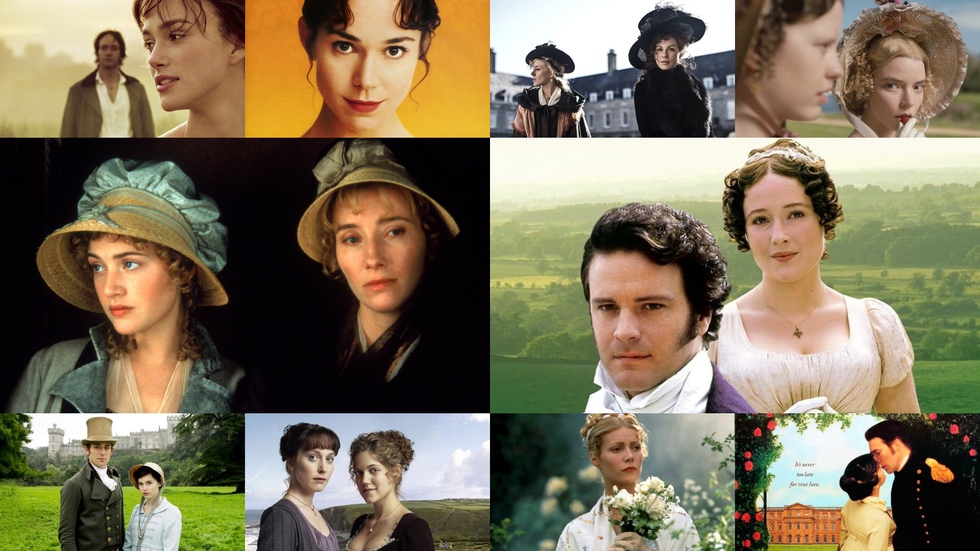 Jane Austen on screen: 12 adaptations worth seeing IMDB/Youtube Screengrabs
1. Sense and Sensibility (1995)
Ang Lee’s film sits comfortably at the top because it gets the balance right. Emma Thompson’s Oscar-winning screenplay understands Austen’s emotional economy. The performances, from Kate Winslet’s impulsive Marianne to Alan Rickman’s guarded Colonel Brandon, feel lived-in rather than performed. It also sparked the 1990s Austen revival, which matters.
- YouTube youtu.be
2. Pride and Prejudice (1995, BBC miniseries)
Technically television, but impossible to ignore. The longer format allows the novel to breathe, and Colin Firth’s Darcy became a cultural shorthand for romantic reserve. For many viewers, this remains the reference point against which all later Darcys are judged.
- YouTube www.youtube.com
3. Pride and Prejudice (2005)
Joe Wright’s version is unapologetically romantic. The camera moves, the music swells, and the emotions are worn closer to the surface. Purists still debate its liberties, but its imagery of misty fields, crowded ballrooms, and that hand flex secured its place in popular memory.
- YouTube www.youtube.com
4. Love & Friendship (2016)
Whit Stillman’s sharp adaptation of Lady Susan reminds viewers that Austen could be ruthless. Kate Beckinsale’s Lady Susan is charming, manipulative and entirely unapologetic. The dialogue lands like clean punches, making this one of the funniest Austen films ever made.
- YouTube www.youtube.com
5. Clueless (1995)
A modern retelling of Emma that works because it understands the novel’s social mechanics. Amy Heckerling translates class, matchmaking and self-delusion into 1990s Beverly Hills without strain. It is not a novelty adaptation anymore, but a classic in its own right.
- YouTube www.youtube.com
6. Emma. (2020)
Autumn de Wilde’s version leans hard into design and tone. It is visually exacting, sometimes deliberately chilly, and unafraid to make Emma Woodhouse less immediately likeable. That choice divided audiences, but the film revived serious discussion around the character rather than softening her.
- YouTube www.youtube.com
7. Emma (1996)
Douglas McGrath’s warmer, sunlit take is often overshadowed by both Clueless and the 2020 film. Gwyneth Paltrow’s Emma is gentler and more forgiving, which some critics found too safe, but it remains a faithful and elegant period piece.
- YouTube www.youtube.com
8. Persuasion (1995)
Quiet, restrained and emotionally mature. Amanda Root and Ciarán Hinds play their regrets beautifully, which suits Austen’s final completed novel. It lacks the visual flourish of other adaptations, but its emotional intelligence has aged well.
- YouTube www.youtube.com
9. Mansfield Park (1999)
Patricia Rozema’s film is the most openly argumentative adaptation here. It brings slavery and moral compromise to the foreground and reshapes Fanny Price into a more assertive figure. Divisive, but intellectually serious, and still discussed for that reason.
- YouTube www.youtube.com
10. Northanger Abbey (2007)
Often overlooked, this television film understands the joke. Austen’s gothic parody is played with a lot of warmth and energy, capturing Catherine Morland’s imagination without condescension. It may not be iconic, but it is quietly satisfying.
- YouTube www.youtube.com
11. Sense and Sensibility (2008, BBC miniseries)
A respectful small-screen return to familiar ground. The performances are strong and the period detail careful, but it struggles to step out of the shadow of the 1995 film. This one is appreciated more than adored.
- YouTube www.youtube.com
12. Bridget Jones’s Diary (2001)
Not a period adaptation, but impossible to exclude. Its modern translation of Pride and Prejudice dynamics brought Austen to audiences who might never have opened the book. Its cultural reach earns it a place, even if its relationship to Austen is indirect.
- YouTube www.youtube.com
So, what makes a great Austen adaptation?
It is not just bonnets and ballrooms. The best ones understand her central tension: the need for financial security versus the hope for personal happiness. They capture her irony, the sharp observation beneath the polite surface. They can be faithful to 1813 or set in 1995, as long as they get that heart and that brain. Her stories are survival guides, written with a quill, for anyone trying to navigate a world ruled by unspoken rules and precarious fortunes. The films that last know this. They are not looking back. They are showing us who we still are.