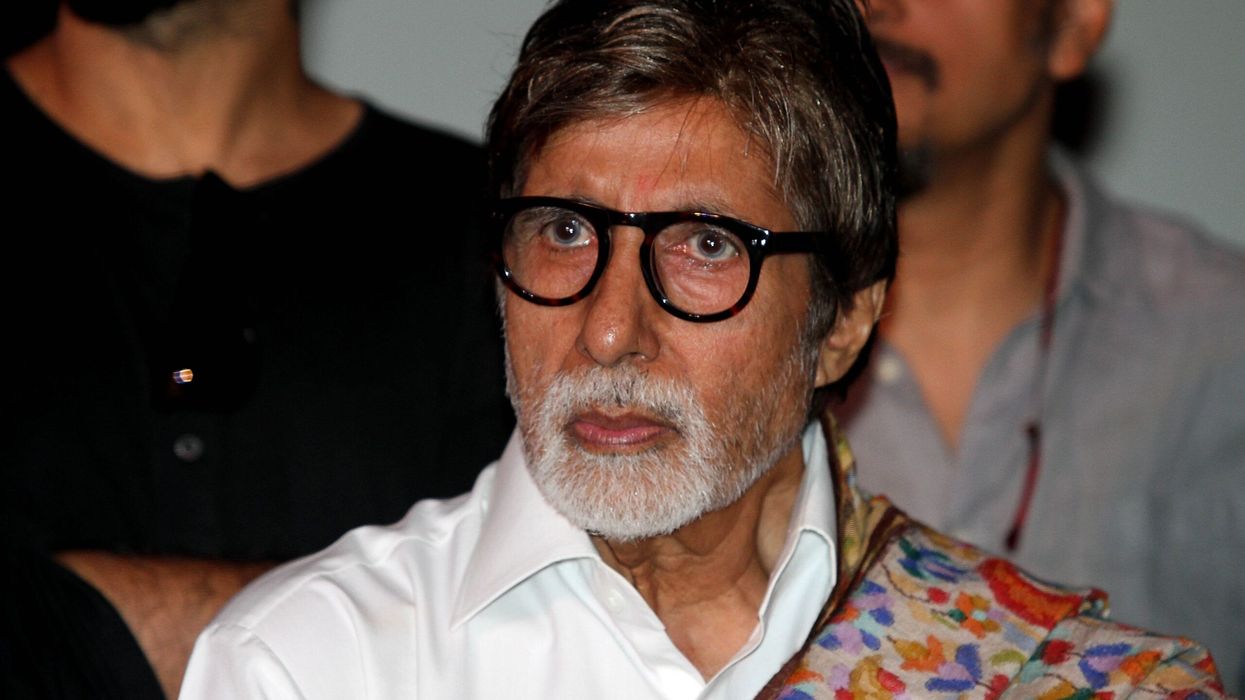

Megastar Amitabh Bachchan will be honoured with the Lata Deenanath Mangeshkar award, the Mangeshkar family announced on Tuesday.
The family and the trust instituted the award in memory of Lata Mangeshkar, who died on February 6, 2022, following multiple organ failure.
Bachchan, 81, will receive the recognition on April 24, the memorial day of their father and theatre-music veteran Deenanath Mangeshkar.
This award, known as the Lata Deenanath Mangeshkar Puraskar, is given every year to an individual who has made a path-breaking contribution towards the nation, its people, and society.
Prime Minister Narendra Modi was its first recipient, followed by Lata Mangeshkar's sister Asha Bhosle in 2023.
Music maestro A R Rahman will receive the Master Deenanath Mangeshkar Puraskar for contribution to Indian music, said a press release issued by the Mangeshkar family.
The award will also be presented to the non-profit organisation Deepstambh Foundation Manobal for services in the field of social service, while Ashtavinayak Prakashit's "Galib", produced by Malhar and Vajreshwari, will be recognised as the best drama of the year.
Marathi writer Manjiri Phadke will receive Master Deenanath Mangeshkar Puraskar (Vagvilasini Puraskar) for contribution to literature, while actor Randeep Hooda will be feted with the Vishesh Puraskar for contribution to cinema.
Veteran actors Ashok Saraf and Padmini Kolhapure will be honoured with Master Deenanath Mangeshkar Puraskar for their contribution to cinema.
The recipients also include Roopkumar Rathod for his contribution to the field of music, Bhau Torsekar for editorial services, and Atul Parchure for services to theatre and drama.
Hridaynath Mangeshkar will preside over the function and the awards will be felicitated by the hands of Asha Bhosle to the awardees, the press release said.
"Since 1943, we have been celebrating this day without fail. Lata didi is not with us but her blessings and inspiration is with us. We will continue to celebrate this and we are hoping that it should happen every year, even after us. As we all have crossed 90, we have established this trust Deenanath Smruti Pratishthan," Hridaynath Mangeshkar said at an event.
Singer Roopkumar Rathod said receiving the Deenanath Mangeshkar Puraskar is bigger than getting an Oscar or a Grammy trophy.
"I have been on the path of music for the past 45 years. For me, this award is not less than the Oscar or the Grammy, it is bigger than that... It is like achieving salvation after many births," he added.