
- Air India CEO Campbell Wilson has resigned and is serving notice
- The airline continues to report heavy losses despite revenue growth
- Operational lapses and geopolitical tensions are adding to the strain
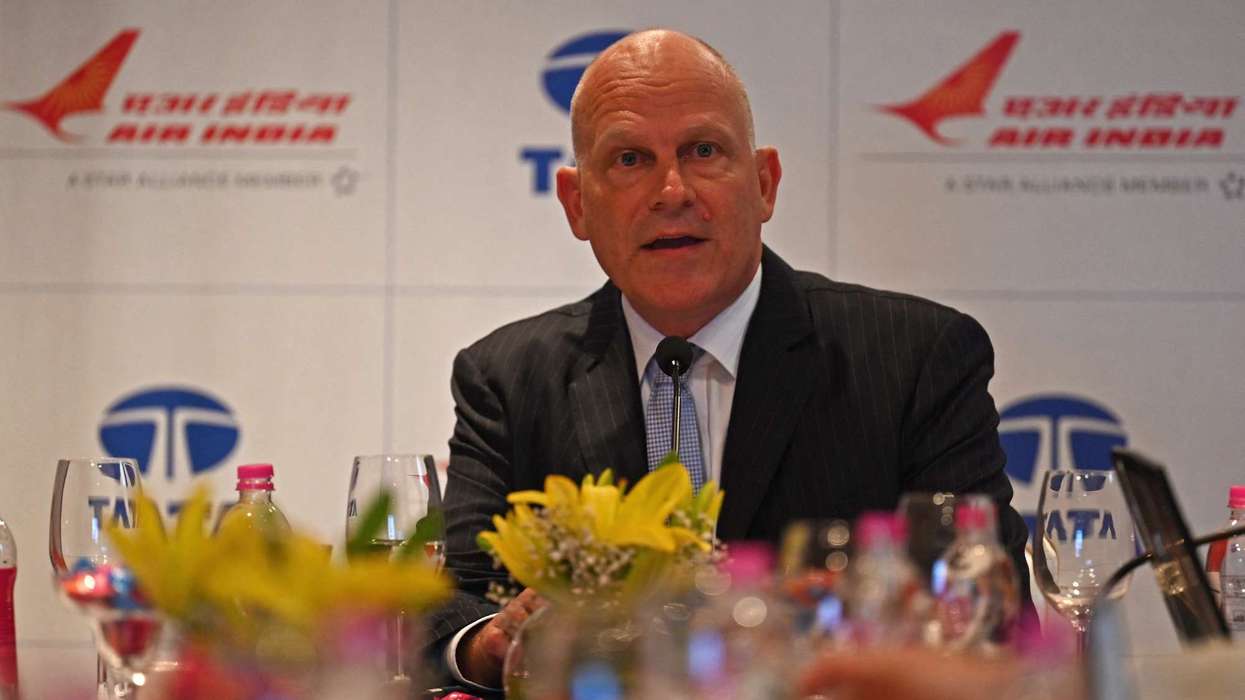
Campbell Wilson is stepping down as chief executive of Air India, marking a pivotal moment in the carrier’s ongoing turnaround under the Tata Group. The development, first reported by multiple outlets, comes as the airline continues to battle financial losses, regulatory scrutiny and operational disruptions.
Wilson, who took charge in 2022 after the Tata Group acquired Air India for £1.7 billion (₹18,000 crore), is currently serving a six-month notice period. According to people familiar with the matter, a successor has not yet been finalised. His contract was originally set to run until 2027.
Brought in from Singapore Airlines’ low-cost arm Scoot, Wilson was tasked with rebuilding an airline long weighed down by years of state ownership. While he oversaw early structural changes — including fleet refurbishment and engineering upgrades — the broader turnaround remains incomplete.
Losses, lapses and a difficult road ahead
Air India’s financials tell a mixed story. Revenue rose 13 per cent to £5.8 billion (₹61,080 crore) in FY2025, but losses persisted at around £380 million (₹3,976 crore). Its budget arm, Air India Express, fared worse, with losses widening sharply to £555 million (₹5,822 crore). Together, the airline group posted a combined loss of roughly £1 billion ($1.05 billion).
Operational challenges have also been hard to ignore. The airline has faced regulatory action over safety lapses, including incidents where aircraft were flown without proper certification or checks. In December, the airline acknowledged a “need for urgent improvements” in compliance and internal processes, as quoted in a news report.
The situation worsened after a June 12, 2025 crash involving an Air India flight from Ahmedabad to London, which killed 260 people. The incident triggered deeper scrutiny from regulators and led to temporary groundings.
External pressures have only added to the strain. Airspace restrictions following tensions with Pakistan have forced longer flight routes, increasing fuel costs. At the same time, instability in West Asia has begun to weigh on key international routes.
A high-stakes leadership vacuum
The timing of Wilson’s exit is notable. It comes just as rival IndiGo moves to strengthen its leadership by appointing Willie Walsh as CEO, signalling a more competitive phase in India’s aviation market.
Air India, now with a fleet of 191 aircraft and orders for over 500 more, is in the middle of an ambitious expansion. The recent merger with Vistara — a joint venture with Singapore Airlines — has further raised expectations, with the latter now holding a 25.1 per cent stake in the combined entity.
Industry observers suggest the next CEO will face a delicate balancing act. “Finding the right candidate to complete the transformation will not be easy,” aviation analyst Brendan Sobie reportedly said, pointing to the growing pressure on Tata Group to get the appointment right.
For now, Wilson is expected to stay on until a replacement is identified. But his departure leaves behind a familiar question — whether Air India’s long-promised revival is still on course, or drifting further into uncertainty.