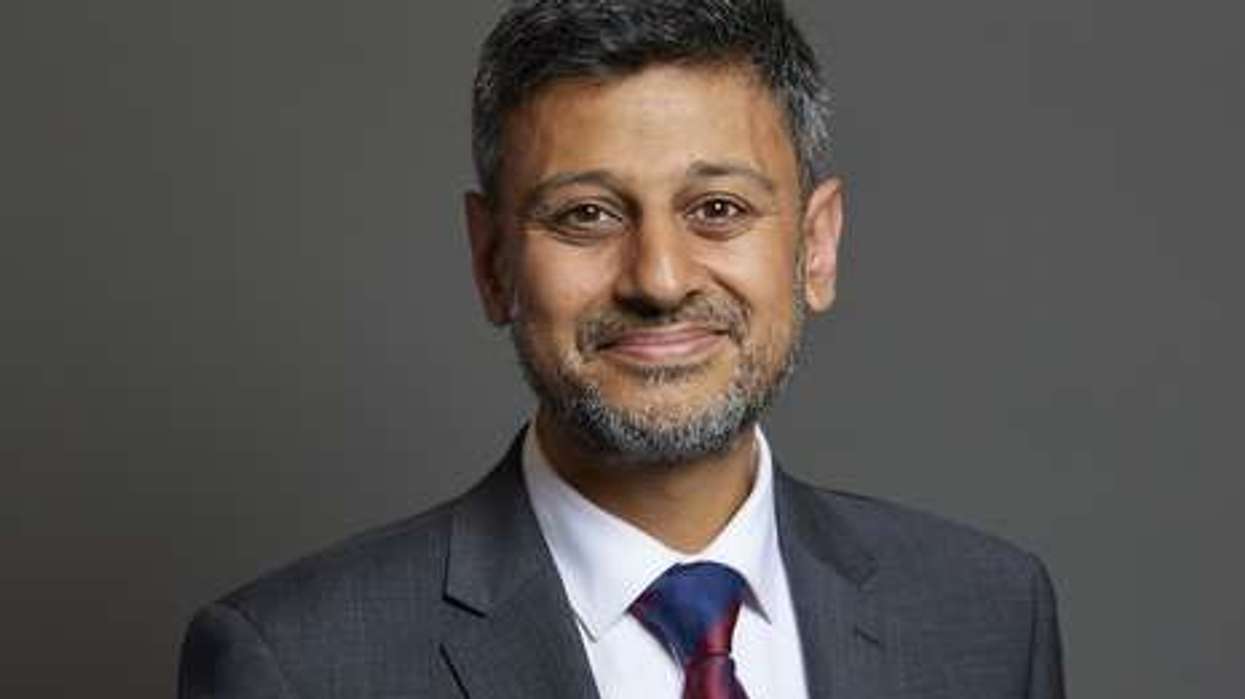

GENOMICS research, underpinned by enhanced access to screening and preventative programmes will help bridge the gap in health inequalities, junior health minister Dr Zubir Ahmed said, as the National Cancer Plan was announced on Tuesday (3).
Under the programme, patients will receive faster diagnosis, quicker treatment and the support to live well with cancer.
The ambition is that 75 per cent of patients diagnosed from 2035 will be cancer-free or living well after five years.
Ahmed, a practising kidney transplant surgeon in the NHS, told Eastern Eye how ministers plan to improve health outcomes for south Asians, with some groups delaying visiting their GPs and therefore having poorer prognosis for diseases, including cancer.
“I think genomics has got a big role to play, especially in a diverse population like we have in the UK, and making sure that different communities understand their risks of developing cancer,” Ahmed said on Wednesday (4).
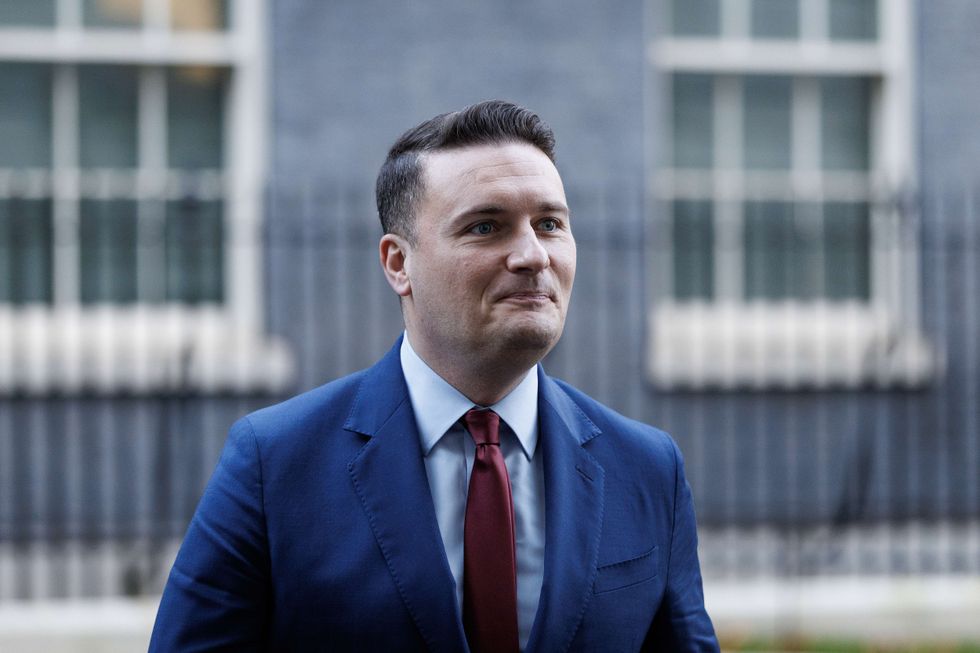 Wes StreetingGetty Images
The aim of the cancer action plan is to improve early detection and survival rates, with hundreds of thousands more patients treated within 62 days of referral.
Survival rates in England are below Romania and Poland for some cancer types, the Department of Health and Social Care said.
Ahmed acknowledged “the kind of progress that has been made in survival and quality has been glacial, at best”.
The MP, who represents Glasgow South West, was appointed parliamentary under-secretary of state in September 2025. His remit includes NHS data and technology, research, patient safety and reform in clinical pathways.
“Asian people are underrepresented in clinical research. For a lot of health conditions – both cancer and non-cancer – they have poorer outcomes than other communities,” he said.
“It’s very much on our minds, not only in the cancer plan, but particularly in the research component as well, because the only way we improve those statistics is to make sure we’ve got tailored programmes underpinned by good research. That is the right way to do things.”
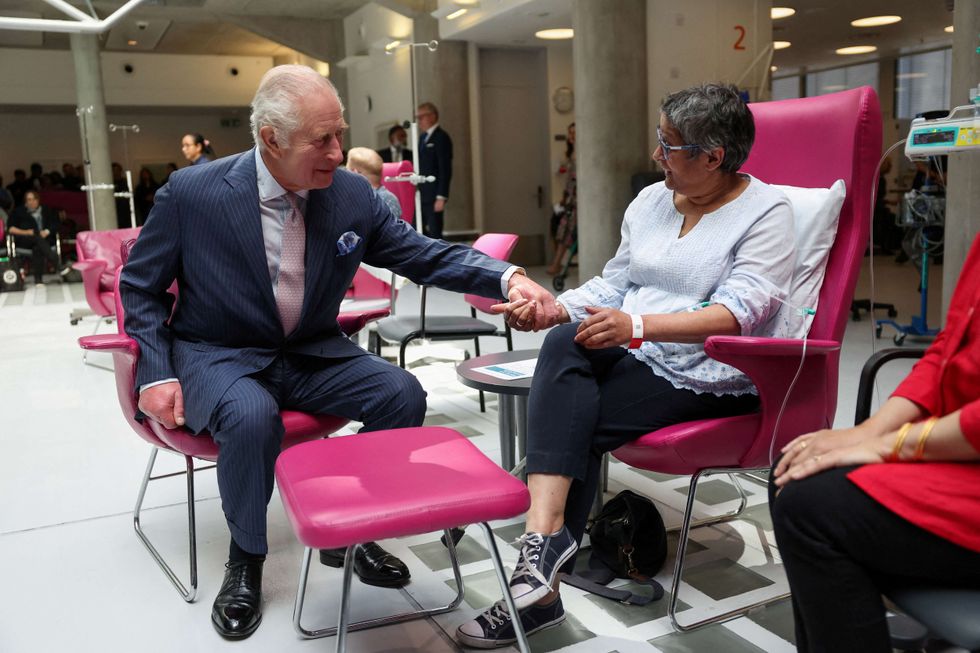 King Charles interacting with a patient during a visit to the University College Hospital Macmillan Cancer CentreGetty Images
Ahmed cited examples of non-invasive methods such as collecting saliva samples from British Bangladeshi and British Pakistani people to build a genomic database, which in turn will help experts understand why certain groups are more prone to having diabetes, heart disease or particular types of cancer.
Ahmed said, “Some women in our community find it difficult and challenging to access healthcare and screening.
“In terms of mammography and cervical screening, we’re doing a lot more to try and make it easier to book appointments to get a mammogram closer to home.
“With cervical screening, we are offering more self-testing, so women can get over that kind of psychological barrier of seeing a doctor; I know this is sometimes an additional barrier among some Asian communities.”
According to the DHSC, around 2.4 million people are currently living after a cancer diagnosis and 60 per cent of patients currently survive for five years or more. Health and social care secretary, Wes Streeting, said: “Cancer survival shouldn’t come down to who won the lottery of life. But cancer is more likely to be a death sentence in Britain than other countries around the world.
“As a cancer survivor who owes my life to the NHS, I owe it to future patients to make sure they receive the same outstanding care I did.”
He added, “Our cancer plan will slash waits, invest in cutting-edge technology, and give every patient the best possible chance of beating cancer.”
A Rare Cancers Bill, introduced by Dr Scott Arthur MP, is currently going through parliament; under its proposals, patients will be able to take part in clinical trials through the NHS App.
“We want to get people interacting with the NHS app,” Ahmed told Eastern Eye.
Initially patients will be able to search for trials on the clinical research database and ask to be contacted. And, later, patients will be able to sign up to automatically be offered the opportunity to receive details of clinical trials that might benefit them.
Streeting said: “I know how painful it is for rare cancer patients and their families to be held back by a clinical trials system that was never designed with them in mind. “We’re modernising the NHS so rare cancer patients not only get breakthrough treatments faster, but so we have more experts in the right places to boost survival rates for rare cancers across the country.”
Ahmed noted examples of a study that uses finger prick blood testing, to look for chronic kidney disease and described how this is also personal for him, as a family member has diabetes and chronic kidney disease.
“As someone who is of south Asian heritage, as someone who’s a kidney transplant surgeon… this is very close to home for me. That we should be picking up these conditions early, so hopefully they never need to get to my surgical table to be need a transplant, because if we catch them early, we can put in place kind of interventions
“That slows down kidney disease, so that dialysis and transplantation become less likely.”
He said Caucasian people are 64 per cent more likely than ethnic minority groups to participate in health research.
“If we’re going to be a health system for not some people, but for all people, we need to bridge that gap and inequity of access to health research.
“For me, as a practicing doctor, as a minister for health innovation, I think it is the access to health research kind of part of my portfolio, where I can help to make the biggest leaps into closing that gap.”