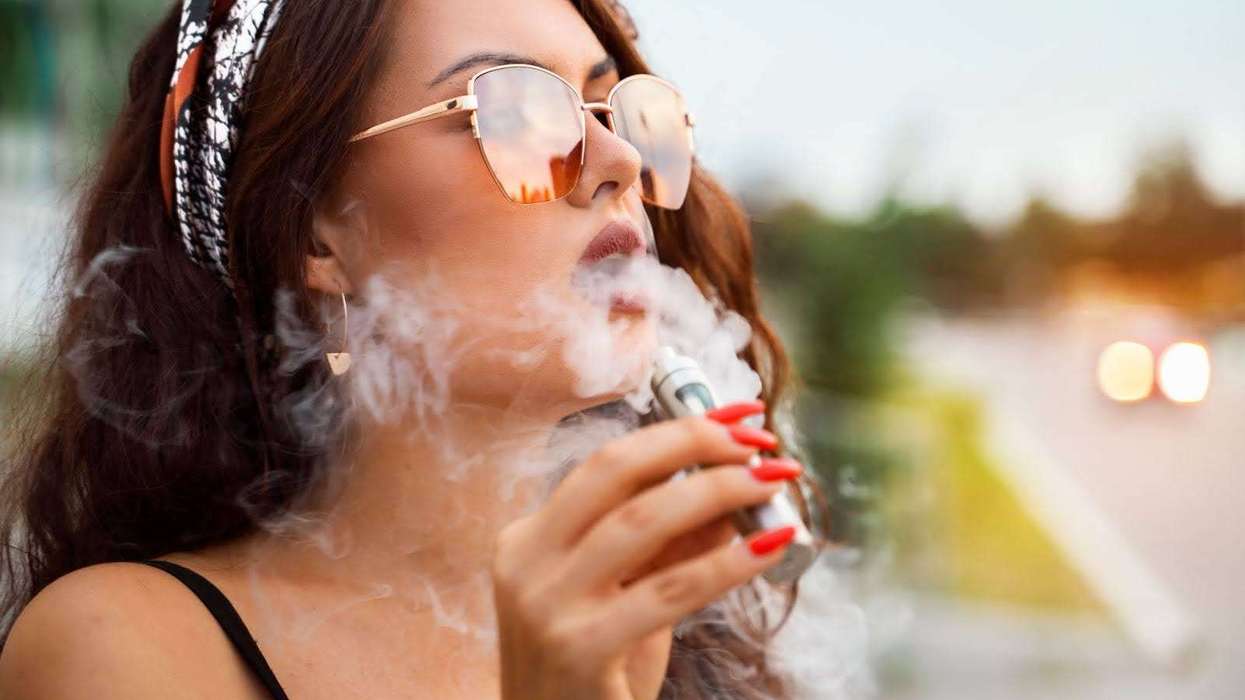

The e-liquid industry, like any maturing market blessed with plenty of capital, seems to have spent the last decade throwing increasingly desperate flavors at the wall. Evidence of this can be found in the sheer range of concoctions available in most stores and online purveyors of vape liquids.
Vape flavoring started out innocently enough, with the obligatory mint, coffee, and fruit varieties, but quickly evolved (or descended) into the madness of doughnut, bacon, and dill pickle flavors. At one point, someone in the industry decided unicorn tears would fly off the shelves, aimed at a yet-to-be-identified demographic.
Every few months, a new novelty lands with the confidence of a product that will definitely still exist in eighteen months. Most of these bizarre new flavors, however, do not.
Strawberry-kiwi vape juice, meanwhile, sits on the middle shelf, inexplicably outselling most flavors available. But this was not supposed to happen. In a market that rewards novelty and punishes the mundane, the survival of a flavor combination last considered exciting during the Clinton administration warrants explanation.
And if you thought this piece was entirely about the rise of strawberry-kiwi as a flavor, it isn't. Well, not entirely. There is a broader point to make, about over-regulation and the mechanics of quitting smoking. We will get to that, but first, what makes strawberry-kiwi vape juice such a stalwart?
Why It Works
In an industry plagued by over-regulation and endless hand-wringing, strawberry-kiwi has achieved something quite remarkable: it offends almost nobody. It’s sweet, but not cloyingly so. Tart, but not aggressively. The main appeal is that it is refreshing, but without the menthol that makes some e-liquids taste like vaping a cough drop.
This is, it turns out, exactly what most people trying to quit smoking actually want. They are not, for the most part, seeking adventure. They are seeking something that will not make them reach for a cigarette. Strawberry-kiwi delivers on that modest brief with unwavering reliability.
Vapers call this an all-day vape, meaning a flavor that does not become intolerable by mid-afternoon. It is perhaps the only context in which reliably inoffensive constitutes high praise.
What Smokers Actually Want
To an observer, the logical assumption would be that smokers switching to vaping would want tobacco-flavored e-liquid. Give them what they know. Ease the transition. This seems reasonable until you actually try it.
Tobacco e-liquid, by most accounts, tastes like a cigarette that forgot to deliver the smoke, which only underscores what is missing. Rather than easing the transition, it tends to make smokers nostalgic for the real thing. The absence becomes more noticeable, not less. It is the vaping equivalent of non-alcoholic beer at a wedding: technically present, albeit spiritually inadequate.
Fruit flavors solve this problem by offering something genuinely different. Surveys of adult ex-smokers consistently show an overwhelming preference for non-tobacco options, with fruit leading by a comfortable margin. The appeal of strawberry-kiwi is not that it mimics smoking but that it does not. You could say that the distance from cigarettes is the feature, not the flaw.
The Shop Floor Workhorse
Vape shop employees, tasked with guiding nervous first-timers through a wall of options, have developed a shorthand for flavors like strawberry-kiwi, viewing it as the safe bet.
When a smoker walks in, unsure what to try (and most do, the first time), this is the bottle that gets recommended. It requires no explanation, no hard sell, and no awkward conversation about what unicorn tears are supposed to taste like.
UK retailers routinely stock as a staple rather than a novelty, the quiet workhorse of the e-liquid aisle. It sells steadily while flashier options enjoy brief, dramatic lifespans. It has, against all odds, become the Margherita pizza of vaping, the thing you order when you cannot be bothered to think, and the thing that never actually disappoints.
Strawberries & Kiwis as Contraband?
Which brings us to the broader point in question.
American regulators, in their determination to protect teenagers from fruit-flavored temptation, have made it increasingly difficult for adult smokers to access the very flavors that help them quit. The logic dictates that if it tastes like strawberry, it must be for children - a somewhat ridiculous position that would come as news to anyone who has ever ordered a daiquiri.
The result is a policy that cannot distinguish between a forty-five-year-old ex-smoker reaching for strawberry-kiwi and a teenager chasing novelty. It simply restricts both equally. Meanwhile, cigarettes, which kill half their long-term users, remain available at every gas station in America, unflavored and apparently entirely unobjectionable.
The UK took a different approach: allow the flavors, regulate the marketing, and enforce the age restrictions. As a result, British youth vaping rates remain a fraction of American levels, while British adult smoking rates have fallen to the point where vapers now outnumber smokers. In the UK, the predicted catastrophe of fruit-flavored e-liquid never arrived.
The humble strawberry-kiwi, in all likelihood, has helped more smokers quit than any congressional hearing or sternly worded packaging requirement. It has received no commendation for this, of course, and almost certainly never will.
Public health victories, it seems, are only worth celebrating when they look sufficiently miserable.
This article is paid content. It has been reviewed and edited by the EasternEye editorial team to meet our content standards.