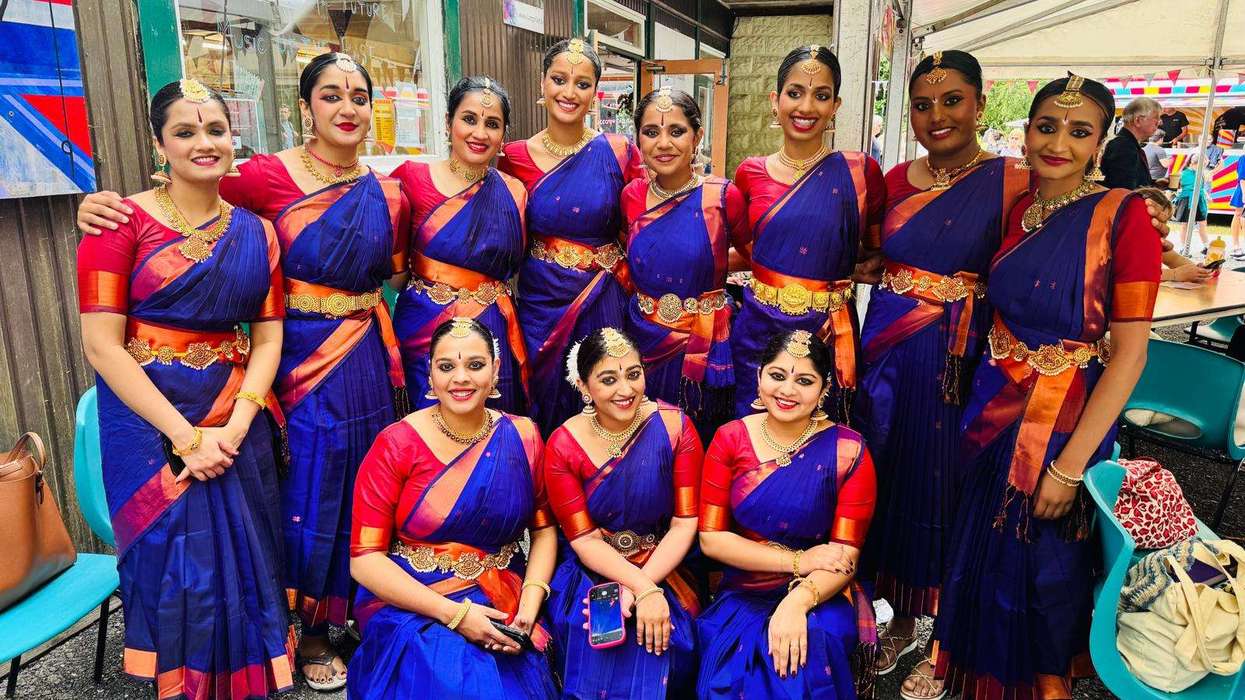

Young Welsh dancers have described how they collaborated with a local music body to convey the image of the Welsh goddess Blodeuwedd in a Bharatnatyam performance.
Eisteddfod is an annual festival that celebrates Welsh art, language and culture. In June last year, Samarpan - a Cardiff-based organisation that works to preserve Indian performing arts - worked with Community Music Wales to interpret a traditional Welsh folk song using the classical dance form from south India.
Blodeuwedd is a goddess made from flowers and rooted in nature and beauty. To accurately portray her image, dancers needed to understand the music and the poetry, which could then be translated into movement. Through adavus (steps) and mudras (hand-gestures), the Bharatnatyam dancers conveyed the image of the Welsh goddess.
One performer said, “As an Asian woman living in Wales, it was more than just a performance, it was a chance to connect two very different cultures in a respectful and creative way. Dancing to a Welsh song while performing Bharatanatyam made me feel like I was building a bridge between my cultural roots and the place I now call home.”
There are clear differences between Welsh and Indian art, and one dancer explained how she was “used to dancing to strong rhythms and clear beats in Bharatanatyam music… (while) the Welsh song had a flowing, airy quality”.
Another dancer found it to be a “unique experience having to relate dance movements and steps to a rhythm that is not typical to Bharatanatyam”.
Samarpan’s co-founder and dance teacher, Dr Santosh G Nair, said she wanted to create an ‘amalgamation of Welsh and Indian culture without changing any technicalities or roots, but trying to find a bridge to connect to the cultural essence’.
The performance bridged a gap between the Asian artists and the Welsh spectators, but it also healed something within the dancers themselves.
One of them said, “I often feel like I am carrying two worlds inside me. Dancing Bharatanatyam to a Welsh song made me feel connected. It was like I didn’t have to choose one culture over the other. I could honour both at the same time.”
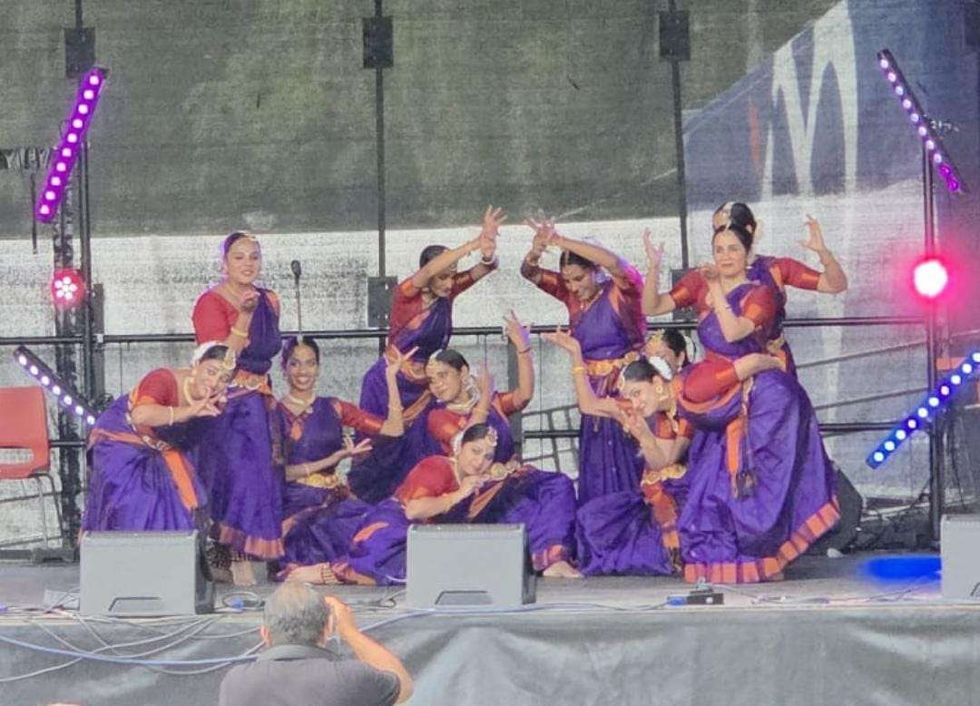 The performance Liz Johnson
At schools, councils, and care homes in South Wales, Samarpan’s workshops invite Welsh people to share their love of Indian music and dance.
Priya Munusamy, Maalivika Baabu and Ally Sebastian are students of dance who have hosted these workshops throughout the year.
They gather to tell the stories behind the poetry and translate the meaning behind hand gestures.
“It’s not about teaching them, but learning something from them as well,” said Munusamy.
Baabu said they almost always find something new within the interpretation, while Sebastian’s view was that “you have to relearn your own dance form’ to help them experience it on their own terms”.
The co-founder of Samarpan, Dr Leena Menon, said the “essence and vision was to position ourselves as one in this universe and use the language of poetry and movement.”