UN human rights council adopted a resolution on Tuesday (23), spearheaded by Britain, to investigate war crimes during Sri Lanka's civil war against separatist Tamil Tigers.
The chief of the Geneva-based rights council, Michelle Bachelet's office will now have new staff, powers and a £2.0 million budget to look at Sri Lanka's war crimes.
The vote was 22 in favour, with 11 against including China and Pakistan, and 14 abstentions including India.
The civil war ended in 2009 after the defeat of the rebels, who fought for a separate state for the Tamil minority. According to the United Nations figures, the 26-year conflict recorded 80,000-100,000 deaths.
"It is hugely significant for victims. It really is a recognition that at the domestic level, processes have failed and there is no real hope that victims will access justice," Yasmin Sooka, a rights lawyer involved in a civil prosecution against Sri Lanka's current president Gotabaya Rajapaksa for alleged war crimes, told Reuters.
Rajapaksa, who served as Sri Lanka's wartime defence chief, has maintained his innocence, and the case was withdrawn after he attained immunity on becoming president in 2019.
Sri Lanka foreign minister Dinesh Gunawardena told a press conference in Colombo on Tuesday (23) that the resolution lacked authority and cannot be implemented without the consent of the country concerned.
"It is a waste of money. Highly uncalled for," Gunawardena told at a hurriedly organised press conference in Colombo.
"Without the consent and acceptance of the country concerned, it cannot be implemented."
The money would be better spent on providing "housing for the entire population in the Jaffna peninsula," he said, referring to the heartland of minority Tamils in the war-battered region.





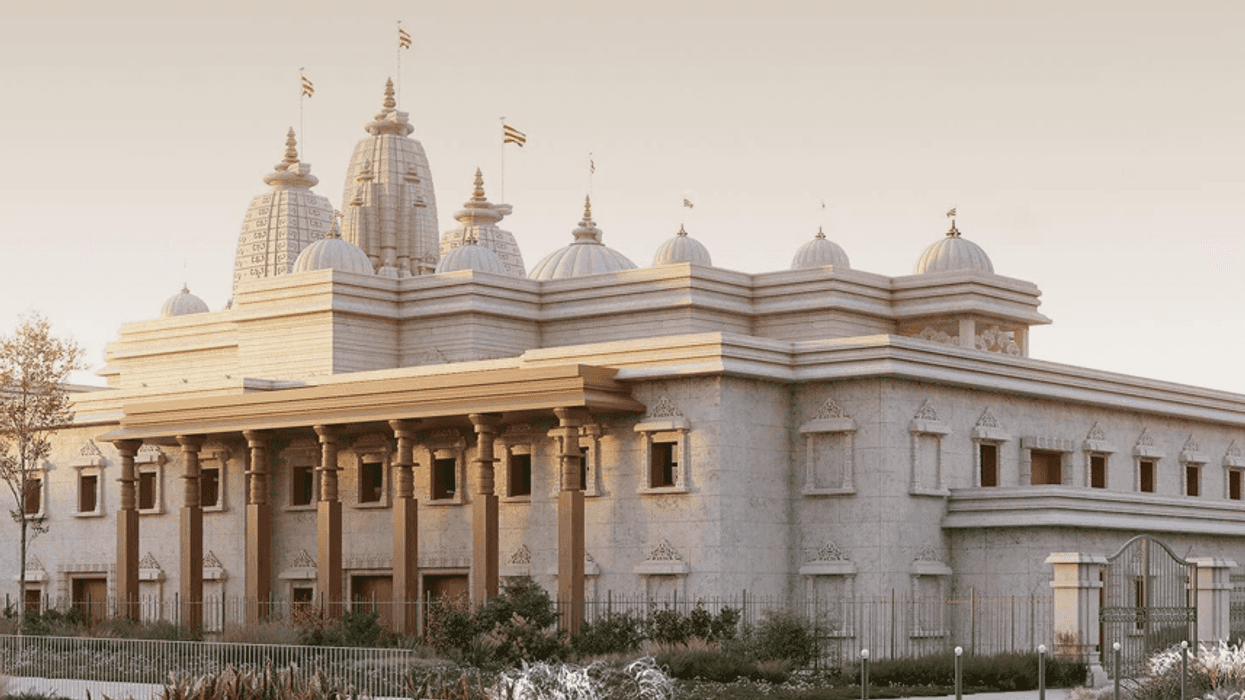
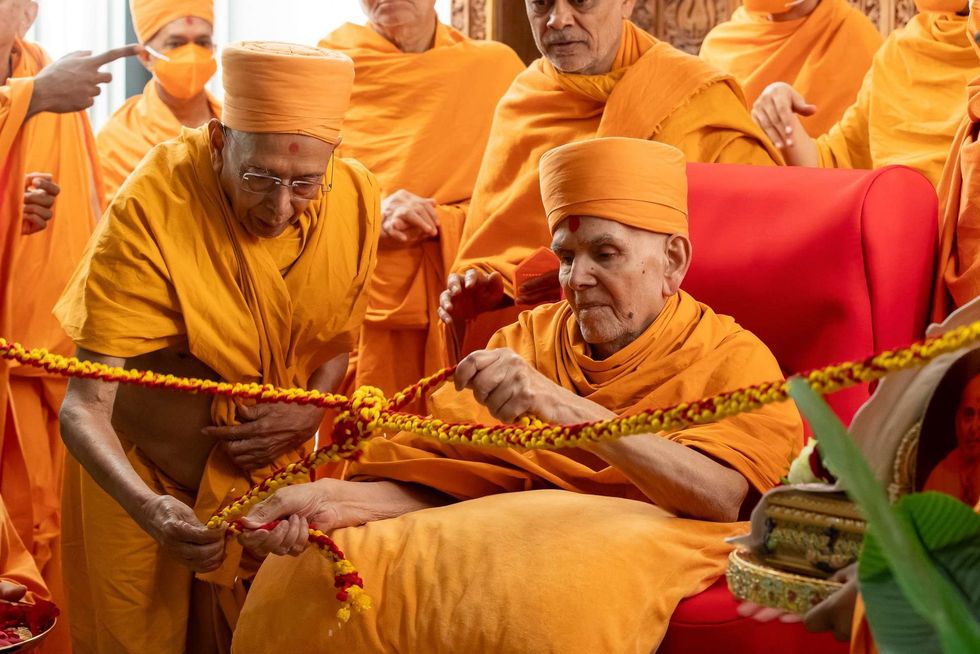 Mahant Swami Maharaj arrives in France ahead of the Paris Mandir Mahotsav BAPS Paris Media
  Historic Jal Yatra starts at the iconic Eiffel TowerBAPS Paris Media
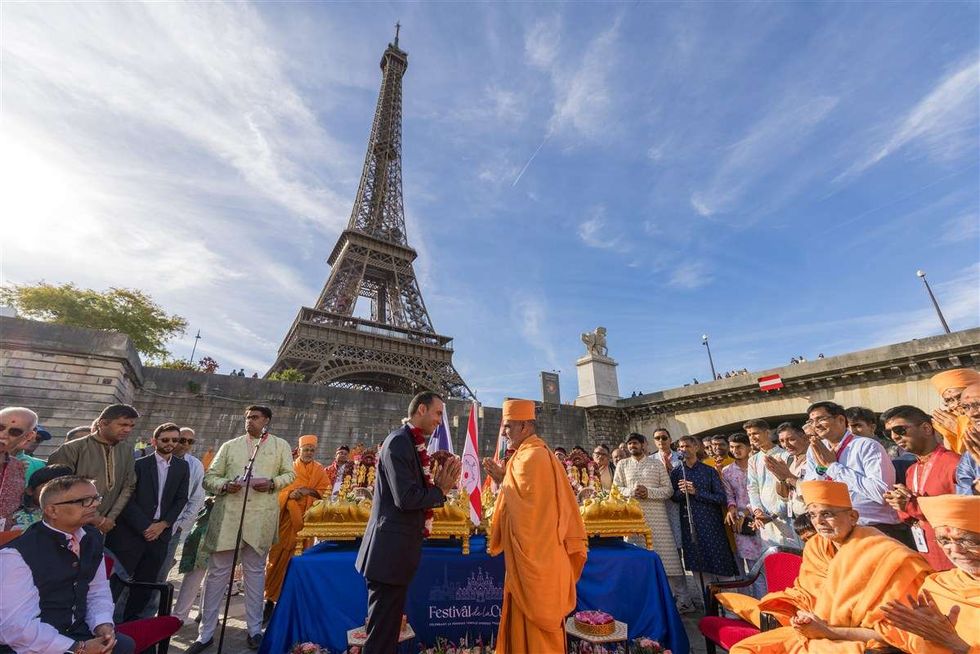 Organisers called it the largest coordinated flotilla to sail the Seine since the opening ceremony of the Paris 2024 Olympic GamesBAPS Paris Media
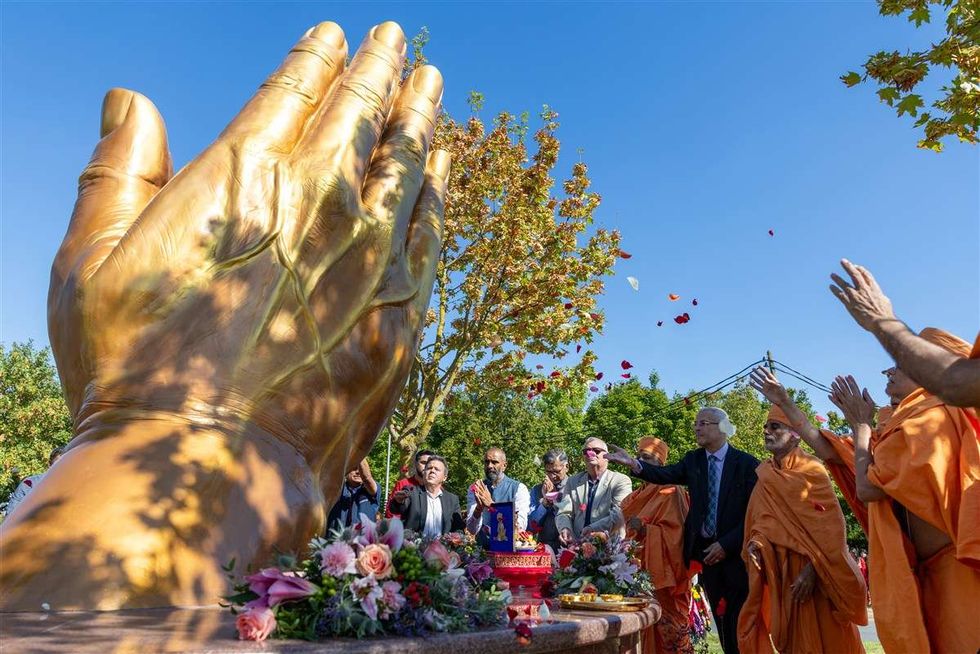 A sculpture of folded hands in the traditional Indian gesture of namaste was unveiled at a roundabout in Bussy-Saint-Georges this weekBAPS Paris Media