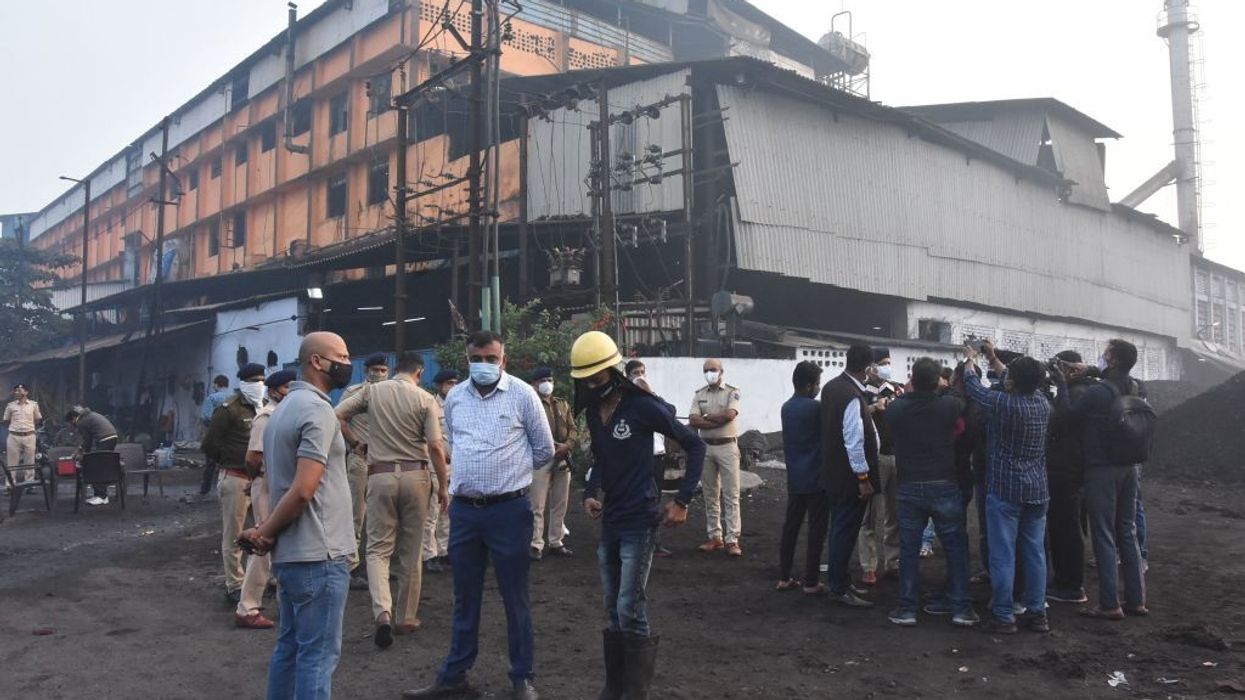

SIX workers at a dyeing and printing mill in India were killed and more than 20 were taken to hospital on Thursday (6) after inhaling toxic gas caused by an illegal dump of waste chemicals, officials said.
The disaster took place in the industrial city of Surat in Gujarat state at around 4 am (2230 GMT). The workers were in the mill when some chemicals were dumped nearby, police and a fire officer said.
"Chemicals were being illegally discharged from a tanker into a rivulet close to the mill, which possibly reacted with another chemical in the water and created toxic gas," said the chief fire officer of Surat Municipal Corporation, Basant Pareek.
"The workers inhaled the gas and started feeling suffocation. When we reached the scene, the workers were found collapsed on the road in their attempt to escape."
Six workers died while 23 people were hospitalised, seven in critical condition and on ventilators, said Pareek.
Senior police official Sharad Singhal said officers were investigating but had yet to make any arrests.
"This was not an accidental gas leakage. Hazardous chemicals were being discharged when the incident took place," he said.
India suffered the world's worst industrial disaster in 1984 when methyl isocyanate gas leaked from a pesticide factory owned by American Union Carbide Corporation in the city of Bhopal, killing more than 5,000 people.
(Reuters)






 Lift their trophies after their respective victories in The Hundred finals at Lord’s in London on August 16Philip Brown/Getty Images
 Michael VaughanPhilip Brown/Getty Images
  Mukesh AmbaniSujit Jaiswal/AFP via Getty Images
  Sanjiv GoenkaSajjad Hussain/AFP via Getty Images
