
Highlights:
- First edition of The Hobbit sold for £43,000 by Auctioneum in Bristol.
- Only 1,500 copies were printed in 1937; few hundred believed to survive.
- Book was found during a routine house clearance without a dust jacket.
- Bound in light green cloth, it features original black-and-white illustrations by Tolkien.
- Copy once belonged to the family library of Oxford botanist Hubert Priestley.
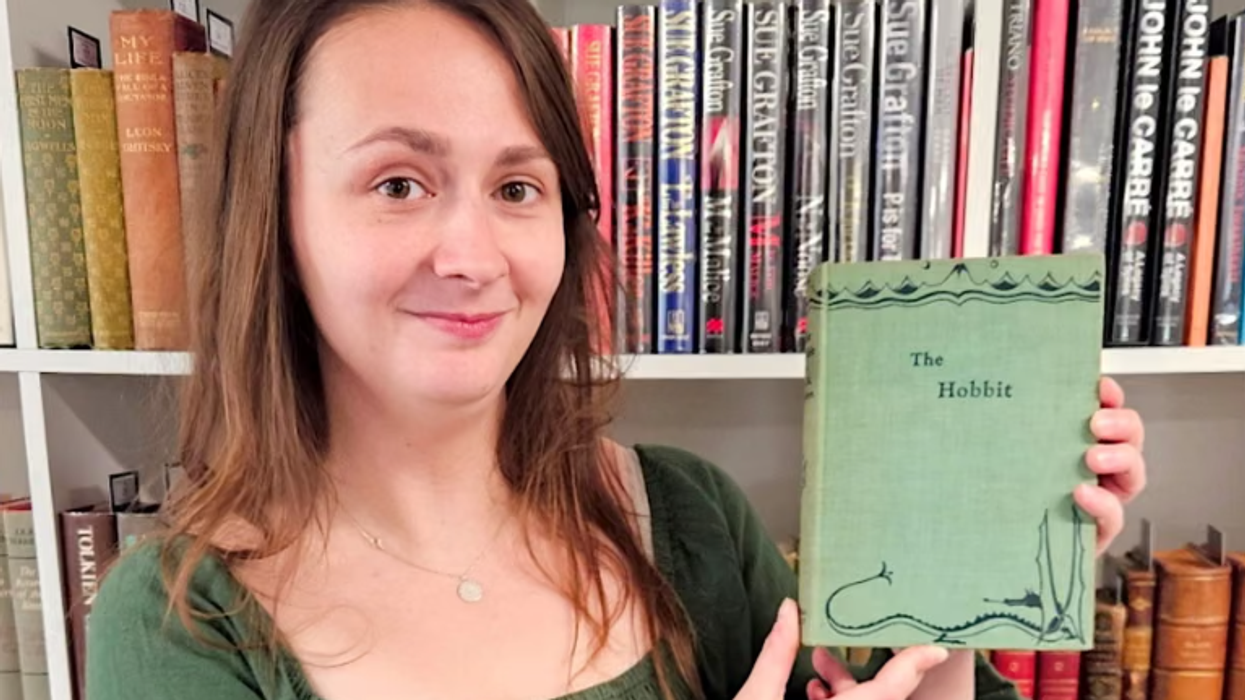
A rare first edition of JRR Tolkien’s The Hobbit has sold for £43,000 at auction after being discovered during a house clearance in Bristol. The copy, uncovered by Auctioneum, was part of the original 1937 print run of 1,500 copies and is considered “unimaginably rare”, with only a few hundred believed to still exist.
The book was bought by a private collector based in the UK. Auctioneum, which handled the sale, noted that bidding came from across the globe, pushing the final sale price to more than four times the original estimate.
Discovered on an ordinary bookcase
The copy was found without a dust jacket on what was described as a “run-of-the-mill bookcase”. Caitlin Riley, Auctioneum’s rare books specialist, recognised the value immediately upon examining the book.
“It was clearly an early Hobbit at first glance, so I just pulled it out and began to flick through it, never expecting it to be a true first edition,” Riley said.
“It’s a wonderful result for a very special book.”
Bound in light green cloth with black lettering, the edition features black-and-white illustrations by Tolkien himself, who was then a professor at the University of Oxford.
Historical connection to Oxford
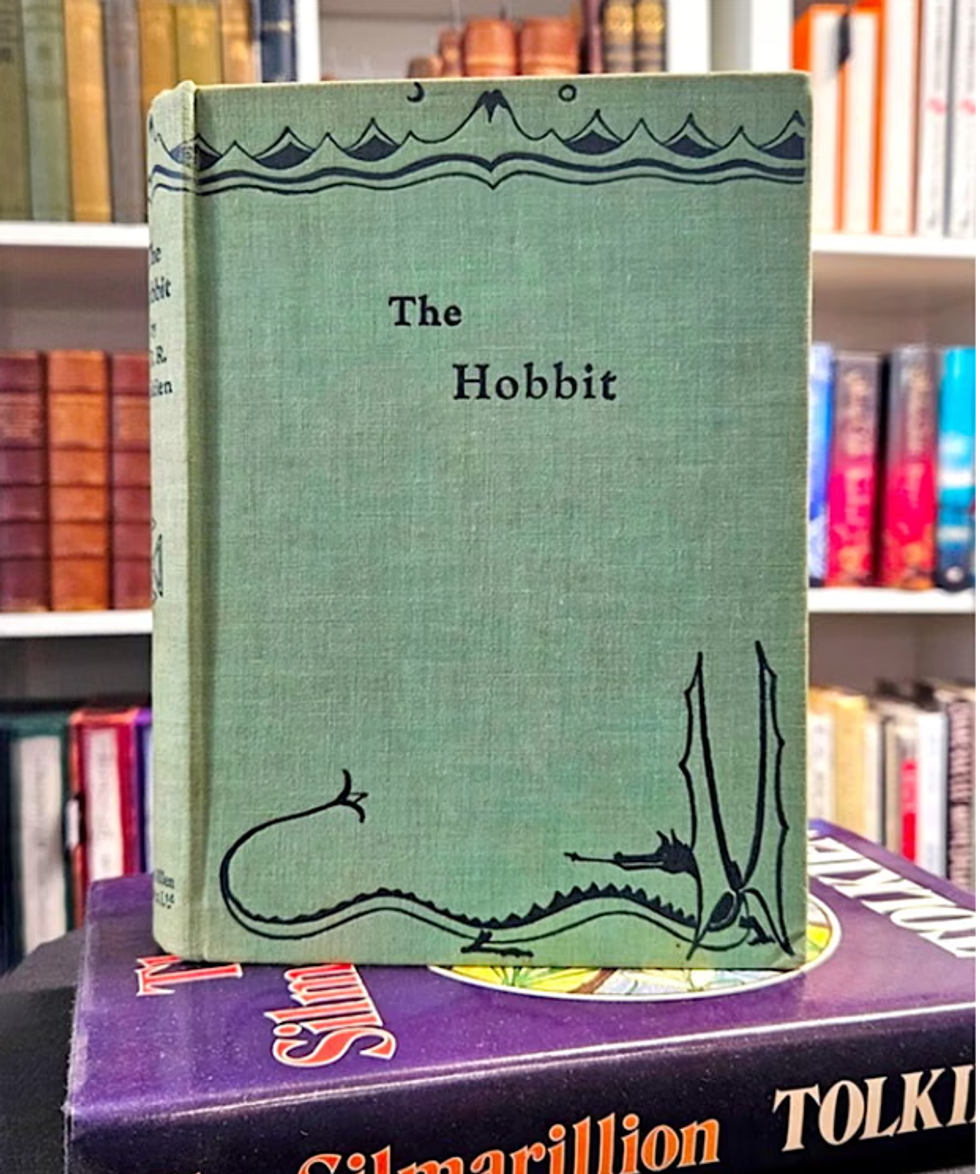 This laid the foundation for his epic sequel, The Lord of the RingsAuctioneum
Auctioneum said the book was part of the family library of Hubert Priestley, a botanist linked to Oxford and the brother of Sir Raymond Edward Priestley, an Antarctic explorer and geologist. It is believed that the Priestley family had personal or academic ties with Tolkien, and possibly CS Lewis, who was also part of Oxford’s literary circle.
High-value collector’s item
Tolkien’s The Hobbit has sold over 100 million copies worldwide and laid the foundation for his epic sequel, The Lord of the Rings. First editions of The Hobbit are in high demand; in 2015, a copy featuring a handwritten note by Tolkien in Elvish fetched £137,000 at Sotheby’s.