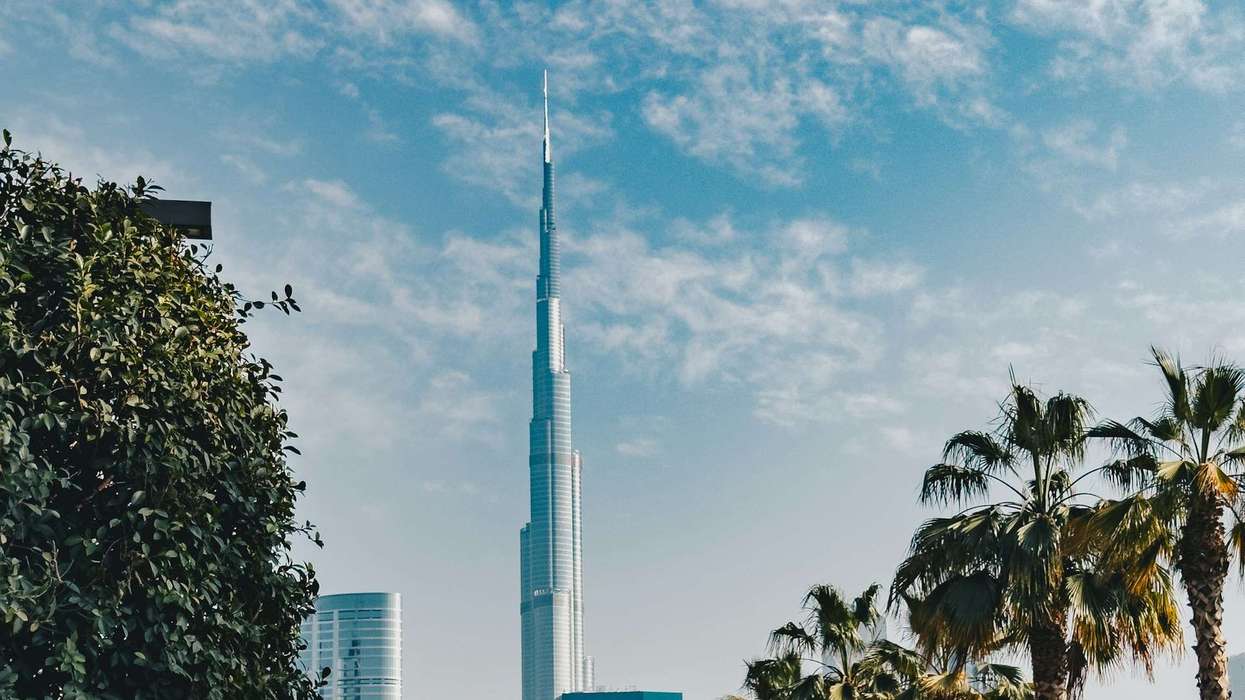

People have responded to Dubai’s latest moment of vulnerability with a familiar mix of ridicule and moralising. As regional conflict disrupted flights, stranded residents and exposed the fragility of life in the Gulf, there was a predictable chorus of schadenfreude: jokes about tax exiles rushing home, about easy lives interrupted, about a manufactured city finally meeting reality. But that reaction says less about Dubai than about the caricature many outsiders still prefer to project onto it. Dubai is not just a playground, a loophole or a fantasy of permanent sunshine. It is a real city, built by work, movement, ambition, and adaptation. Moments of crisis tend to reveal that more clearly that critics might expect.
The past weeks have offered a striking example of the gap between perception and reality. As missiles and drones targeted parts of the UAE, social media quickly filled with images of influencers scrambling for flights and wealthy expats supposedly fleeing the city. It was an easy narrative to tell. Dubai has long occupied a strange place in the global imagination: admired for its dynamism but dismissed by many as artificial, excessive or morally suspect.
Yet, the reality on the ground looked rather different. Writing from Dubai, Wall Street Journal correspondent Yaroslav Trofimov noted that the reaction abroad was often less sympathy than sarcasm, with social media filled with jokes about “fleeing influencers, tax dodgers and crypto bros.” But for the millions who actually live in the city, the picture was far less dramatic. Offices opened, restaurants filled, and traffic returned to the roads. As Trofimov observed, many outsiders assume Dubai is a mirage that would collapse under pressure, but the past weeks showed something else, “Dubai has proven that it is not a bubble, that it is resilient and is a real place.”
A city carrying on
The British journalist Franck Kane captured that reality in more intimate terms. Writing from his apartment overlooking Dubai Marina, he described a week in which the surreal quickly became routine. Evening conversations turned to missile interceptions and drone trajectories, while residents stepped out onto their balconies to watch the sky as air-defence systems lit up the night.
In Kane’s dry summary, the rhythm of the city had simply adapted. “The evening conversation turned to intercepted missiles, drone trajectories and which air-defence systems appear to have had the better night.”
None of this means Dubai is immune to the tensions of the region around it, nor does it mean life there is easy. The idea that Dubai represents a permanent holiday for wealthy outsiders is perhaps the most persistent misunderstanding about the city. For most of the people who live there, Dubai is not a playground; it’s a workplace.
Only a small fraction of the Emirates’ population are Emirati citizens. The overwhelming majority are expatriates who arrived from every corner of the world in search of opportunities. Construction workers from South Asia, engineers from the Philippines, lawyers from Egypt, entrepreneurs from Europe and investors from Africa and Central Asia all form part of the city’s fabric. Many send money home to support families thousands of kilometers away. Others build companies, raise children and gradually put down roots.
Jason Grannum and the appeal of Dubai’s entrepreneurial culture
For entrepreneurs, Dubai’s appeal lies not only in its prosperity but also in its potential. Jason Grannum, a Swedish entrepreneur and former professional footballer who now builds technology businesses, moved to the UAE with his family in 2021 after years of developing telecom ventures in Europe.For him, the appeal of Dubai lies in the clarity of its business culture. “Here, it’s survival of the fittest,” he said, referring to the entrepreneurial environment. “There are no excuses.” For founders shaped by competitive environments, whether in sports or business, that directness can be a powerful attraction.
At the same time, belonging in Dubai often grows gradually. Like many expats who have built their lives there, Grannum has also become involved in youth development through local sports initiatives, supporting access to swimming education and coaching grassroots football. For many residents, contributing to the city that hosts their families becomes part of building a long-term future there.
A city built by people who chose it
This sense of rootedness may surprise those who view Dubai solely as a transient destination. Yet cities built by migration have always defied that assumption. New York was once dismissed as a chaotic trading port filled with temporary arrivals. Singapore was long viewed as little more than a colonial entrepôt. In both cases, mobility eventually became the foundation of permanence.
Dubai follows a similar pattern. People arrive for opportunity and gradually build lives. Walk through its neighborhoods and the variety is immediately visible: Pakistani shopkeepers serving Russian customers, Ukrainian families living next to Lebanese entrepreneurs, Indian accountants sharing office space with British designers. English is the common language not because it belongs to anyone in particular, but because it belongs to everyone.
The coexistence is not perfect, and the city has its contradictions. Yet it is also a place where infrastructure functions, where businesses can grow rapidly and where people from vastly different backgrounds manage to live side by side with remarkable pragmatism.
In moments of crisis, those everyday realities become more visible. When missile alerts sounded across Dubai this week, residents did what people in real cities always do. They checked on their neighbours, reassured their children and adjusted their routines before returning to work the next morning. The supposed mirage did not dissolve. Instead, these weeks have revealed something quieter but more enduring: the resilience of a city built not on fantasy, but on the determination of the millions of people who have chosen to make their lives there.
This article is paid content. It has been reviewed and edited by the Eastern Eye editorial team to meet our content standards.