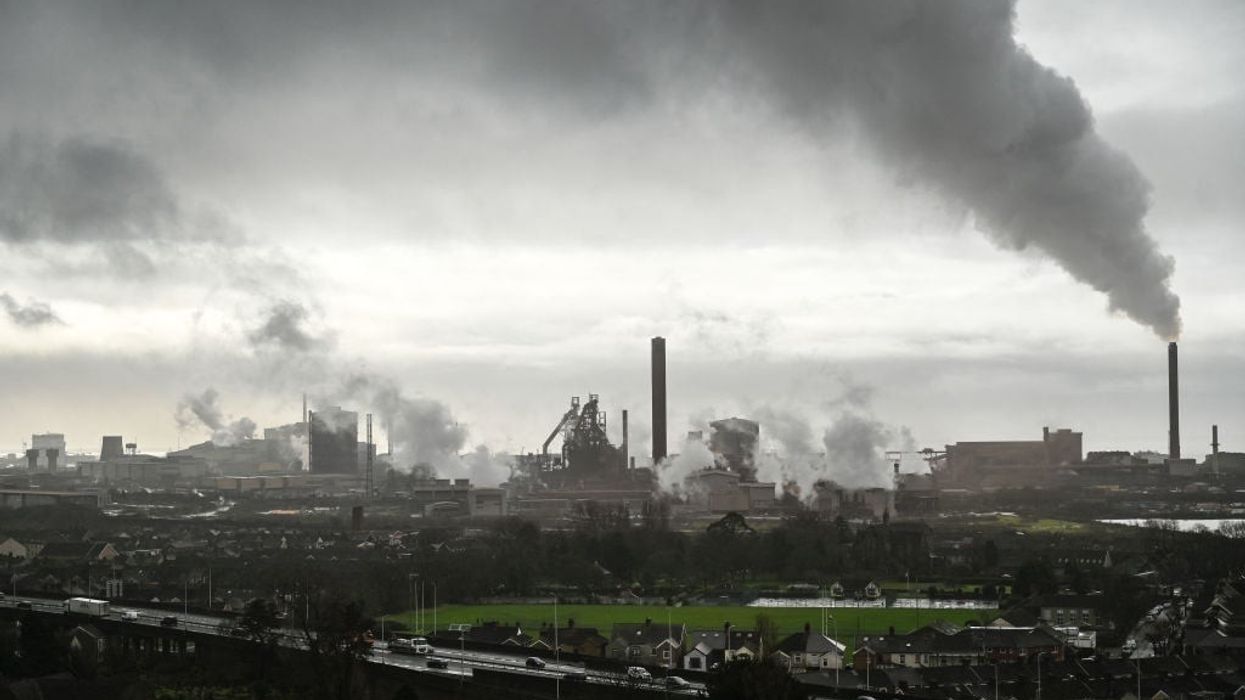

TATA STEEL UK, owned by India-based Tata Group, announced the closure of the coke ovens at its Port Talbot steel plant in south Wales, with operations ceasing this week, marking an earlier shutdown than originally planned.
The company on Monday (18) said that the plant is “significantly deteriorating operational stability”.
The ovens are used to heat coal to create a hard residue called coke, which is then used to fuel blast furnaces at what is Britain’s largest steelworks.
The Indian steel major said “Herculean” efforts had been made to keep the ovens operational but they had worsened to a level that made them “untenable”.
“We regret to announce that we have been forced to make the decision to cease operations at Morfa Coke Ovens from Wednesday (20) as a result of significantly deteriorating operational stability,” said Tata Steel UK CEO Rajesh Nair.
“The performance of the coke ovens has been deteriorating over many months, despite some Herculean efforts by the teams there. The condition of the ovens has now worsened to a level making continued operation untenable. We will now begin the process of safely closing and purging the coke ovens, and ceasing operations at the adjoining by-products plant."
The company chief said that trade unions were kept informed of the need to cease operations and work will be undertaken in the coming weeks to understand the needs of the workforce, which aligns with the company’s ongoing wider consultation programme.
“We have been clear in our current restructuring proposals that many of our heavy-end assets in Port Talbot are at their end-of-life capability. As part of our efforts to stem our current losses, and given the condition of the assets, we propose to close the heavy end iron and steelmaking assets at Port Talbot within this calendar year in a phased manner,” said Nair.
“Tata Steel is investing £1.25 billion investment in electric arc furnace-based capacity which will secure steel making in Port Talbot for the long term — and facilitate a transition to low-CO2 steelmaking. Consultation on these aspects is currently ongoing."
The company is the largest steelmaker in the UK with primary steelmaking at Port Talbot in south Wales supporting manufacturing and distribution operations at sites across Wales, England and Northern Ireland as well as Norway, Sweden, France and Germany.
It employs more than 8,000 people and has an annual crude steel capacity of 5 million tonnes, supplying high-quality steel products to demanding markets, including construction and infrastructure, automotive, packaging and engineering.
Tata Steel UK has a stated ambition to produce net-zero steel by 2045 and to have reduced 30 per cent of its CO2 emissions by 2030.
Last September, the government had confirmed a joint investment package with Tata Steel for the Port Talbot steelworks, including a grant worth up to £500 million.
At the time, it was announced that a new electric furnace is to replace the existing coal-powered blast furnaces, which are nearing the end of their effective life.
An Electric Arc Furnace uses an electric current to melt scrap steel or iron and produce steel, whereas blast furnaces use coke, a carbon-intensive fuel made from coal to produce steel.
(PTI)