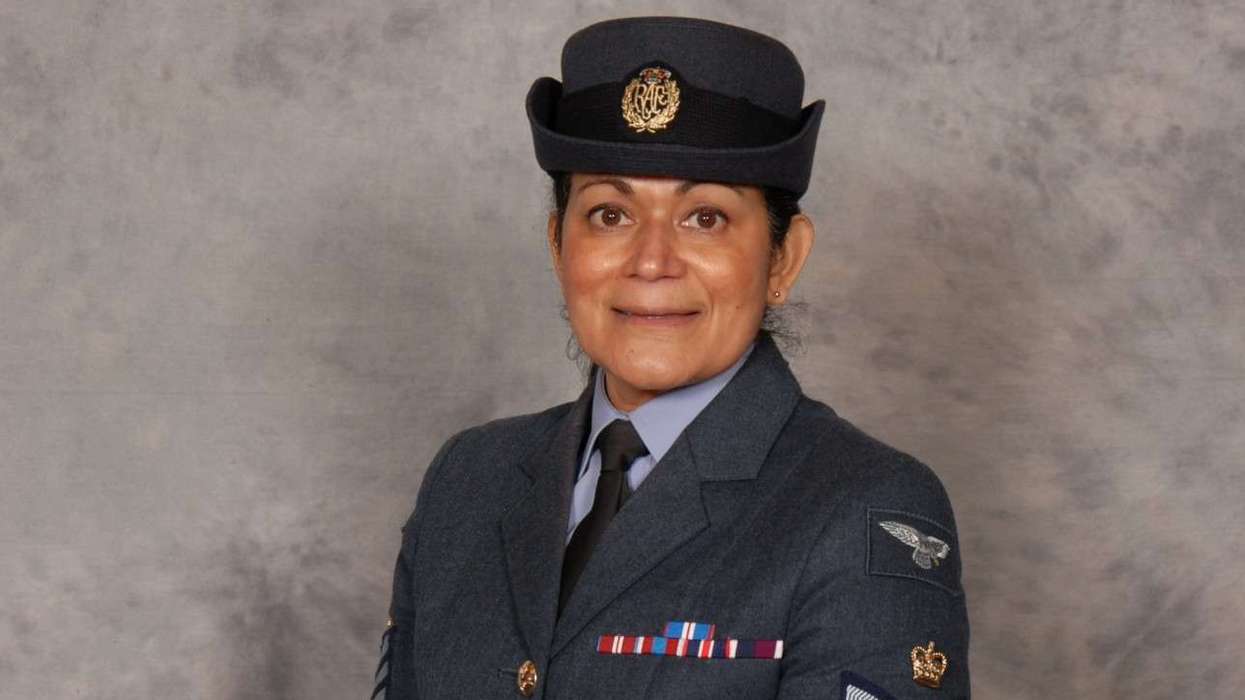

SUNITA AVEN’S eyes light up when she describes her career in the Royal Air Force. She uses words such as “amazing”, “fun” and “I really enjoy it” with genuine excitement. Her enthusiasm is so infectious that one might mistake her for a new recruit just beginning an RAF adventure.
In reality, nearly three decades have passed since a chance encounter in Cardiff in the 1990s sparked the curiosity that led the then 23 year old to join the military. Today, Flight Sergeant Aven still speaks with the same passion, especially when she watches young recruits at their graduation and thinks about the experiences and opportunities ahead of them, even as she approaches the later stages of her own service.
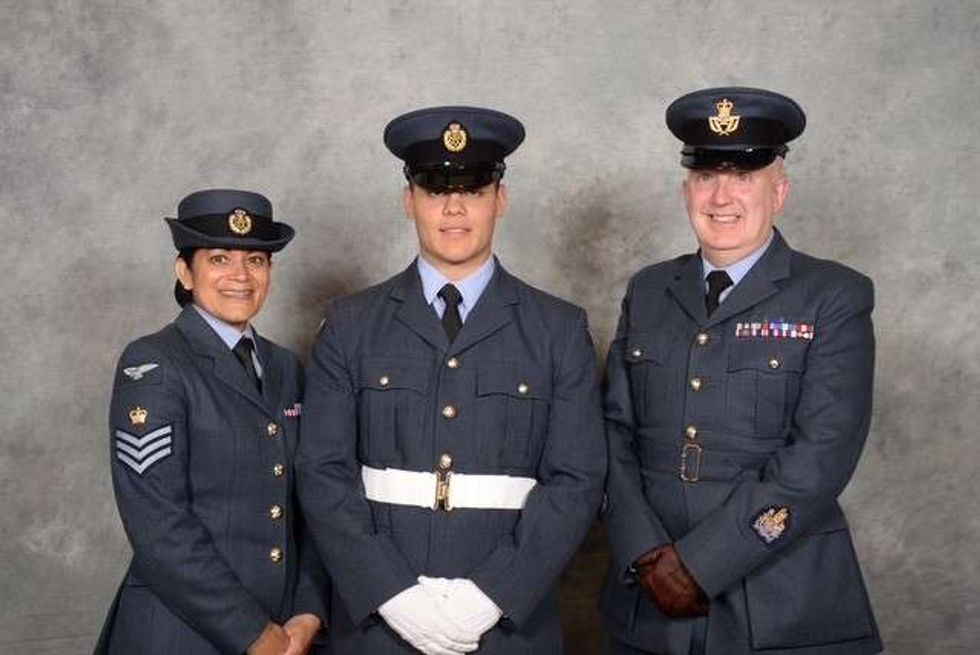 Flight Sergeant Sunita Aven with her husband, Warrant Officer Andrew Gibson, and son, Air Specialist 1 Bradley AvenEastern Eye
Based at RAF Halton in Aylesbury, Aven works in human resources analysing data. Her previous roles focused on welfare, where she supported personnel across the organisation, including a posting as Welfare and Support to Phase 1 recruits. There she helped individuals realise their potential. It is work she finds deeply rewarding.
“You make a huge difference to somebody’s life,” Aven said. “For example, I have had recruits who were struggling with training and wanted to leave. You help them through that process of finding themselves and working on areas where they think they are not good. A lot of people believe they are not confident, and you help build their confidence.
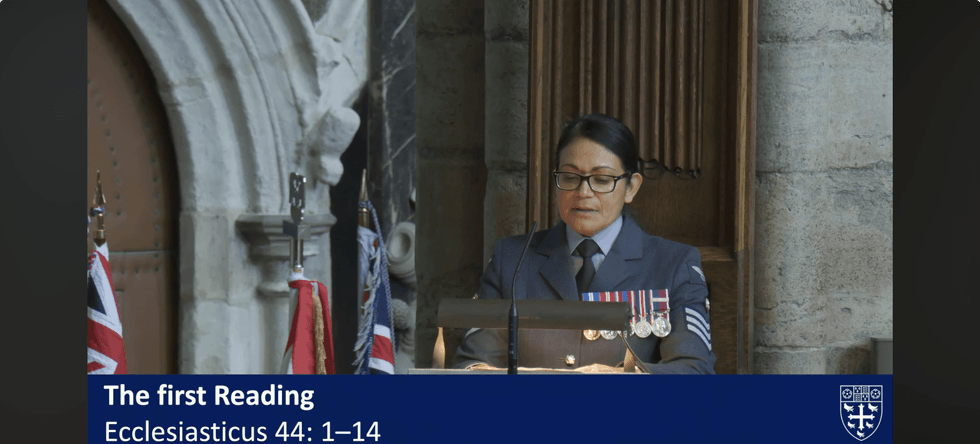 Flight Sergeant Sunita Aven delivering a reading during a Westminster Abbey service marking the 85thanniversary of the Battle of BritainEastern Eye
“You work with different people every single day. When someone reaches the second or third week of training and eventually graduates, you see their genuine excitement and think, ‘yes, you made a difference to that individual’.”
Her passion for the RAF is unmistakable. It is the kind of pride that characterises those who serve. Since joining in her early twenties, she has built her career, met her husband, raised three children and now proudly watches one of them follow in her footsteps.
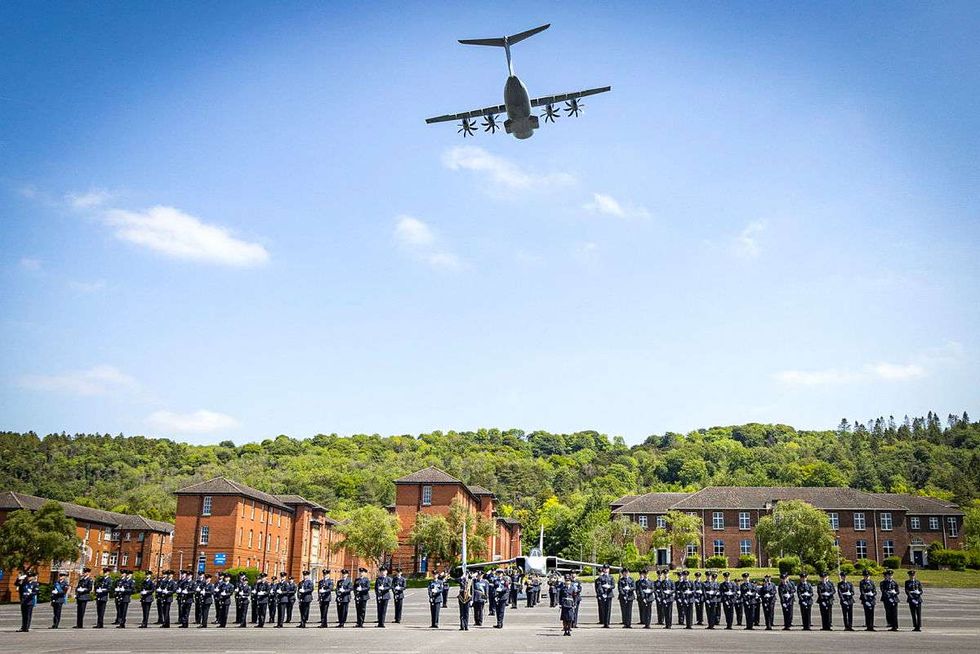 A graduation parade at the Recruit Training Squadron, RAF HaltonEastern Eye
“It’s a great organisation. You look out for each other,” she said. “You meet people from every walk of life. Yes, there is structure but there is also friendship, teamwork and a real sense of belonging. I have made lifelong friends from the lowest rank all the way up to two star air vice-marshals.”
One moment stands out as life changing. Early in her career, Aven collapsed at work. Insisting it was “just a migraine”, she planned to go home until a senior officer ordered her to see a doctor. That insistence saved her life. She had suffered a brain aneurysm that required immediate surgery.
“I feel like I owe my life to the Royal Air Force. We work in a really good family unit,” she told Eastern Eye.
At the time, as a young mother, she feared the consequences for her career. “I had not, obviously, envisaged leaving,” she said, but the RAF stood firmly behind her. “I have had a lot of support. The organisation understands the realities of family life and works hard to provide stability where possible.”
“Our organisation now recognises that parents need support. Because you do move around and it is not always easy to just up sticks and go with children.
“Also, it does take two wages to have the kind of lifestyle we have become accustomed to, or would like. It is not easy, if you are married to somebody in the civilian sector, to just up sticks and move.
“The military as a whole, and I speak for the Army, Navy and the Air Force, has recognised that. They try to give you as much stability as possible. You can stay in post for up to three to five years and request to stay longer, but it has to remain fair.”
Aven grew up in Cardiff as the youngest of six children. Her parents arrived in the UK from Kerala, south India. Her mother arrived as a toddler, while her father studied medicine in India before moving to the UK to qualify as an orthopaedic surgeon. As a child, Aven dreamed of becoming an actress, though she knew her parents might not approve. “I did not want to be a doctor or a solicitor,” she said.
When the RAF opportunity emerged, her father was initially apprehensive. But watching his daughter at her graduation changed his perspective. “I love being aro-und people,” she said. “During training, I thou-ght I would stay three or four ye-ars, but here I am since 1996.”
Her career has brought unique experiences, including reverse mentoring the RAF’s Chaplain in Chief, offering insight into life on the ground and “what people are feeling on the ground”. That relationship later led to an invitation to deliver a reading at Westminster Abbey for the Battle of Britain service, an experience Aven described as “extremely fortunate to have been offered” and “amazing, really brilliant”.
Aven credits many role models along the way, including her husband and senior colleague Air Vice- Marshal Paul Atherton, now retired, particularly in leadership and team dynamics. Early in her career, she recalled telling a group at a social function that she worked for the then Wing Commander Atherton.
“He stopped his conversation and said, ‘Sunny, you do not work for me. We work as a team. You work with me, not for me. I just get paid more to make bigger decisions.’” She carries that lesson with her to this day.
For young girls considering a career in the military, Aven offers encouragement. “Speak to the careers office. The people there will be open, honest and transparent with you. If not, seek me out. My door is always open if you have questions or concerns.”
She emphasised the importance of fitness and mental resilience, recalling her own preparation in the 1990s when friends helped her get fit for basic training.
She still smiles when describing basic and initial force protection training, where recruits learn to march, iron, carry out rifle and gas mask drills, and develop leadership and teamwork.
“The best way I can describe it is that you play war games for a few weeks and learn to use the strengths of your team. I absolutely loved it. It was so different to anything I had ever done or experienced.”
Looking back over almost three decades, Aven says her time has passed quickly. “It has gone in a blip,” she said. With four years left, she is unsure what comes next but is confident the RAF has equipped her with what she needs to succeed.
“I know I need to be around people. I am definitely a people’s person.
“I like wearing the uniform. I like being part of something special. I do not know what is out there for me, but whatever it is, I will succeed because I have had such a great foundation in the Air Force. I have the confidence, the skills, the determination and the pride to be successful.”