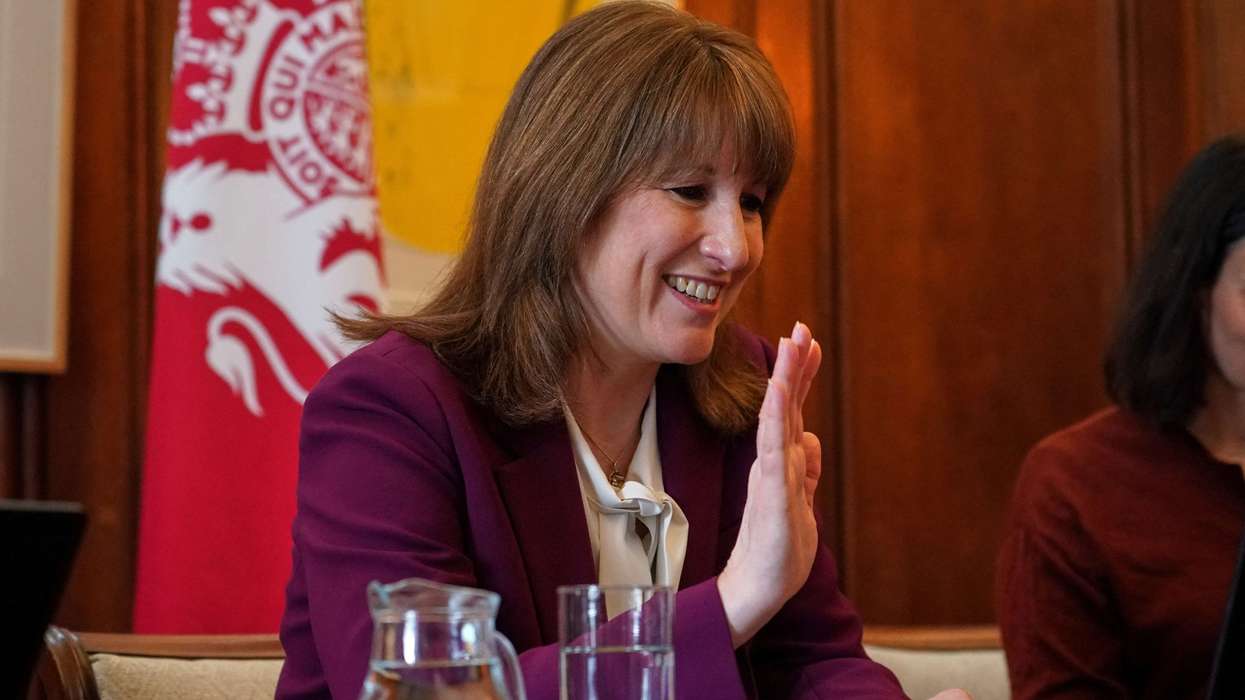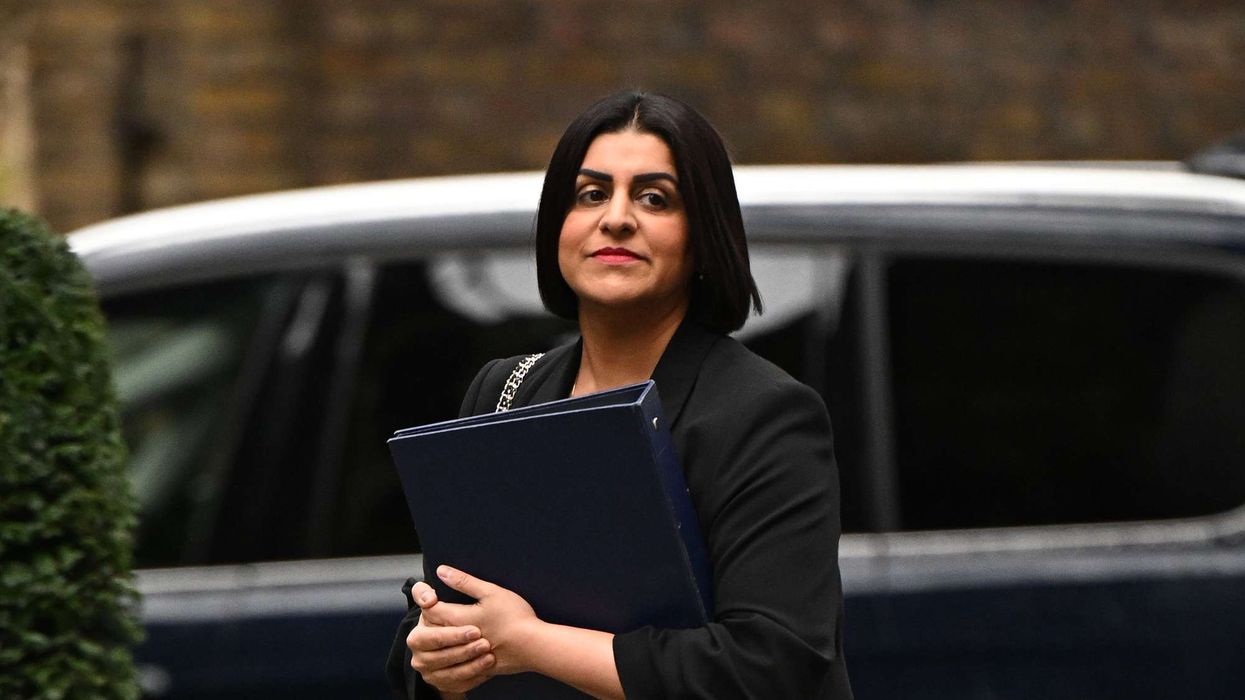

"There are a hundred landmines every day," said Shabana Mahmood contemplating her first hundred days as home secretary.
The fact that her interlocutor was none other than Tony Blair set tongues wagging in Westminster. This public conversation with a former prime minister came amid febrile Westminster speculation on whether Sir Keir Starmer’s tenure in Downing Street may be cut short next year.
"Why are you all laughing?” the home secretary asked as a grimacing Blair asked her about the state of the Labour Party. But she stuck to setting out the case for her tornado-like approach at the Home Office.
"There is something very clarifying about a crisis" she said, characterising the challenge from each policy - from asylum to police reform - as “go big or go home” moments.
Mahmood’s confidence shone through this encounter, assisted by softball questions from a political ally. Asked about abuse on social media, her assertion that "no racist in this land is going to tell me I don't belong in this country”, was warmly applauded.
She sees her asylum reforms as informed by seeing “the sharp end of race relations in this country”, too. "When you don't have rules, you get prejudices," Blair concurred.
Yet this is half-right and half-wrong.
A centre-left government does need to demonstrate control to unlock compassion for refugee protection, and secure confidence in the broader contribution of well-managed immigration.
But Mahmood and Blair risk a dangerous conflation if what are rightly identified as ‘legitimate concerns’ about control in the Channel, pressures and pace of immigration are also posited as the key drivers of illegitimate prejudices - even racial slurs.
No real-world policy approach to immigration or asylum policy could ever satiate the most toxic two per cent or two per cent of the public who object in principle to Asian and black MPs in our parliament, or who fantasise about “remigration” even now, making Britain’s settled ethnic diversity a reversible post-1948 experiment.
This government should not mistake its immigration reforms for its missing policy strategies on hate crime and community cohesion.
Labour will seek to secure a third of the vote again to stay in office. The political challenge is to hold Labour voters tempted by Reform on its right without repelling those looking to left alternatives like the Greens, or nationalist parties in Scotland and Wales.
Labour can win a few converts from the sixth of the electorate who already backed Nigel Farage in 2024, so must rally the anti-Farage vote.
Mahmood told Blair the government’s goal is to “unlock fairness, tolerance and generosity”, a muted theme of its public argument to date.
To verify that, its low-profile pledge to provide legal routes for refugees through a new community sponsorship programme should take substantive form.
Mahmood is the most senior British Asian minister any Labour government has had: the first to hold a great office of state. Yet, the last Conservative government made ethnic diversity a new norm across every top job. Having a Hindu prime minister did not stop Trevor Phillips asking Mahmood last weekend whether Britain would be ready for a Muslim prime minister. His question reflects the evidence that anti-Muslim hostility is more widespread than that against other minorities.
Successive governments have not put in place the foundations of a strategy to tackle it. The government tasked a working group, chaired by former Conservative minister Dominic Grieve, to navigate the choppy waters of providing a working definition.
“Islamophobia” and “anti-Muslim hatred” have been terms often used interchangeably over the past quarter of a century. Yet the term “Islamophobia” blurs the key boundary, so the recommendation to move away from this makes sense. The policy aim should not be to protect a faith from critique. It should protect its followers - Muslims - from unfair hostility or prejudice against them because they are Muslim.
A “non-statutory” definition will not change the legal boundaries. Violence, abuse and harassment are against the law: those crimes can be aggravated by racial or religious hostility. But few people realise that much prejudice is lawful speech.
For example, “never vote for a Jew or Muslim - they can never be loyal citizens of our country” is lawful, yet prejudiced speech. That is not a matter for the police or courts. But civic institutions - such as mainstream parties, from LibDems to Reform, should choose to exclude those who express such sweeping prejudices.
The government chose not to comment on a leaked draft definition published by the BBC. So it may be early next year before the final definition of anti-Muslim hostility is published. What may be as important as the definition itself is to secure public understanding of its point and purpose - to get the boundaries right that can protect democratic legitimate debate of the toughest issues while excluding hostility and toxic prejudices.

The author is the director of thinktank British Future and the author of the book How to Be a Patriot: The must-read book on British national identity and immigration.