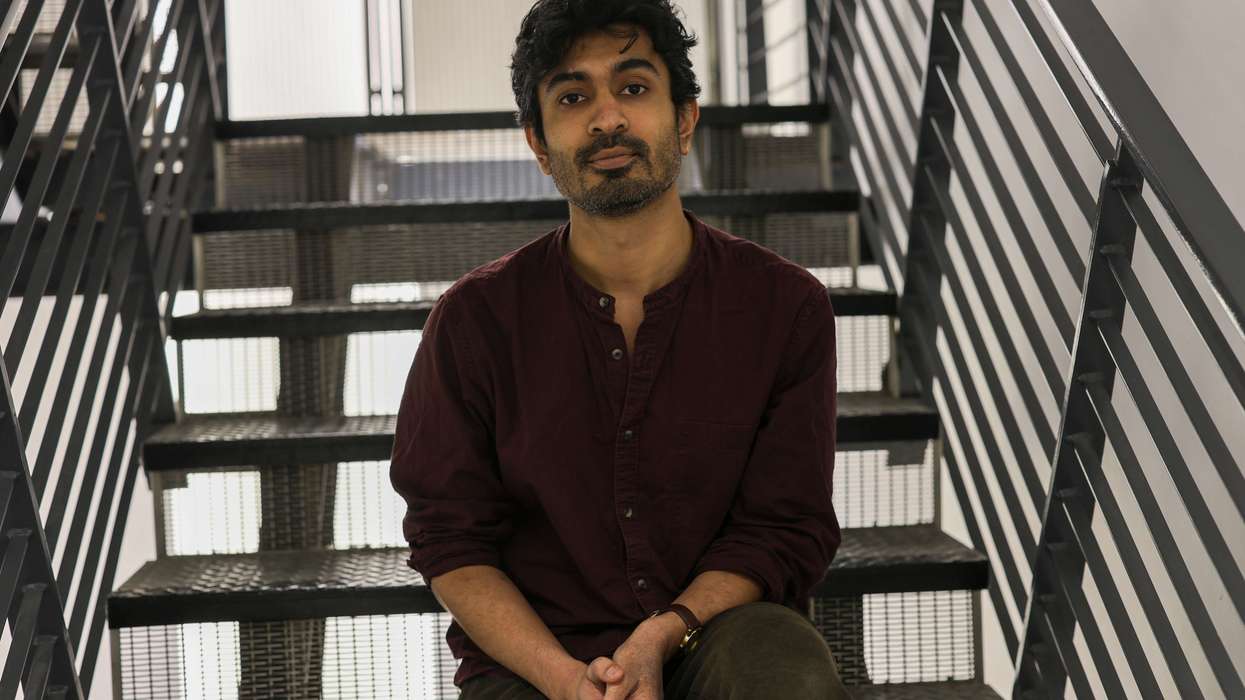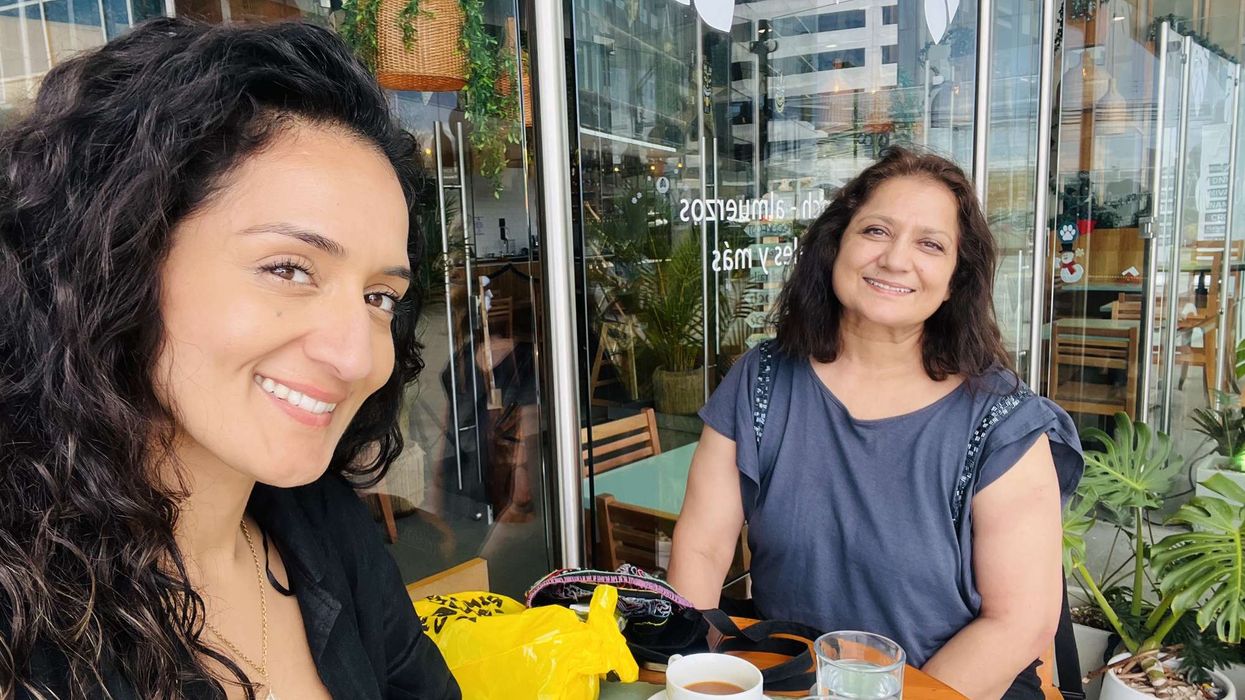

A FILMMAKER who documented her mother’s experience of grief following the loss of her young son to cancer has spoken about how Asian families see addiction as a “moral issue” rather than an illness that can be treated.
Maleena Pone, 40, from Southampton, started filming her conversations with her mum, Jas, who turned to alcohol after the death of her brother, when he was just 12.
The resulting documentary, Saving Mum, to be shown on Channel 4 on Wednesday (December 10), at 11.10 pm, depicts the toll of grief on the family, with Jas becoming addicted to alcohol, and her daughter trying to help her get the support she needed.
In an interview with Eastern Eye prior to the broadcast of the short film, Maleena said, “The reality is, for most women and most people from south Asian communities, it is a bit of a quiet crisis; we don’t really have the language for it.
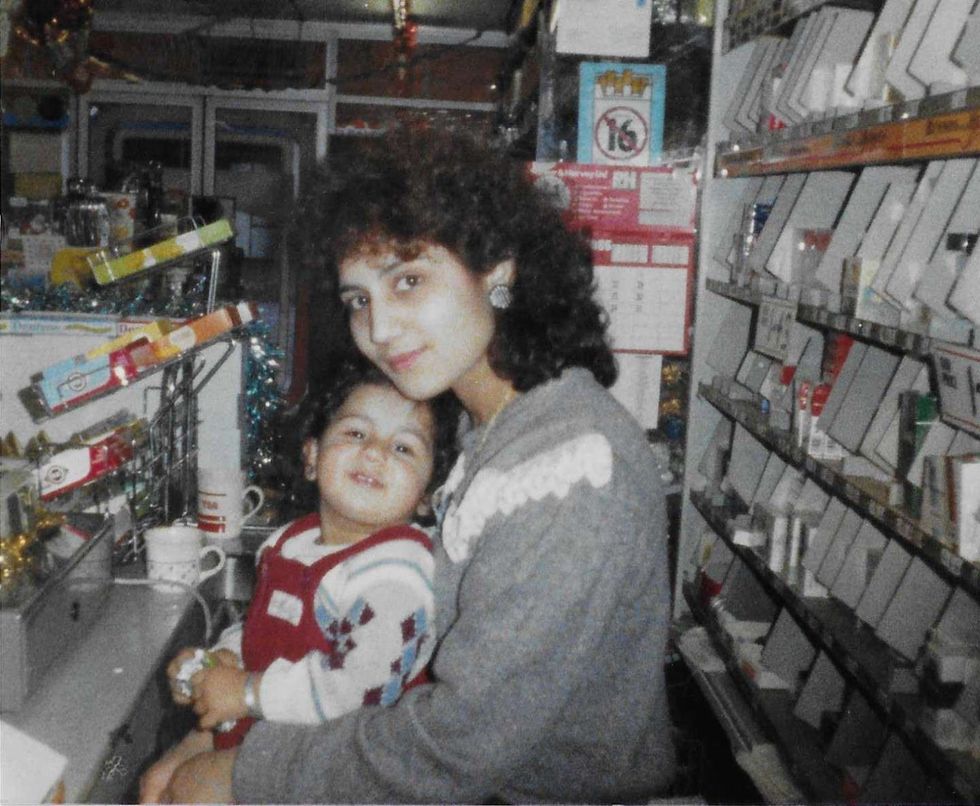 An old photograph of Jas with a young Maleena.
“We don’t really want to admit that anything is wrong, because it is so much about keeping up appearances; the shame of speaking about something… we see it kind of more as a moral issue versus an illness.”
Saving Mum is a candid look at how the pair try a holistic approach in south America, with Ayahuasca, a traditional Amazonian plant medicine. It helps Jas, briefly, before she relapses into her old patterns of alcohol dependency.
Maleena said her own reaction to her young brother’s death was more physical, with symptoms such as chronic fatigue. Initially, filming their conversations was a “bit of a creative catharsis process”, before it became a “vehicle” for the pair to have those difficult conversations.
“Mum kept relying on alcohol every time she felt low or depressed,” Maleena said, adding, “she wasn’t processing her grief. She still didn’t fully understand why she felt so guilty for losing my brother.”
A year after Maleena and Jas tried the Ayahuasca approach, Maleena stopped filming, in the hope that her mum would come around to confronting her illness.
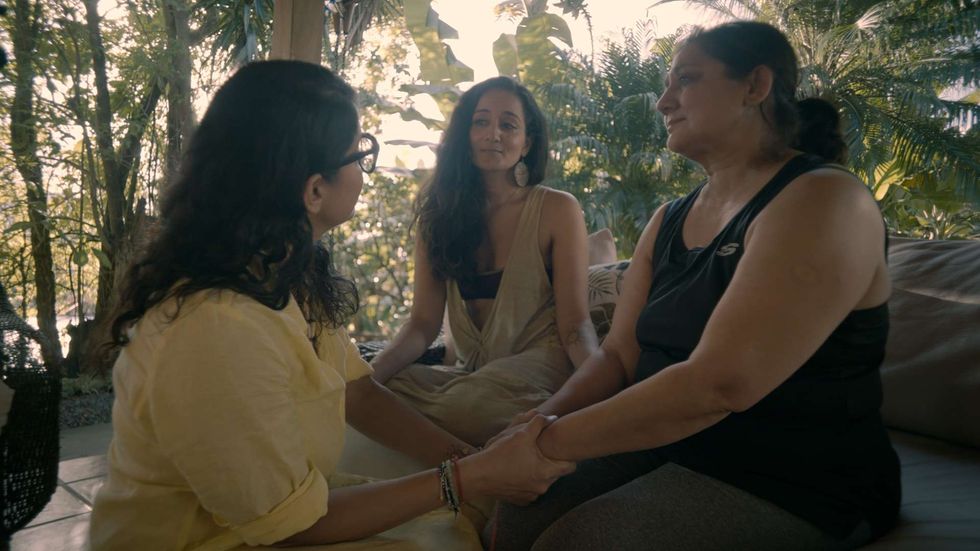 Both in south America during the ayahuasca treatment.
Today, mum and daughter are taking it one day at a time, Maleena said, getting stronger and looking at “how we can heal and recover”.
“Mum has benefited a lot from having the opportunity to watch the film, witness her journey, she has really started to come into that feeling of empowerment instead of disempowerment, and she’s taking steps to get more support, which was the point,” said Maleena.
“The film is only a small part of a journey and a long, one chapter of a very long journey. For most people struggling with an issue like alcoholism, it is about valuing their right to live,” she added.
Saving Mum shows how Jas’s grief is compounded by the sudden death of her husband a few years after her son died. But Maleena explained how addiction can show up as avoidance, which meant she became a parent to Jas. In one of the many moving moments in the film, mum and daughter have a heart-to-heart, acknowledging the role reversal and years lost to grief and addiction.
Maleena said, “There is this maternal myth, or this myth of the mother in our culture, as well. “We don’t complain, we prioritise everybody else, but not our self care. We don’t speak out when we need help.
“Especially for women, who have issues with drugs or alcohol or other addictions, the idea to admit that you have a problem and it’s out of control, it’s so much more scary. Because you worry your kids going to be taken away from you, and about what society is going to think.”
She added, “Let’s be honest, there’s a very normalised narrative for men to drink and to even be abusive at times, and we’ve kind of normalised that.
“For me, I just felt like it was the biggest responsibility I have as the eldest daughter and as her child to find a way to do the best for us and as a parentified child, which is what happens when you grow up way faster than you should.”
Although Jas saw a GP and was provided help, including being prescribed anti-depressants, attending therapy and counselling sessions, Maleena said they did not help her.
“Mum didn’t even recognise she was an alcoholic for a very long time… because we have this perception of what addiction looks like, or what drinking irresponsibly or harm-based reaction is like.
“My mom’s addiction has worn so many masks.”
The filmmaker added, “The very traditional, westernised modalities, just didn’t work for mum, because she couldn’t sit with herself long enough in those processes, or she didn’t feel comfortable with that environment.” Maleena is keen to point out that recovery is not linear, neither is Saving Mum “a neat success story.”
She said, “There is no perfect way to do any of this. You may not even find this is the way for you.”
However, she said “We need more spaces where we can all process grief without rushing its resolution. We need to come back to our rituals, to our stories.
“We need to come back to a community that has less judgment about why people are in pain and what their medicine should be.”
Maleena noted the rise in the number of Asian women in treatment for alcohol dependency over the past decade, and asked, “How long do you think you can sit with that weight before it collapses on top of you?”
Her advice to those suffering in silence is to “do what you can to start to accept and love the parts of yourself that you think are dark, or you think is unlovable, or you think no one would ever want to hear, because that’s once you start to embrace that part of you. Then you find it easier to tell other people about what’s been going on.
“Honesty is a really powerful medicine, and the film shows that people can change, families can shift, even the heavier stories can be rewritten.”
Saving Mum: Our Family Secret airs Wednesday, December 10, at 11.10pm on Channel 4