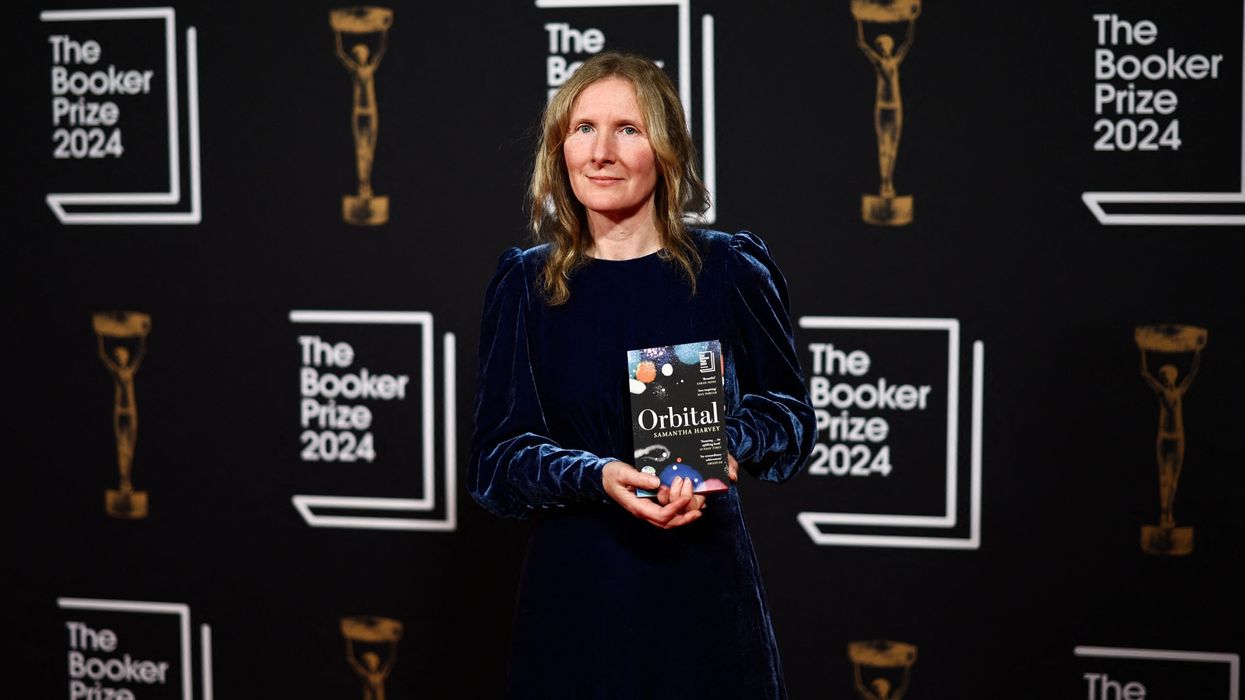

BRITISH author Samantha Harvey has won the prestigious 2024 Booker Prize for her novel Orbital, which follows six astronauts as they observe Earth from the International Space Station.
Spanning a single day, the novel explores the perspectives of astronauts from Japan, Russia, the United States, Britain, and Italy, touching on themes of mourning, desire, and environmental issues.
Harvey’s Orbital, just 136 pages long, is the second-shortest novel ever to win the Booker and the first to be set in space, according to the Booker Prize Foundation. With its £50,000 cash prize, the Booker has spotlighted numerous writers since it began in 1969, launching literary careers and sparking debate over its choices. Past winners have included literary figures such as Margaret Atwood, Ian McEwan, Julian Barnes, and Kazuo Ishiguro.
“I was not expecting that,” Harvey said in response to her win. This award marks the first time a woman has won the Booker since Atwood shared it with Bernardine Evaristo in 2019. In her acceptance speech, Harvey dedicated the prize to “everybody who does speak for and not against the Earth; for and not against the dignity of other humans, other life; and all the humans who speak for and call for and work for peace.”
Edmund de Waal, chair of the judges, praised Orbital as “a book about a wounded world” with “everyone and no one” as the central subject. “With her language of lyricism and acuity, Harvey makes our world strange and new for us,” he said.
Harvey has described Orbital as a “space pastoral” in interviews, sharing her intent to write about human life in low Earth orbit in a realistic manner, rather than as science fiction. “I wanted to write about our human occupation of low Earth orbit for the last quarter of a century—not as sci-fi but as realism,” she said. “Could I evoke the beauty of that vantage point with the care of a nature writer? Could I write about amazement? Could I pull off a sort of space pastoral? These were the challenges I set myself.”
This year’s Booker Prize shortlist was historic, with five women among the six finalists. Other authors in contention included Rachel Kushner with Creation Lake, Anne Michaels with Held, Yael van der Wouden with The Safekeep, and Charlotte Wood with Stone Yard Devotional. The list was rounded out by Percival Everett’s novel James, with Everett and Kushner considered the frontrunners for the prize.
The Booker Prize, known for bringing attention to emerging literary talent, is open to works of fiction by writers of any nationality, as long as they are written in English and published in the UK or Ireland between 1 October 2023 and 30 September 2024.
(With inputs from AFP)