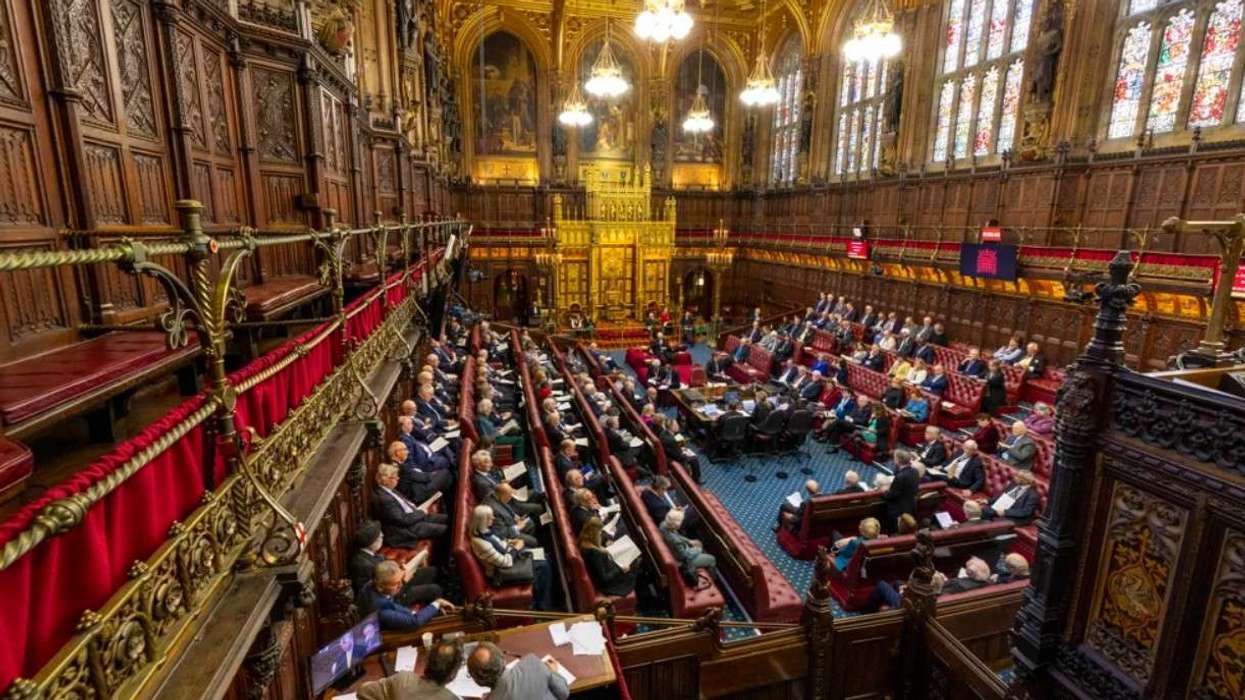

HEREDITARY peers in the UK will no longer be able to sit and vote in the House of Lords after parliament approved a bill on Tuesday to remove them.
The government said the House of Lords and Lesotho's Senate are the only legislative bodies in the world that still have a hereditary element.
Once the bill comes into effect at the end of the current session of parliament later this year, the 92 hereditary peers who can still vote in the Lords will lose their membership of the upper house. The group includes dukes, viscounts and earls. They can only return if they are appointed as life peers.
The government said the measure is "one of the biggest reforms to parliament in a generation" and that it completes reform of the Lords that began under Tony Blair's Labour government in the late 1990s.
"The Lords plays a vital role within our bicameral parliament, but nobody should sit in the House by virtue of an inherited title," said leader of the House of Lords, Baroness Smith.
"Getting this bill through is a major first step towards reform of the Lords, with further changes to follow - including on members' retirement and participation requirements."
The government said removing the "archaic and undemocratic" hereditary peerages fulfils a key manifesto pledge.
"Our parliament should always be a place where talents are recognised and merit counts," said Cabinet Office minister Nick Thomas-Symonds. "It should never be a gallery of old boys’ networks, nor a place where titles, many of which were handed out centuries ago, hold power over the will of the people."
The Lord Speaker thanked the hereditary peers for their service.
"Whatever views people may have of this constitutional change, it is sad to say goodbye to friends, who in many cases have contributed significantly to debate and scrutiny and to our institutional memory," Lord Speaker, Lord Forsyth of Drumlean, said in a statement.
The House of Lords has around 800 members, most of whom are appointed for life.
They include former MPs, who are usually appointed by departing prime ministers, people nominated after serving in public or private sector roles, and senior Church of England clerics including the Archbishop of Canterbury.
The chamber’s main role is to scrutinise the government.
It cannot override legislation passed by the elected House of Commons, but it can amend and delay bills and initiate draft laws.
Blair's government had planned to remove all hereditary members who held seats in the chamber at the time.
It removed about 600 members, but 92 remained as part of what was intended to be a temporary compromise.
(With inputs from agencies)