
Highlights
- Short film Elijah traces the emotional toll of migration on a Bangladeshi family in the US
- A child’s evolving identity exposes generational and cultural fault lines within an immigrant household
- The film links personal conflict to wider despair among displaced communities
Razid Season’s short film Elijah opens on an unassuming domestic moment: a family seated around a dining table. The parents eat with their hands, while their daughter uses a spoon. The contrast, subtle but deliberate, signals the generational gap that underpins the film. This divide soon sharpens when the child resists her mother’s insistence on traditional clothing and asks to be called Elijah.
Further tension emerges when the father dismisses same-sex relationships while watching a television news segment, unaware that his own child is already questioning both gender and identity. Season avoids direct explanation, allowing everyday interactions to reveal the growing distance between parents and child.
The film charts Elijah’s transformation through restrained imagery. A pencil sketch with long hair is erased; the next scene reveals a short haircut. The mother reacts with fear but chooses silence, avoiding confrontation with her husband. This unspoken response highlights a recurring theme: the compromises immigrant families make to maintain stability, even as internal conflicts deepen.
Season’s approach relies on visual cues rather than dialogue, trusting the audience to read meaning in gesture, framing and absence.
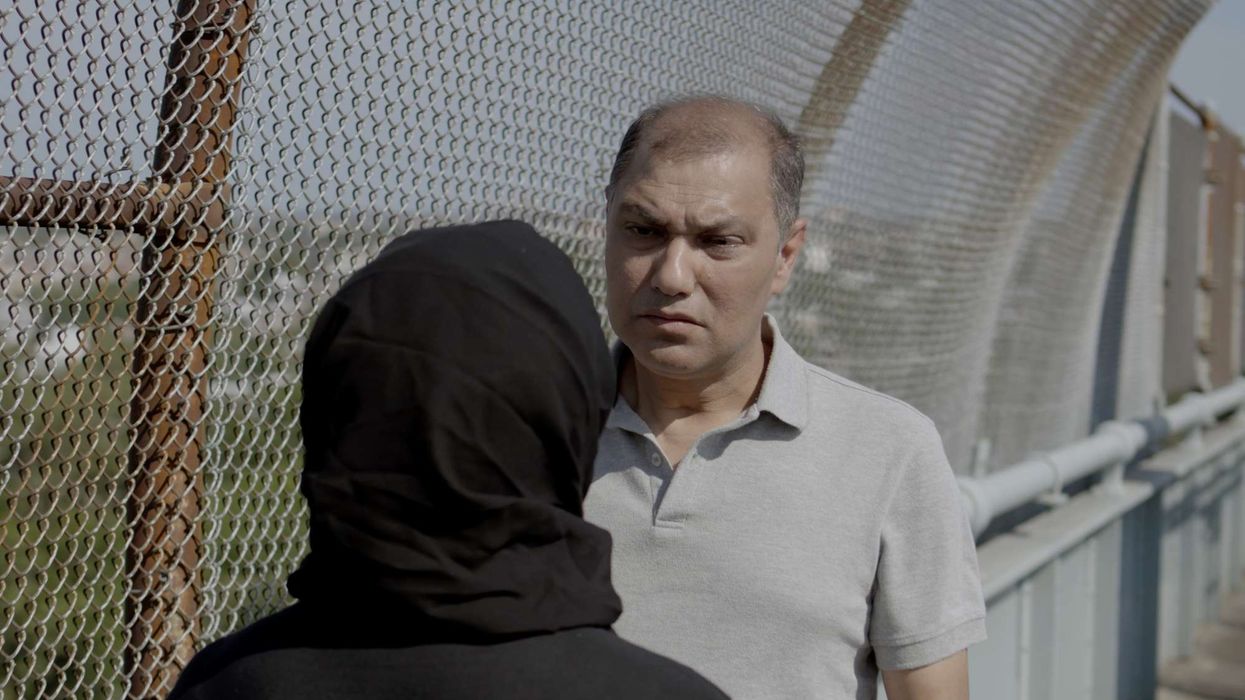
 One of Elijah’s strengths lies in its visual disciplineImage Maker Films
Running alongside Elijah’s story is the life of Mozammel, a fellow taxi driver and friend of the father. Trapped in exhausting work and unmet expectations, Mozammel succumbs to despair and takes his own life. His fate is echoed elsewhere in the film, where a similar clash between conservative values and a gay son ends in tragedy.
These parallel narratives broaden the film’s scope, placing Elijah’s personal struggle within a wider immigrant experience shaped by isolation, moral conflict and broken promise.
Haider, Elijah’s father, defines success through education and marriage, ideals rooted in tradition. Those beliefs begin to fracture as he confronts his child’s identity. When he realises that Elijah may be contemplating suicide, his intervention prevents immediate tragedy, but offers no certainty about the future.
In the film’s closing moments, Haider introduces his child at a wedding simply as “my son, Elijah”. The gesture is understated yet powerful, suggesting reluctant acceptance rather than resolution.
One of Elijah’s strengths lies in its visual discipline. The cinematography uses light and space with precision, and the pacing remains controlled throughout. Dialogue is sparse, allowing emotion to surface through expression and movement.
The performances, seemingly from non-professional actors, feel natural and grounded, particularly within the central family. A minor inconsistency in dialect between the parents is noticeable but does little to disrupt the film’s emotional coherence.
A character describes Haider as a victim of the American Dream, but the film extends that idea to an entire generation of migrants who find themselves caught between two worlds. They are neither fully American nor fully Bangladeshi. When Elijah’s mother tells her child to live freely only after the parents are gone, the line underscores the weight of generational constraint.
Elijah presents immigration not as a purely economic journey, but as an ongoing crisis of identity and belonging. With restraint and clarity, Razid Season captures the emotional cost of displacement and the uneasy compromises it demands.
(The author is a former programmer at Bangladesh Television, an alumnus of FTII-Pune alumnus and a 2025 SAARC Literature Award recipient)