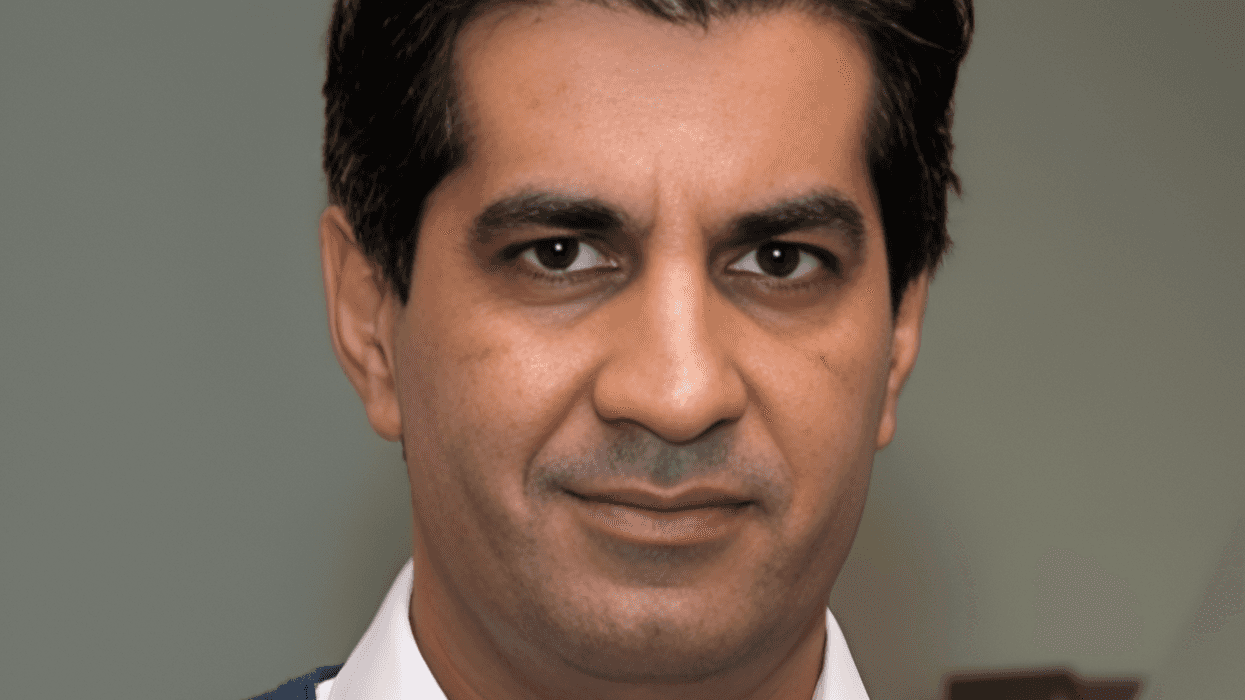

VERY few industrialists have shaped the mechanics of what Britain eats as profoundly as Ranjit Singh Boparan.
The 59-year-old businessman influences what lands on the nation’s plates not through branding or celebrity, but through infrastructure. As founder of 2 Sisters Food Group, he built an industrial engine that processes roughly a third of the chicken consumed in the UK – about 6 million birds a week.
His company touches the daily diet of most British households, supplying supermarkets and restaurant chains, but its owner rarely steps into the spotlight. In an era of performative entrepreneurship, Boparan is an anomaly by design.
The past year has reinforced a shift in his business philosophy. The era that defined him – rapid acquisitions, bold expansion and debt-fuelled scale – has given way to something more measured: resilience.
Food manufacturing is among the most exposed sectors in the UK economy. Energy volatility, labour shortages, regulatory pressures, climate obligations and relentless retailer price sensitivity create a narrow margin for error. For a vertically integrated operator like 2 Sisters, the balance between efficiency and risk is constant.
Yet over the past year, Boparan’s core business has staged a decisive recovery.
In April 2025, Boparan Holdings, the parent company of 2 Sisters Food Group, reported a £35.5 million pre-tax profit for the year ending 27 July 2024 – a £63.5m swing from a £28m loss the previous year. The turnaround was driven by operational improvements across poultry, meals and bakery divisions, alongside automation investment and difficult decisions, including the closure of the underperforming Llangefni factory in Wales.
The most strategically significant move came in June last year, when Boparan completed the full acquisition of Hook2Sisters, the farming joint venture previously shared with PD Hook. The deal brought more than 170 farms under his sole ownership.
It completed a long-held ambition: full vertical integration.
Boparan now controls the supply chain from farm to factory. He owns the land where the birds are raised, the feed they consume, and the facilities where they are processed. That level of control provides leverage over cost, quality and animal welfare – and insulation from external shocks. It also consolidates his influence over one of Britain’s most essential food supply chains.
If the Hook2Sisters deal strengthened the foundation, another move reshaped the financial structure.
In September 2024, Boparan sold 2 Sisters’ European poultry operations – trading as Storteboom – to his private investment vehicle, Boparan Private Office. Though an internal restructuring, the impact was tangible. It injected approximately £170m into Boparan Holdings, sharply reduced debt, and allowed the UK and European businesses to pursue separate strategies.
It was a characteristic manoeuvre: quiet, technical, but consequential.
At the same time, his private office has acted as a stabilising force elsewhere in Britain’s food ecosystem. In October, Boparan backed a rescue of the 138-year-old Roberts Bakery, securing around 400 jobs and preserving a historic family business that might otherwise have disappeared.
Such interventions reveal an evolution. Where Boparan once built scale relentlessly, he now appears more focused on consolidation, control and longevity.
It is an extraordinary distance from where he began.
Born in Bilston, in the West Midlands, to Punjabi immigrant parents, Boparan left school at 16 and took a job in a local butcher’s shop. It was there, handling carcasses and learning the rhythms of supply and demand, that he first understood the mechanics of the meat trade.
In 1993, with a small bank loan, he founded 2 Sisters Food Group in West Bromwich as a frozen poultry cutting operation. Its early turnover was £6m. His wife, Baljinder, co-founded the business and, with him, remains its only shareholder.
Growth came quickly, but not easily. He acquired additional sites at Scunthorpe and Flixton, expanding into primary production. The purchase of Devon Poultry followed, then the acquisition of Dutch processor Storteboom, marking his first major European expansion.
Throughout, Boparan remained rooted in the West Midlands, running an increasingly international operation from the region where he started.
The deal that transformed his standing came in January 2011, when Northern Foods, a publicly listed manufacturer, delisted from the London Stock Exchange and was absorbed into Boparan Holdings. Alongside the acquisition of Brookes Avana that same year, it turned 2 Sisters into one of Britain’s largest food manufacturers, with operations spanning poultry, ready meals and bakery.
His ambitions extended beyond factories. Through Boparan Private Office, he assembled a portfolio of food and restaurant brands, including Harry Ramsden’s, acquired in 2010; Giraffe Restaurants, bought from Tesco in 2016; the Cinnamon Collection; and turkey producer Bernard Matthews, purchased for £87.5 million in 2016. Slim Chickens franchises followed, extending his reach into consumer dining.
Recognition came in different forms. In 2015, Nottingham Trent University awarded him an honorary doctorate for his contribution to food manufacturing, workforce development and philanthropy.
Yet his story has not been without strain. His business has faced intense scrutiny over the years, including media criticism of hygiene standards at certain facilities. He has navigated financial losses, restructuring and reputational pressure – and emerged with ownership intact.
Even personally, he has shown an unexpected willingness to endure hardship. Last year, in a move that surprised many who know him as intensely private, Boparan ran the London Marathon, raising £140,000 for charity.
When he does speak publicly, he is direct. He has criticised government policy for favouring private equity over family-owned manufacturers, warning that tax and regulatory burdens risk undermining domestic food production. He has also highlighted planning delays and investment constraints affecting the sector.
His argument reflects his own position. Unlike private equity investors, Boparan’s wealth, reputation and identity are bound entirely to his business.
More than three decades after founding 2 Sisters, the enterprise he built from a butcher’s apprenticeship and a bank loan now generates over £3 billion in turnover and employs more than 13,000 people. Alongside it, his private office controls an extensive portfolio spanning poultry, bakery, biscuits and restaurants.
But scale alone does not explain his power.
Boparan’s influence lies in his control of the invisible systems that sustain everyday life. He operates behind the supermarket shelves, inside supply chains consumers rarely consider, making decisions that determine price, supply and survival.
He has never sought to become a public figure. Instead, he became something more enduring: an industrialist whose reach is felt daily, even if his name is not.
They call him the “Chicken King”.
He has always let the work speak.
For now, the work is speaking clearly again.