
- Global private jet flights are up 35 per cent on pre-pandemic levels.
- Asia-Pacific aviation traffic is growing faster than the global average.
- Environmental concerns continue to shadow the sector’s expansion.
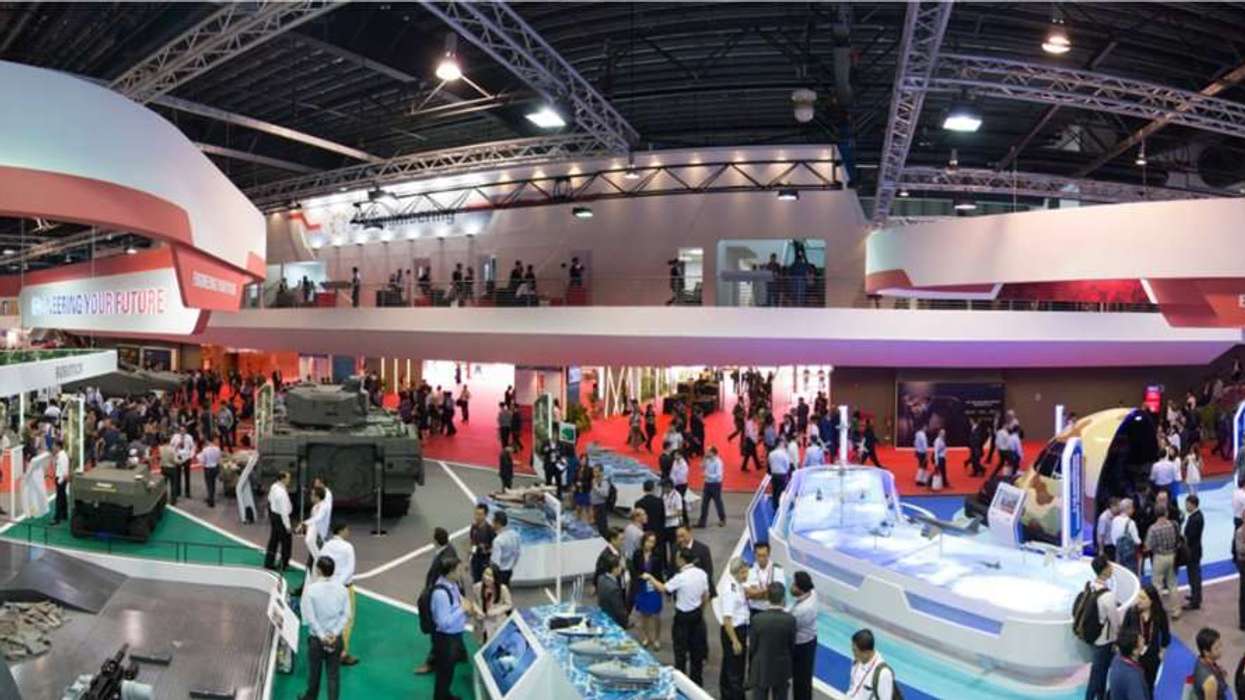
Singapore’s main runway is crowded with fighter jets and wide-body airliners, but some of the longest queues are forming around a private aircraft.
At the Singapore Airshow, Gulfstream’s G700 has become one of the most talked-about displays. Parked away from the larger commercial planes, the jet has drawn steady lines of visitors hoping to step inside. Sales discussions are still under way on board, with potential buyers considering aircraft priced at tens of millions of dollars – often above £22 million depending on the final specification.
Inside, the cabin is arranged more like a compact apartment than a plane. There are lounge-style seats, polished wood finishes and what staff describe as separate “living areas”, including a rear suite with a shower. The pitch, however, is less about indulgence and more about time.
Wealth growth fuels market shift
Private jet activity has climbed sharply since the pandemic. In 2025, global business jet flights reached around 3.7 million, up 5 per cent from 2024 and roughly 35 per cent higher than before Covid-19, according to aviation intelligence firm WingX. Over the same period, the number of ultra-high-net-worth individuals – those worth more than £22.2 million ($30 million) – has risen by more than 70 per cent.
Scott Neal, Gulfstream’s head of worldwide sales, reportedly said companies operating globally see business aircraft as the most efficient way to connect far-flung offices. “More companies are doing business globally, and they need to travel to more places around the globe,” he said, as quoted in a news report.
Gulfstream is competing with rivals including Dassault, Bombardier, Embraer and Textron Aviation, the maker of Cessna jets. France’s Dassault argues that technology developed for its military aircraft improves performance in its Falcon business jets.
Carlos Brana, head of civil aircraft at Dassault Aviation, reportedly said frequent travellers may find private jets cost-effective over time compared with repeated first-class tickets. He insisted most buyers are focused on efficiency rather than excess. “I want to go from that point to that point as fast as I can and not lose time in stopovers or connections,” he said, as quoted in a news report.
Manufacturers are increasingly marketing reduced cabin pressure, lower noise levels and improved air systems as ways to limit fatigue on long journeys.
The commercial airline industry operates on far tighter margins. According to the International Air Transport Association, many carriers generate profits of just 2 per cent to 4 per cent above costs. By contrast, private jets sell in low volumes but at very high prices, with additional income from maintenance and servicing contracts.
Asia’s growing role – and the climate question
Asia-Pacific is emerging as a growth market. A report by Alton Aviation Consultancy found international traffic in the region grew by 8 per cent in 2025, compared with global growth of 6.8 per cent. Airlines have added more than 600 new routes since 2015, improving links to secondary cities.
Gulfstream says deliveries are rising across South East Asia, including Vietnam, Singapore and Indonesia, as quoted in reports. Dassault has also pointed to increased demand in India and Thailand. In archipelagic nations such as Indonesia and the Philippines, smaller jets can access shorter runways that large airliners cannot.
China, which once had the largest private jet fleet in Asia, has seen activity cool in recent years, according to Dassault. Brana reportedly suggested demand could recover as Chinese companies expand internationally.
Despite the growth, Asia still accounts for a smaller share of the global business aviation fleet than the US, which represents around 70 per cent of the market.
The expansion has drawn criticism. Environmental groups argue private jets are among the most carbon-intensive forms of travel. Manufacturers respond that newer models are more fuel-efficient and capable of using sustainable aviation fuel. Gulfstream says its latest jets can operate on 100 per cent sustainable aviation fuel, while Dassault currently supports blends of up to 50 per cent. However, supplies remain limited and significantly more expensive than conventional fuel.
Neal said Gulfstream has reduced fuel burn by 35 per cent over one aircraft generation, as quoted in a news report.
The emphasis on premium travel extends beyond private jets. Some commercial airlines are expanding first and business class cabins, betting on higher-spending passengers.
At Singapore’s showground, the message from manufacturers is clear: as global wealth expands, demand for faster and more direct travel appears to be holding firm. Whether that growth can continue alongside mounting climate concerns remains uncertain.