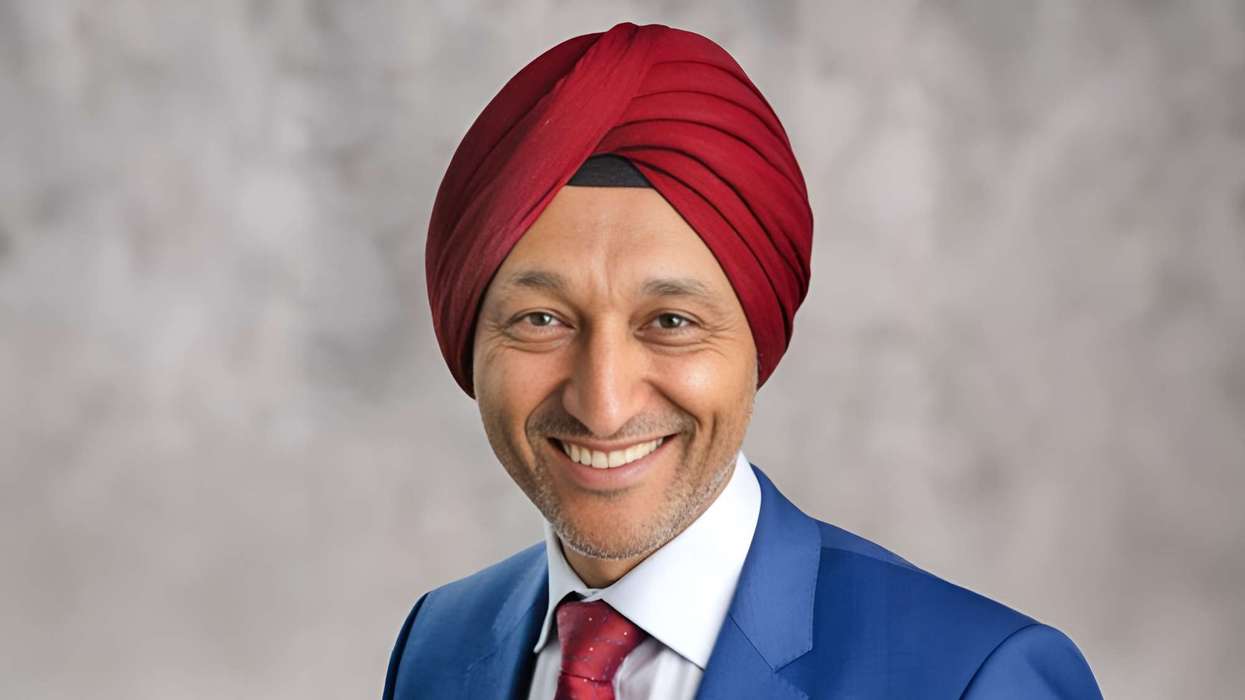

A MAN who describes himself as “a simple man from a humble background” now occupies one of the most consequential seats in Britain’s energy industry. At 54, Parminder Kohli sits at the intersection of energy security, corporate power and the transition to a lower-carbon economy – as UK country chair of Shell and the company’s executive vice president for sustainability and carbon.
As head of Shell’s UK operations, Kohli oversees the strategic direction of one of the country’s largest energy companies, responsible for activities spanning offshore gas production, power supply, renewables and the infrastructure that keeps homes and industries running. The position places him at the heart of debates about Britain’s energy future: how to balance climate ambitions with economic growth, and how to keep the lights on during a turbulent transition.
Kohli’s authority rests not merely on his title but on the breadth of experience behind it. Over more than two decades with Shell, he has moved across the company’s sprawling global operations – from chemicals and lubricants to mobility and fuels – gaining a reputation for turning complex international businesses into high-performing ones. His roles have spanned strategy, marketing, business development, operations and full profit-and-loss responsibility, a combination that has given him both a commercial instinct and a systems view of how the energy industry functions.
Born in April 1971 in India, Kohli grew up in small towns where ambition often had to compete with limited opportunity. He studied civil engineering but soon sensed that his future lay beyond technical design. “I came to the understanding that I wasn’t meant to build bridges,” he later joked.
After completing a postgraduate qualification in management, he began his career in India’s fast-moving consumer goods sector. Yet Kohli soon set his sights beyond the country’s borders. At a time when many of his engineering classmates were heading into the booming IT industry of the 1990s, he chose a different route, accepting a role in Côte d’Ivoire to help build a food-imports business in Abidjan. The experience offered an education in entrepreneurship and risk – one cut short by political upheaval when a coup attempt and civil war forced him to leave the country.
Switzerland became an unlikely turning point. Taking what he describes as a year out to rethink his future, Kohli enrolled in the MBA programme at IMD in Lausanne, graduating in 2001 amid a faltering global economy after the dot-com crash and the shock of the September 11 attacks. Yet the network he built there opened doors quickly, including the one that would define his career: a position with Shell in London.
From the outset he embraced the company’s culture of internal mobility, moving roles every few years to build a portfolio of experience. He began in strategy within the chemicals division before shifting to commercial fuels in Northern Europe, where he led sales and marketing across six markets. Later came a global marketing role in Shell’s lubricants business and then a posting in Casablanca as chief executive of a lubricants joint venture in Africa – a position in which he expanded the business six-fold.
These assignments forged the international outlook that now shapes his leadership. Kohli has worked across multiple continents and industries, managing teams in markets with sharply different political and economic conditions. The result is a pragmatic perspective on energy: one that acknowledges both the urgency of decarbonisation and the continued demand for reliable supply.
That balance is evident in his current responsibilities. As Shell’s UK country chair – a role he assumed in 2024 – he represents the company’s interests across government, industry and civil society while steering its operations through a period of rapid transformation. At the same time, as executive vice president for sustainability and carbon, he is tasked with advancing Shell’s efforts to reduce emissions and expand lower-carbon energy solutions.
Recent developments under his watch illustrate the tension between continuity and change. Shell’s Victory gas field in the North Sea, for instance, is expected to produce enough energy to heat almost 900,000 homes each year, helping reduce Britain’s reliance on imported gas while older fields decline. Kohli described the project as “another way Shell UK delivers secure energy for the country”.
Yet he also speaks frequently about the longer-term transformation of the energy system – particularly the need for skills and workforce development. Partnerships such as the Energy Transition Skills Hub in Aberdeen aim to train thousands of workers for emerging roles in renewables and advanced manufacturing, reflecting his belief that the shift to cleaner energy must bring communities with it.
The same theme runs through his work outside the company. In 2022 the UK government appointed him as a commissioner on the Social Mobility Commission, a role focused on improving opportunities for people from disadvantaged backgrounds.
Within Shell he has championed diversity and inclusion, sponsoring the company’s Asian employee network in London and mentoring young professionals from ethnic minority backgrounds. He has also emphasised the need for gender balance in leadership teams, arguing that progress across corporate Britain remains too slow.
“We are continually working to create one of the most diverse and inclusive organisations in the world. Examples of this in action include playing a leading role in our industry through the voluntary publication of ethnicity pay data by specific ethnic group and being a founding signatory to the Race at Work Charter,” he wrote in his forward to the 2025 Shell in the UK Diversity Pay Gap Report.
A dedicated runner and advocate of mental fitness, Kohli begins his days before dawn with meditation and a long run – habits he credits with sharpening his focus in high-pressure roles. He is also a keen traveller having visited more than 85 countries.
At a ceremony for IMD graduates in 2025, he offered advice that distils his philosophy. Success, he said, depends less on grand strategy than on the quality of relationships: “Think of relationships like a savings account – you build them steadily and draw from them sparingly.”
The remark hints at the quiet foundation of his influence. In an industry often defined by technology, capital and geopolitics, Kohli’s power derives equally from people – the ability to bring together engineers, policymakers and investors around shared goals.
For a leader guiding one of Britain’s most consequential energy businesses, that ability may prove as important as any pipeline or power plant.