
Highlights
- Won writing award at House of Lords, attended Asia's prestigious writers residency in Seoul.
- Writes original novels in both Hindi and English simultaneously, not translations.
- Founded India's first street film festival for underprivileged children.
"I still feel that love letters are the first and most honest form of creative writing because you hardly get a chance to write again," Dubey recalls with a smile. "You have to be at your creative best to impress your reader in the first round itself."
From those early days of crafting romantic prose for classmates, Dubey's path has taken him through school magazines, literary societies at University of Delhi, a master's degree in Applied Communications in England, and a stint as a broadcaster with BBC World Service in London. But the calling to fiction proved irresistible.
Small towns, big canvas
"I realized quite early in life that I have always been a storyteller from school time," he says. "Writing was part of my passion project all the time."
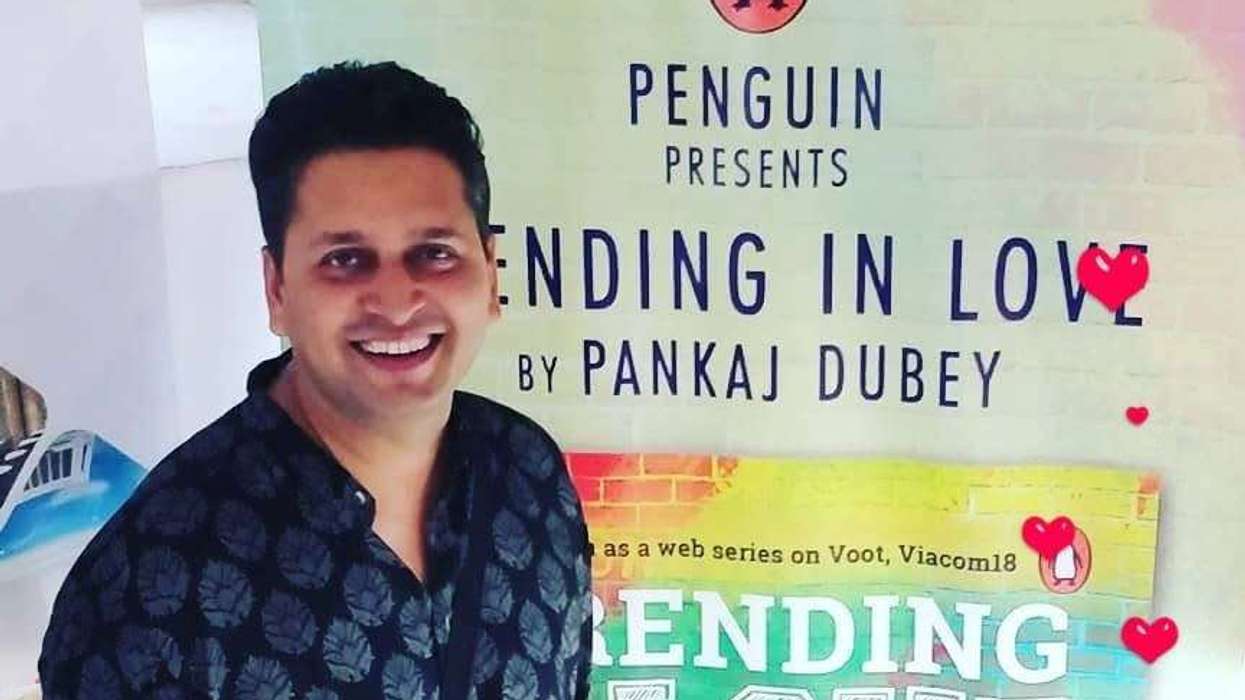 From Jharkhand to global literary spaces, Dubey explores migration, culture, and the emotional worlds of emerging IndiaPankaj Dubey
"All the big stories come from small towns," Dubey says, reflecting on his literary focus. Born in Chaibasa, Jharkhand, a town he compares to RK Narayan's Malgudi, his novels traverse locations from Ranchi and Begusarai to Agra and Coventry. His characters grapple with what fascinates him most: identity conflicts.
"The conflict of identity in a small towner coming to a metropolis, an Indian or south Asian coming to a Western country. There is conflict outside wherever you go, and then there is a conflict within you," he explains.
His unique writing process reflects this dual perspective. Rather than writing in one language and translating, Dubey creates original works in both.
"I write 20 per cent of the story in one language, then switch to another, write 40 per cent there and keep switching," he says.
"The reader base is different with a different sense of humour, their condition with different phrases, he added ".
The approach stems from a fundamental belief. "When I was comfortable in both languages, I thought, why not original writing? Why shouldn't I do the original writing for both the community of readers?"
For Dubey, this process is also shaped by how he constructs his characters. “I feel that our lives are not very interesting all the time. Throughout we are not interesting. So if you'll have a character based on one real life character, it will not be interesting throughout.
So what I do, I pick up four different real life characters and pick their interesting parts and club those and form 1 character for my novel and story to make this character interesting for my readers so that the book becomes a page turner".
Storytelling across media
Before becoming a novelist, Dubey's career in broadcast journalism shaped his narrative instincts. At BBC World Service, he wrote news stories, conducted interviews, and produced features.
"The basic work and passion is storytelling," he explains. "Everything else are different forms of storytelling."
His trajectory includes journalism, filmmaking, podcasting, and festival curation.
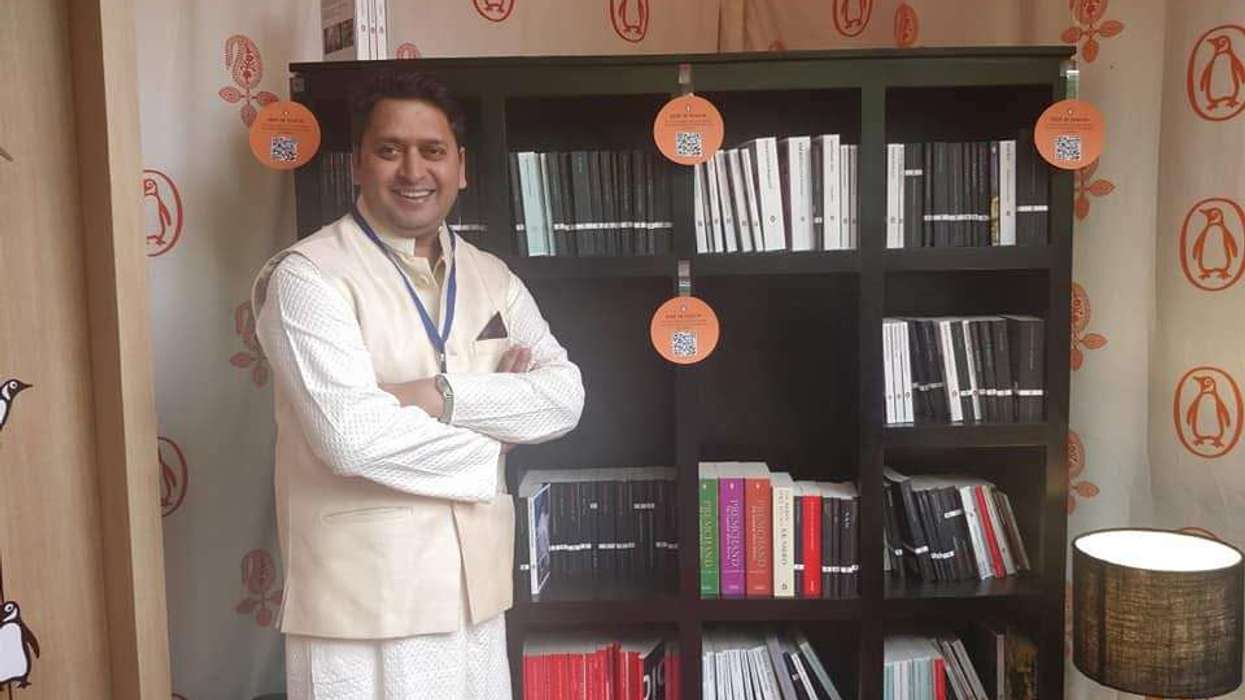 Through bilingual storytelling, Dubey connects vernacular voices with global audiences, redefining modern Indian literature’s evolving landscapePankaj Dubey
He curated the inaugural Nalanda Literature Festival in December 2025, inviting speakers from across the world and creating space for aspiring writers.
"There was a set crowd of authors invited everywhere," he observes about the festival circuit. "So the locations were changing, but speakers and content used to be very similar."
The Nalanda Literature Festival, in contrast, aimed to bring together not just established authors but also young first-timers, aspiring writers, and speakers from diverse countries, creating a truly inclusive and dynamic literary environment.
Through his audio podcast "Old School Romance" with Amazon's Audible and YouTube chat show "Small Towns Big Stories," Dubey continues exploring themes of migration, youth, and cultural change.
His latest novel, One String Attached, tells a "subaltern romance," a love story of a tailor set between the 1992 Ayodhya events and 2010 Commonwealth Games.
Beyond the page
Dubey's commitment to storytelling extends to social initiatives. He founded Sadak Chhaap, India's first street film festival for children in slums and villages.
"Society lacks empathy in many areas," he says. "These children grew up fighting for their bread. No one thinks about showing them cinema."
Starting with borrowed projectors and donated bananas, the festival screened children's films across Delhi, Mumbai, Bangalore, Chennai, and other cities, earning him a Youth Icon award for social entrepreneurship.
He's also established Brookstone Film School in Dubai, bringing together industry practitioners to teach contemporary storytelling techniques.
"Practitioners will be taking up the classes. Those whose films are being made can come and teach," he explains, though the Middle East conflict has temporarily stalled operations.
Dubey's advice for young storytellers is straightforward: "They should be honest about their feelings and fearless. They have to detach themselves from interpersonal relationships and all the biases and baggage."
There is a love story in my mind set during the British period, between the 1942 Quit India Movement and 1947 Independence.
The story draws from his own family. His paternal grandfather served in the Imperial Police while his maternal grandfather fought for freedom. "It's a love story between the daughter of a freedom fighter and the son of an Imperial Police officer," he says.
For Dubey, who positions himself as "a global practitioner of storytelling," the journey continues.
His bilingual approach, cultural curation, and focus on marginalised narratives represent a distinct voice in contemporary Indian literature, one that insists small-town stories deserve centre stage.