Skip to content
Search

Latest Stories

Pakistan’s new law allows chemical castration of serial rapists

Pakistan’s new law allows chemical castration of serial rapists

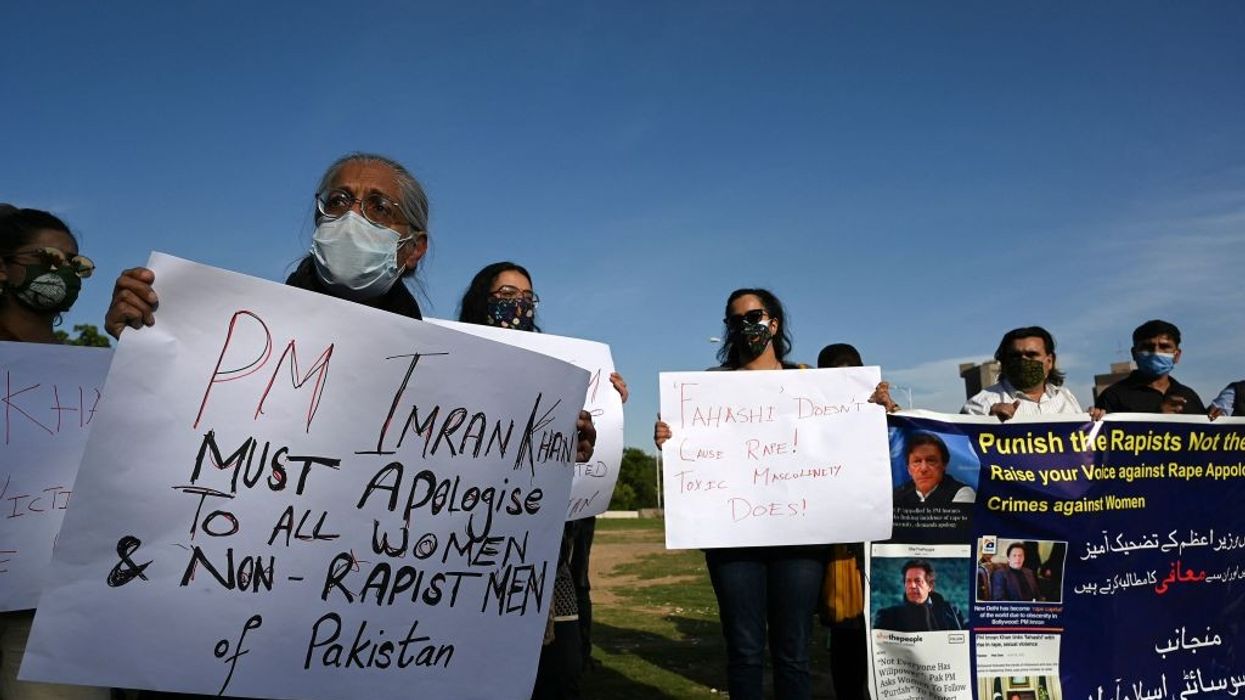
PAKISTAN has introduced chemical castration as a possible punishment for serial rapists under a law that also calls for faster trials of suspected sexual offenders, a government official said on Thursday (18).

Parliament passed the law on Wednesday (17) and it came into effect immediately, government official Waqar Hussain said.


Chemical castration, carried out by the use of drugs and reversible, is practised in Poland, South Korea, the Czech Republic and some US states.

Prime minister Imran Khan said last year he wanted to introduce the penalty amid a national outcry over increasing offences and the specific case of a mother of two driving along a major highway who was dragged out of her car and raped by two men at gunpoint.

Fewer than 3 per cent of rapists are convicted in courts in Pakistan, according to the non-profit organisation, War Against Rape.

Amnesty International has called for investigations into the causes of sexual assaults instead of opting for harsher punishments.

(Reuters)

More For You

Lancashire Health Warning

Dr. Sakthi Karunanithi, director of public health, Lancashire County Council

Via LDRS

Lancashire warned health pressures ‘not sustainable’ without stronger prevention plan

Paul Faulkner

Highlights

  • Lancashire’s public health chief says rising demand on services cannot continue.
  • New prevention strategy aims to involve entire public sector and local communities.
  • Funding concerns raised as council explores co-investment and partnerships.
Lancashire’s public sector will struggle to cope with rising demand unless more is done to prevent people from falling ill in the first place, the county’s public health director has warned.
Dr. Sakthi Karunanithi told Lancashire County Council’s health and adult services scrutiny committee that poor health levels were placing “not sustainable” pressure on local services, prompting the authority to begin work on a new illness prevention strategy.

The plan, still in its early stages, aims to widen responsibility for preventing ill health beyond the public health department and make it a shared priority across the county council and the wider public sector.

Dr. Karunanithi said the approach must also be a “partnership” with society, supporting people to make healthier choices around smoking, alcohol use, weight and physical activity. He pointed that improving our health is greater than improving the NHS.

Keep ReadingShow less


