
In Pakistan, the tradition of adorning intricately decorated bangles has become synonymous with the Islamic Eid-al-Fitr festivities. These exquisite accessories, crafted with meticulous care, are not just ornaments but essential elements of cultural expression and celebration.
Each bangle undergoes a journey involving numerous artisans, from the sweltering confines of factories to the skilled hands of designers who adorn them with intricate embellishments.
For 42-year-old Talat Zahid and many others, bangles are indispensable accessories that complete any outfit and add a touch of elegance to special occasions. Whether adorned with beads, stitching, or embroidery, bangles hold a special place in the hearts of Pakistani women.
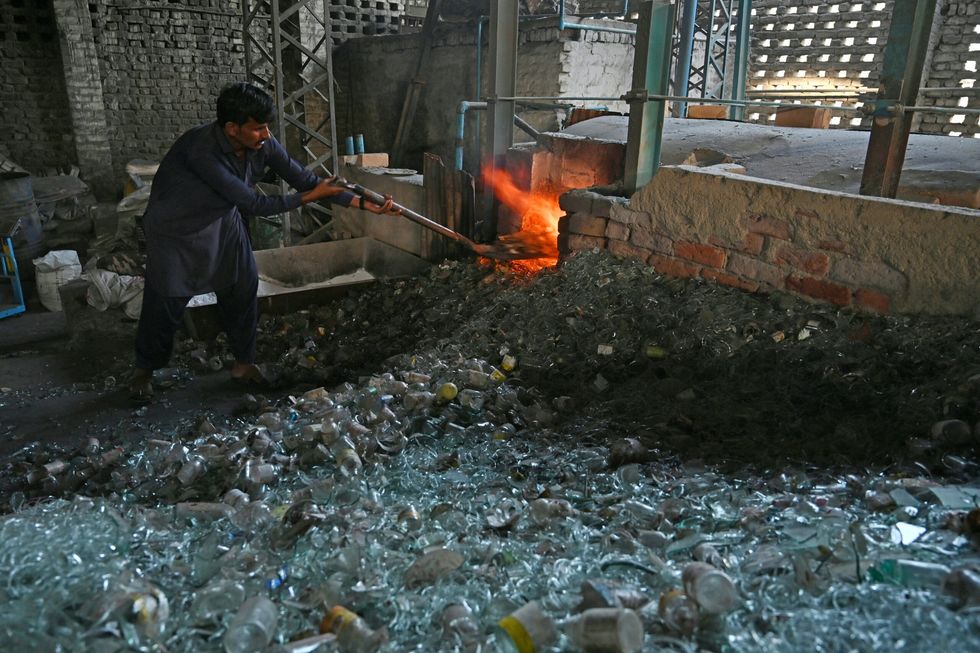 At a glass bangle factory in Hyderabad, a worker recycles broken glass in a furnace as part of the manufacturing process, essential for Pakistani women's Eid-ul-Fitr celebrations. (Photo credit: Getty images)
"Whatever the fashion trends, when we attend any event and wear any outfit, it feels incomplete without bangles," said 42-year-old Talat Zahid, who uses beads, stitching, and embroidery to embellish bangles.
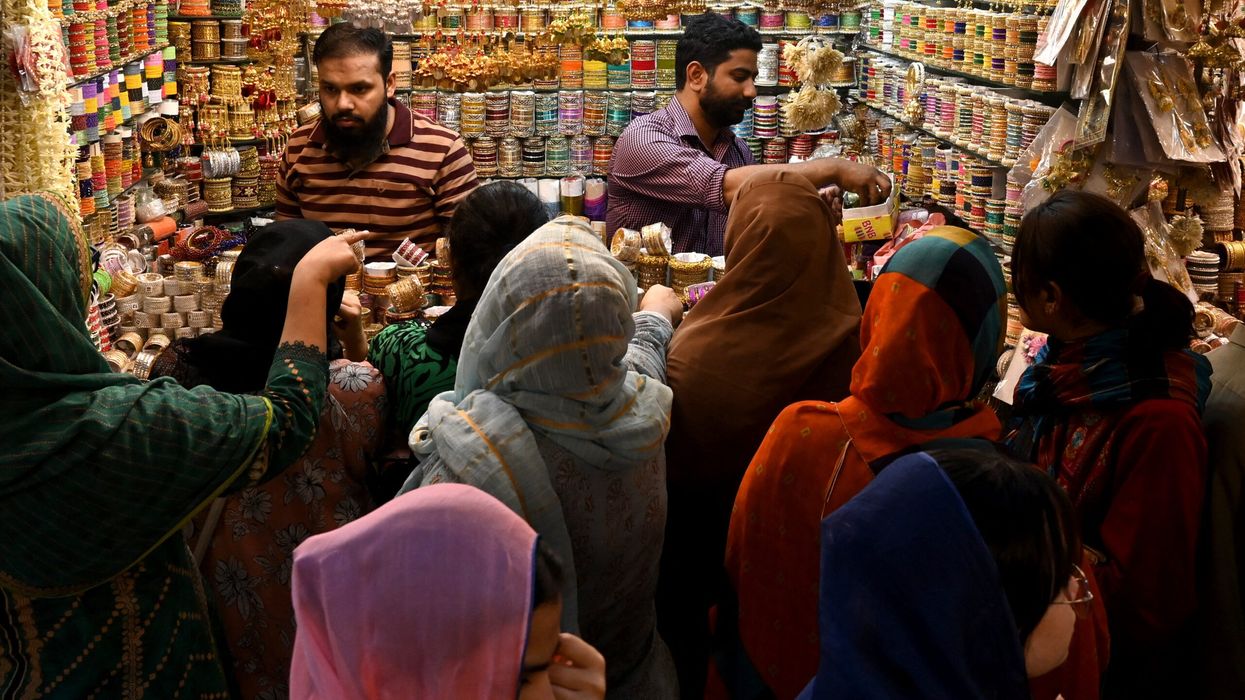
As Eid-al-Fitr approaches, marketplaces are adorned with a dazzling array of colourful bangles, attracting eager shoppers who meticulously inspect each piece for its beauty and craftsmanship. Bargaining for the perfect set is a cherished ritual, with prices ranging from modest beginnings to more luxurious offerings adorned with stones and silk.
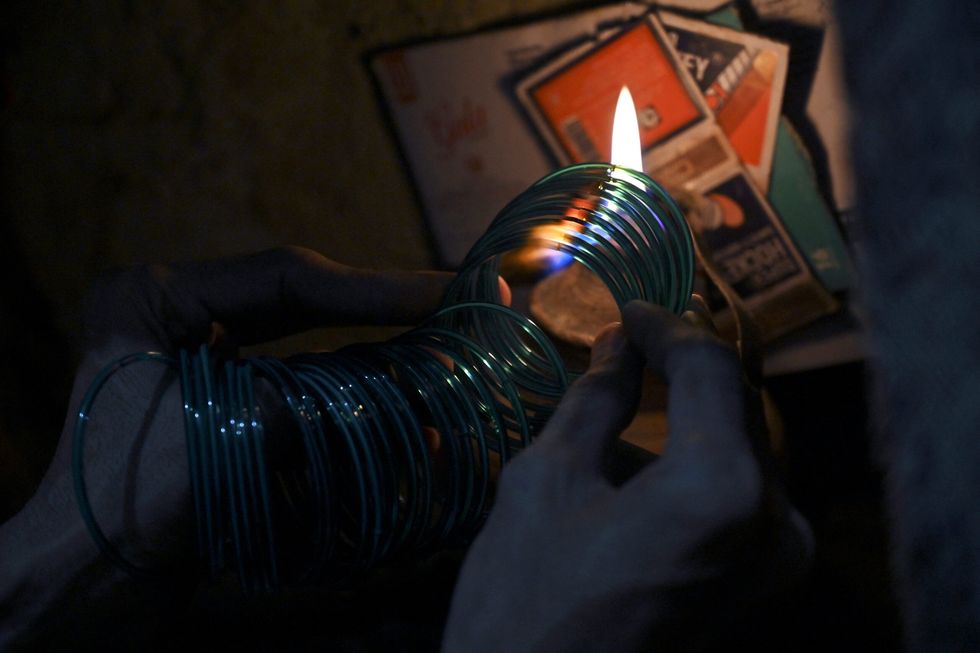 A worker crafts glass bangles in a home workshop in Hyderabad, an essential part of Pakistani women's Eid-ul-Fitr celebrations. (Photo credit: Getty images)
In Hyderabad, the birthplace of the delicate "churi" glass bangle, artisans toil tirelessly in furnaces, shaping molten glass wire into intricate loops around iron rods. However, the labour is not without its challenges; oppressive temperatures, power cuts, and the delicate nature of the glass threads pose constant hurdles.
Workers like 24-year-old Sameer, following in his father's footsteps, endure harsh conditions for meagre wages, highlighting the struggles faced by many in the industry. Despite the challenges, the artistry and craftsmanship continue to thrive, passed down through generations.
"The work is done without a fan. If we turn on the fan, the fire is extinguished. So the heat intensity is high. As it gets hotter, our work slows down," Sameer said.
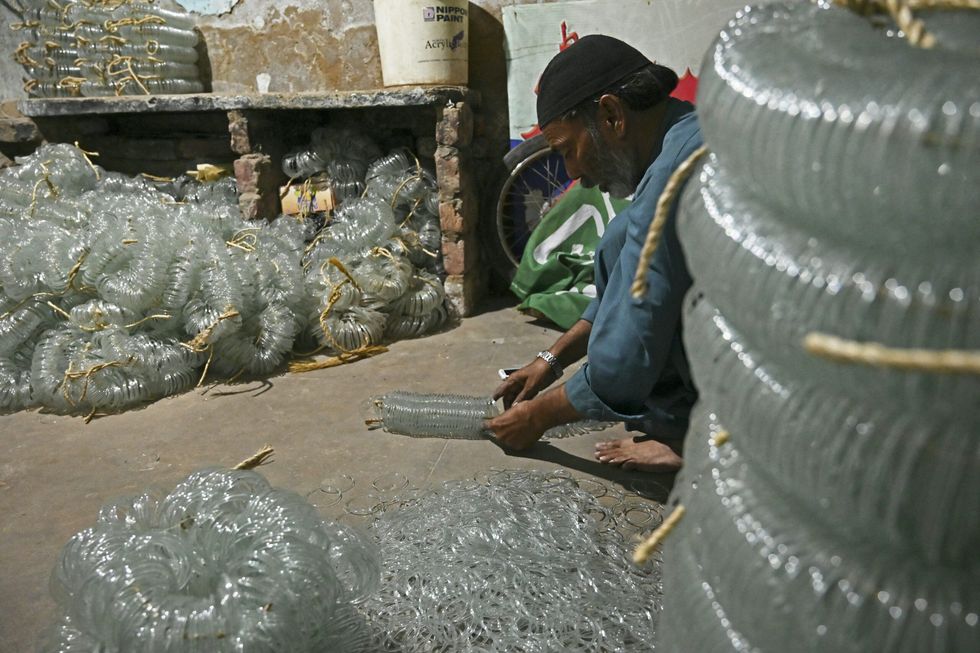 A worker prepares intricately decorated glass bangles at a shop in Hyderabad, Pakistan, essential for women's Eid-ul-Fitr celebrations. (Photo credit: Getty images)
Since the partition of British India in 1947, Hyderabad has been a hub for bangle production, with hundreds of thousands depending on the industry for their livelihoods. However, escalating gas prices and taxes have led to the closure of many factories, threatening the survival of this cherished tradition.
Nevertheless, the production of bangles remains a labour of love, often involving entire families. Women like Saima Bibi meticulously embellish bangles at home, while their husbands toil in the factories, highlighting the interconnectedness of the industry and the resilience of its artisans.
As Eid approaches, the journey of these bangles—from furnace to forearms—serves as a testament to the enduring tradition and craftsmanship that continue to enrich Pakistani culture.

 The memorial opens at Leeds Minster on September 10 Stitch Their Names Together