
OIL prices rose above $100 on Monday and most Asian stock markets fell as the war involving Iran entered its third week, with fighting continuing and concerns growing over shipping through the Strait of Hormuz.
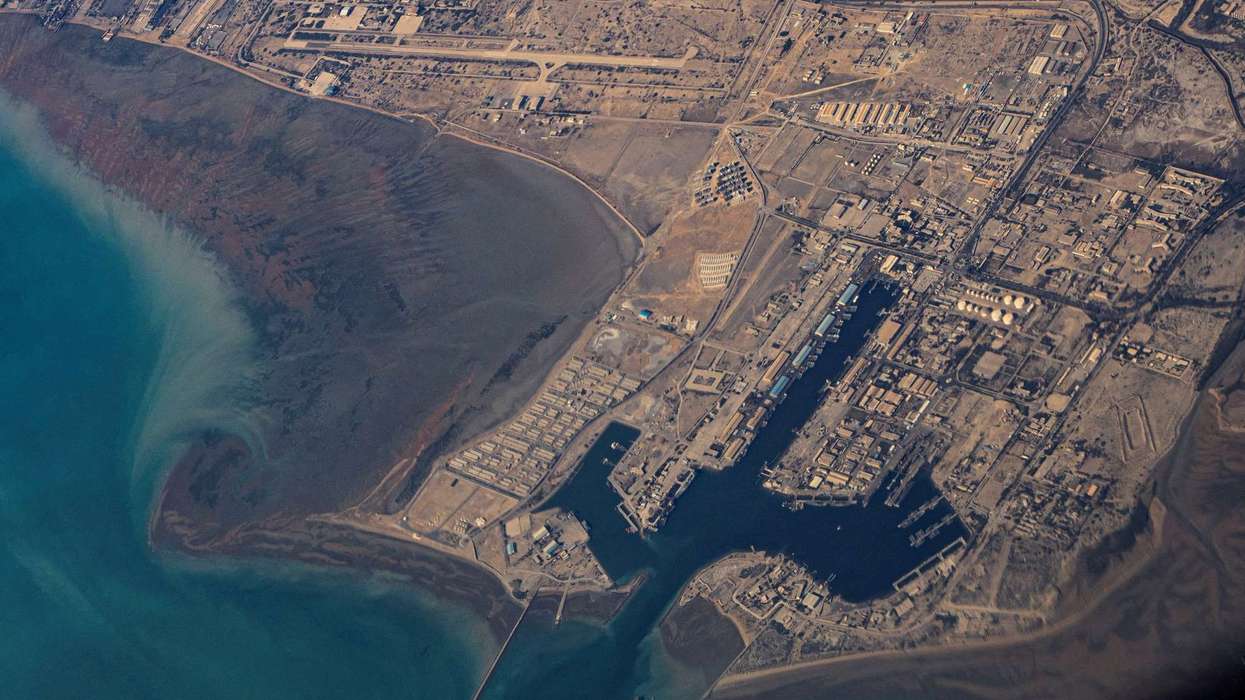
Crude prices rose after the US president said at the weekend that US forces struck military targets on Kharg Island, which handles most of Iran’s oil exports. He also warned that attacks could expand to energy infrastructure if Iran interferes with shipping through the Strait of Hormuz, which has been effectively closed since US-Israel operations began on February 28.
Iran’s Fars news agency reported that no oil infrastructure was damaged in the strikes.
US President Donald Trump urged countries to send warships to keep the waterway open, saying China, France, Japan, South Korea and the UK should take part.
ALSO READ: Trump asks allies to send warships to Strait of Hormuz as Iran vows response
He wrote in a Truth Social post: “The Countries of the World that receive Oil through the Hormuz Strait must take care of that passage, and we will help -- A LOT!
“This should have always been a team effort, and now it will be.”
Japan said it was “not at the moment considering issuing a maritime security operation”, while Australia said it would not send navy ships to the region.
Trump also said Tehran wanted a deal to end the fighting but that he was not ready to agree to current terms.
Iran’s Foreign Minister Abbas Araghchi said his country was not interested in talks with Washington.
“We don't see any reason why we should talk with Americans, because we were talking with them when they decided to attack us,” he told CBS’s “Face The Nation” in an interview aired Sunday.
“We never asked for a ceasefire, and we have never asked even for negotiation,” he added.
ALSO READ: Indian sailors stranded near Strait of Hormuz 'want to go home'
However, he said Iran was ready to speak to countries seeking safe passage for ships through the Strait of Hormuz.
“I cannot mention any country in particular, but we have been approached by a number of countries” seeking such safe passage, Araghchi said.
Fighting and attacks across the region
Explosions were heard in central Tehran on Monday after Israel said it carried out overnight strikes. Air defence systems were activated and it was not immediately clear what was targeted.
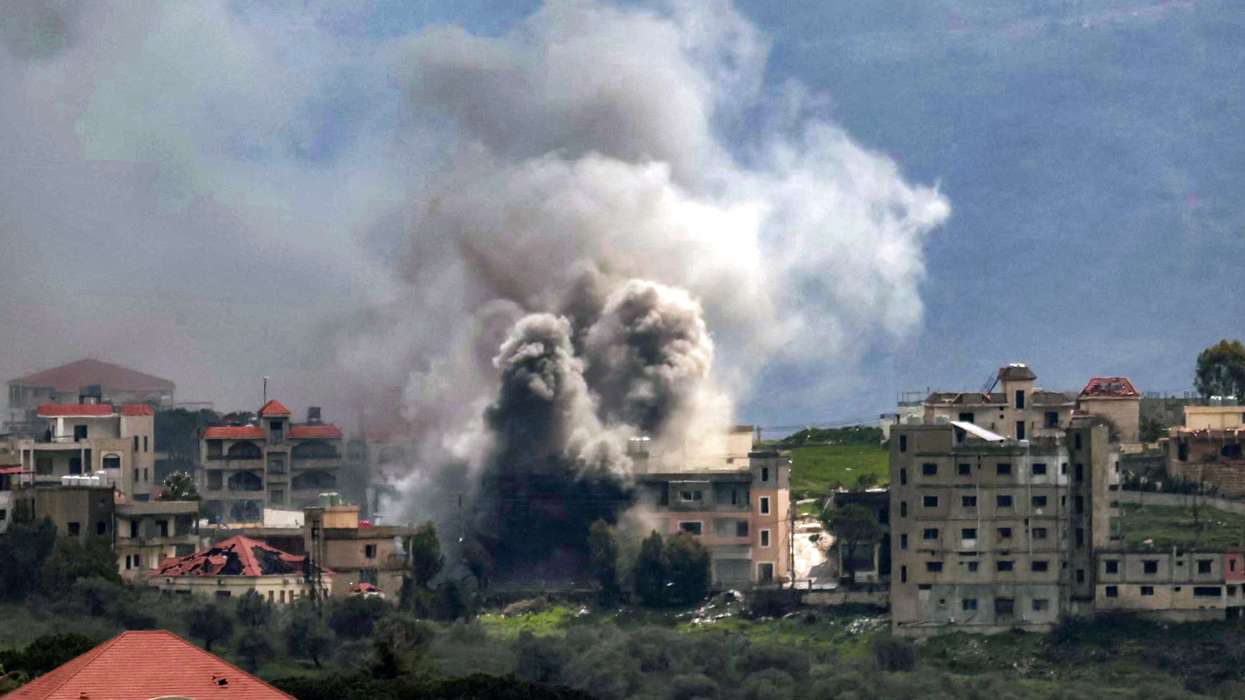
The Israeli military also said it had begun “limited and targeted ground operations” against Hezbollah positions in southern Lebanon.
“In recent days, IDF troops from the 91st division have begun limited and targeted ground operations against key Hezbollah strongholds in southern Lebanon, aimed at enhancing the forward defence area,” the military said.
ALSO READ: Iran attacks oil and shipping targets as global crude prices jump
Saudi Arabia said it intercepted 61 drones in the eastern part of the country since midnight.
A drone attack also hit the Fujairah oil industry zone on the UAE’s east coast, causing a large fire.
Authorities said a Palestinian civilian was killed near Abu Dhabi when a missile struck their car.
Araghchi said Israeli strikes on fuel depots in Tehran constituted “ecocide” because of the long-term risks to residents’ health.
Dubai airport disruption
Flights were gradually resuming at Dubai International Airport on Monday after a drone attack caused a fuel tank fire near the airport.
The incident forced a temporary suspension of flights and disrupted air travel across the region.
The Dubai Civil Aviation Authority said there was a “gradual resumption” of flights to selected destinations.
ALSO READ: Iran fires missiles across region as G7 weighs oil reserve release
Emirates said it expected to partially resume operations at 06:00 GMT after some flights were diverted to Al Maktoum International Airport.
A Reuters reporter travelling on an Emirates flight from Rome to Dubai said the aircraft diverted to the city of Al Ain before landing because of security concerns.
The airline later told passengers it would fly them back to Dubai once airspace reopened.
On its website, Emirates said some flights scheduled for Monday had been cancelled. Sister airline flydubai also halted flights temporarily.
Air India and Air India Express said flights to Dubai had been cancelled for the day.
Monday’s incident was the third attack affecting Dubai airport since Iran launched missile and drone attacks on Gulf nations on February 28.
ALSO READ: UK warplanes intercept drones as Iran warns oil exports will stop
More than 2,000 missile and drone attacks have been reported across Gulf states since the conflict began. Targets have included US diplomatic missions, military bases, oil infrastructure, homes and offices.
Flights in the region are operating at about half their usual level.
Markets and oil prices
Oil prices rose as the conflict continued and shipping through the Strait of Hormuz remained disrupted.
Brent crude rose about three per cent to as high as $106.50 before easing to around $104. West Texas Intermediate climbed more than two per cent to above $100.
The increase came as Japan said it was beginning the release of strategic oil reserves after the International Energy Agency signalled that stockpile releases would start in Asia and Oceania.
IEA members agreed last week to release 400 million barrels from reserves to limit the rise in prices.
Stock markets in Tokyo, Shanghai, Sydney, Wellington, Taipei, Manila, Mumbai, Bangkok and Jakarta fell, while Hong Kong, Seoul and Singapore rose. London, Frankfurt and Paris were higher at the open.
Michael Brown of Pepperstone said the impact on markets would depend on shipping through the Strait of Hormuz.
ALSO READ: Mojtaba Khamenei takes over as Iran’s supreme leader
“The impact of geopolitical events on markets, and the macro outlook, hinges more on when transits through the Strait of Hormuz begin to normalise, than it does on when hostilities come to an end,” he wrote.
“The longer the Strait is impassable, the tighter commodity supply will become, thus the higher prices will likely go, and the greater the inflationary impulse that will follow.”
Data released on Friday showed US gross domestic product grew 0.7 per cent in the fourth quarter, lower than the earlier estimate of 1.4 per cent.
Figures also showed the Federal Reserve’s preferred inflation gauge fell to 2.8 per cent in January before energy prices rose.
Ray Attrill of National Australia Bank said developments over the weekend did not improve sentiment.
“Developments over the weekend, while no more disconcerting than at the end of last week, don't offer any obvious pretext for a less pessimistic start to the new trading week,” he said.
Investors are also watching policy meetings this week at several central banks, including the US Federal Reserve, the Bank of England and the European Central Bank.
Meanwhile, the Iranian men’s football team is still expected to take part in the upcoming World Cup in North America, according to Windsor Paul John, general secretary of the Asian Football Confederation.
“As far as we know, Iran is playing,” he said.
(With inputs from agencies)