
Highlights:
- Nnena Kalu has won the 2025 Turner Prize.
- First artist with a learning disability to do so.
- Works in tape, cardboard, fabric, VHS and plastic.
- Judges picked her for the art itself, not her disability.
- Exhibition at Cartwright Hall.
Nnena Kalu, 59, has won the 2025 Turner Prize. She is the first artist with a learning disability to win the award. The Scottish-born, London-based artist works in bright, abstract forms. Her sculptures and drawings use tape, fabric, cardboard, plastic and even VHS tape. The decision has divided critics while highlighting the contribution of neurodiverse artists in Britain.
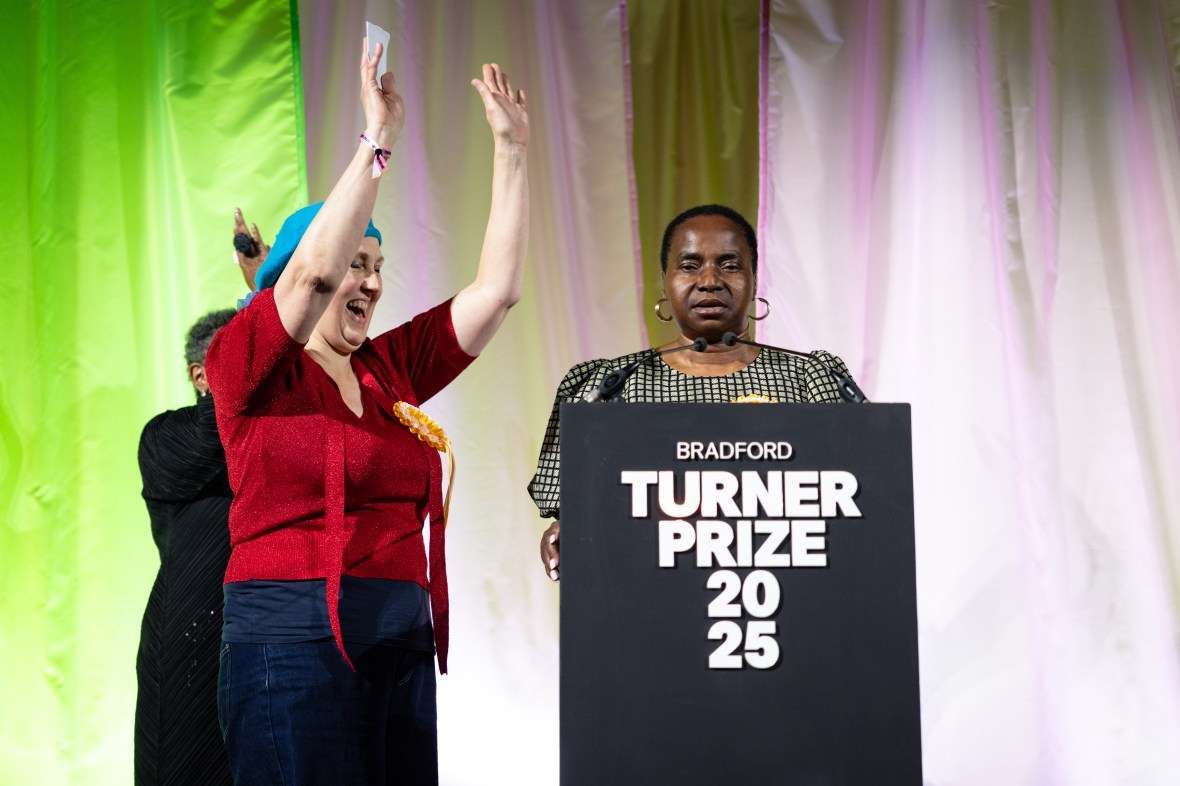 Kalu accepting the award on Tuesday night JAMES SPEAKMAN/PA
Why this win is historic
Kalu has autism and limited verbal communication. She makes sculptures from tape, fabric and cardboard, and her drawings twist with bright, bold colours. Kalu works at ActionSpace in Clapham, a London charity that supports artists with learning disabilities. Charlotte Hollinshead, her studio manager, spoke at the ceremony. “Nnena has faced discrimination,” she said. “This award helps change that.”
Charlotte Hollinshead, Kalu’s studio manager at ActionSpace in London, delivered her winner’s speech. “Nnena has faced an incredible amount of discrimination,” she said. “Hopefully this award helps to smash that prejudice away.”
The £25,000 (approx. ₹2,600,000) prize recognises outstanding work by artists born or working in Britain. Kalu’s win breaks a longstanding barrier between neurotypical and neurodiverse artists.
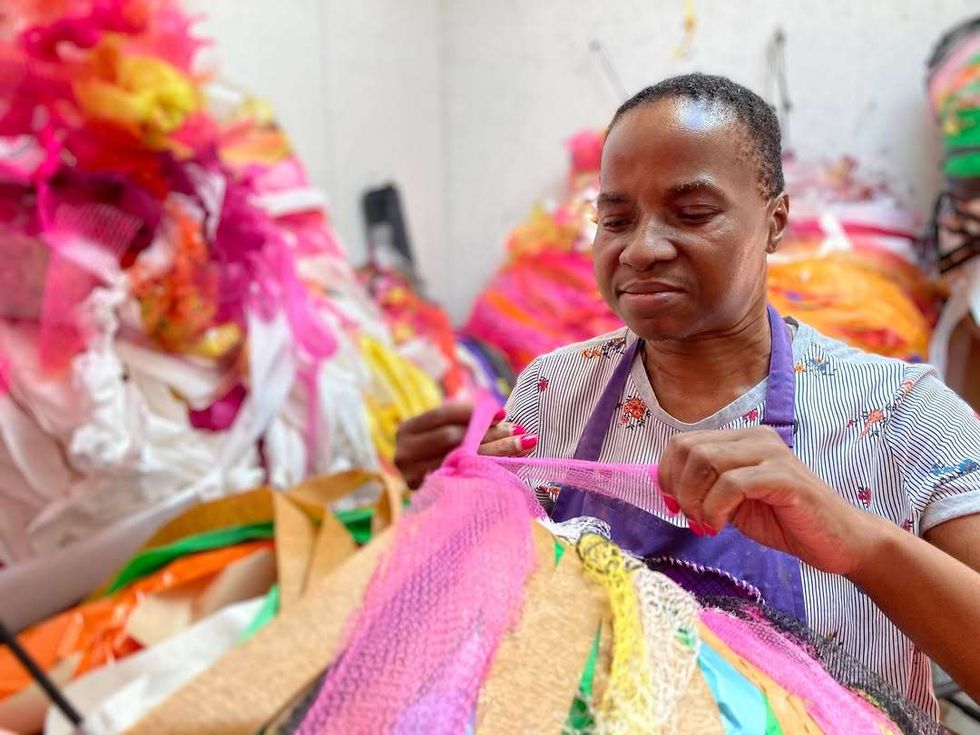 Nnena Kalu becomes first learning-disabled artist to win Turner Prize Instagram/tate
How the judges viewed Kalu’s work
Alex Farquharson told reporters the panel focused on quality and uniqueness. “It wasn’t about wanting to give the prize to a neurodiverse artist. It was about the work itself,” he said. Kalu’s sculptures were described as “amazing, compelling things that draw you in and give you joy,” while her drawings have a “beautiful intricacy.”
The judges spent hours deliberating. The other nominees were Rene Matić, Mohammed Sami and Zadie Xa, whose work also drew attention from critics. Each of them received £10,000 (approx. ₹1,060,000).
Fans and critics respond
Kalu has been gradually gaining recognition over the past decade. Exhibitions in Barcelona, Norway and Glasgow helped her work reach a wider audience. The Guardian’s Adrian Searle praised the “irreducible” quality of her sculptures, comparing her approach to artists Judith Scott and Hanne Darboven. Her victory has been widely welcomed by disability charities. Sense described her win as “richly deserved and long overdue,” highlighting the importance of recognition for learning-disabled artists.
Others were less impressed. Waldemar Januszczak of The Sunday Times called the sculptures “sprawling” and “messy,” questioning whether therapy should be conflated with talent. He argued that artists such as Mohammed Sami were more deserving based on conventional artistic standards.
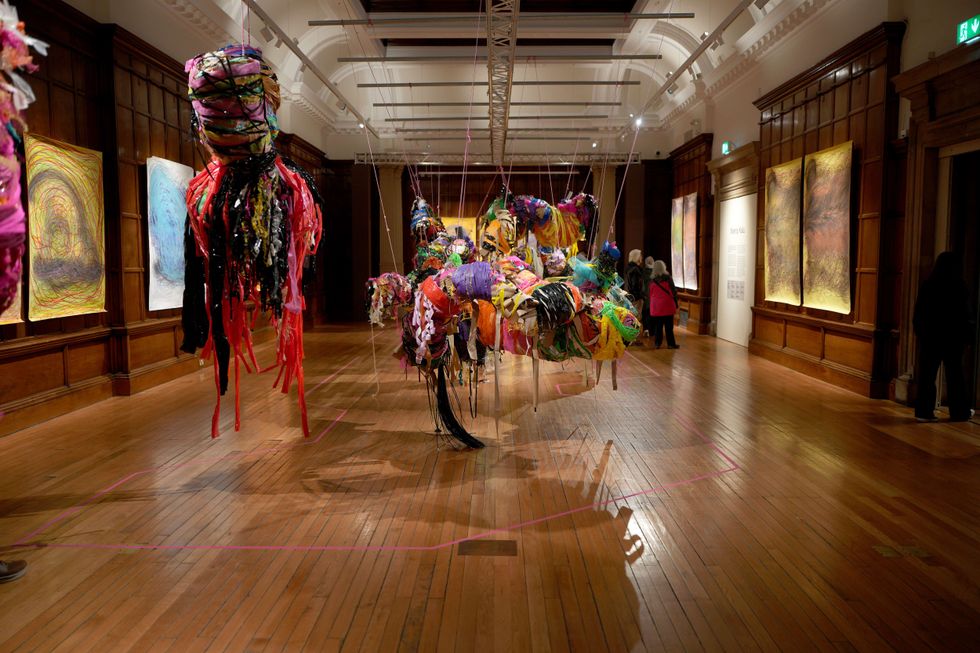 Installation entitled 'Conversations' by artist Nnena KaluGetty Images
What’s next for Nnena Kalu
Born in Glasgow to Nigerian parents, Kalu began creating art at the Hill House day centre in the late 1980s. She now works at ActionSpace in Clapham, London, where she makes most of her sculptures and drawings.
At the moment, Kalu’s pieces are on show at Cartwright Hall in Bradford. The exhibition is part of the city’s UK City of Culture programme and will continue until 22 February 2026.