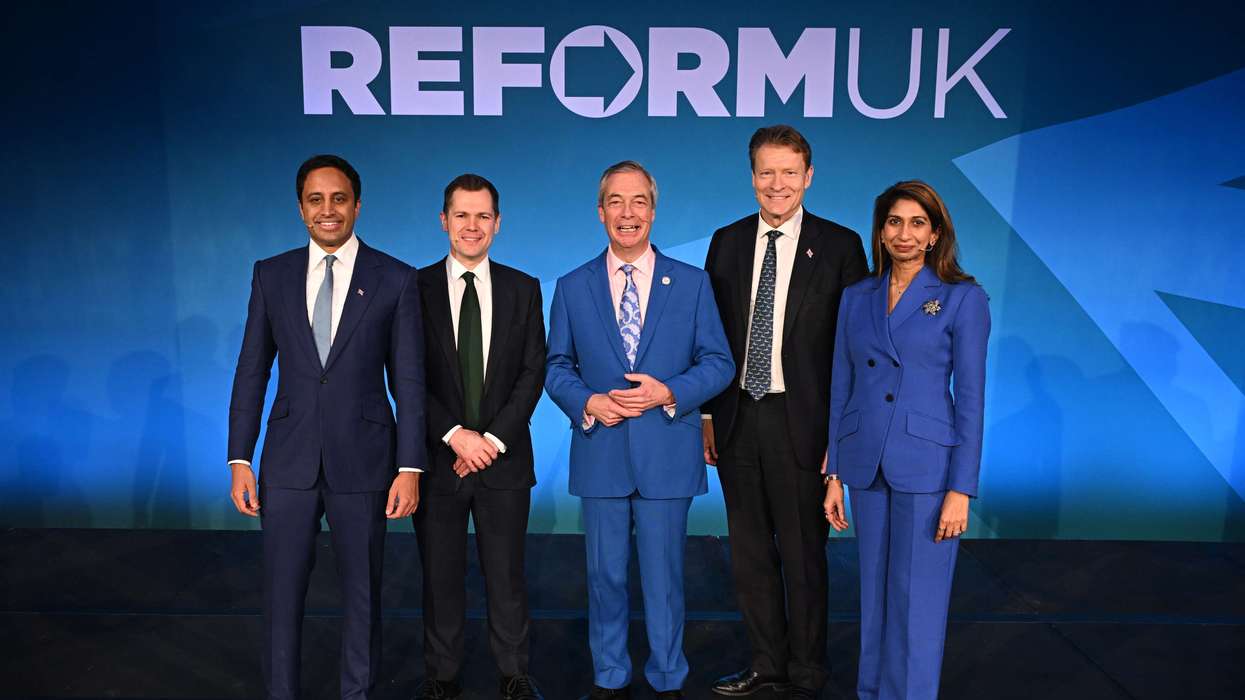

REFORM on Tuesday (17) reshaped its senior team as part of leader Nigel Farage’s efforts to prepare his party for government if it wins the next national election.
British Asian leaders Zia Yusuf and Suella Braverman received prominent policy roles in the reshuffle alongside other high-profile defectors from the Conservative Party.
Farage said the changes marked a move away from the view that Reform was a “one-man band”, as opinion polls continue to show the party ahead of Labour.
The next general election is due in 2029, but Reform is hoping to build momentum ahead of local elections in May and a parliamentary by-election later this month.
Zia Yusuf, who had been serving as Reform’s head of policy, was appointed home affairs spokesman. He said a Reform government would take a hard line on immigration and would not allow international agreements to block deportations.
Reform, he said, would “ignore international treaties that may frustrate attempts to deport immigrants”, signalling a willingness to challenge existing legal frameworks in pursuit of tighter border controls.
Immigration has become one of the party’s core campaigning themes and remains central to its appeal among voters disillusioned with both Labour and Tories.
Braverman, the former Tory home secretary, was given responsibility for education and equalities policy.
She said Reform would seek major changes to equality law if it came to power.
Braverman added the party would repeal protections provided by the Equality Act, a stance likely to draw criticism from opponents, but welcomed by Reform supporters who argue the legislation has gone too far.
Labour said the appointment showed Reform was recycling figures who had “failed Britain before”.
Farage used the event to unveil what he described as a “shadow cabinet”, a term usually reserved for the main opposition party.
“The time has come to broaden the party,” he said, adding that Reform now had “its own senior characters, with their own departments to lead”.
Among the other appointments, former Tory leadership contender Robert Jenrick was named finance spokesman, effectively making him Reform’s shadow chancellor, while Farage’s deputy Richard Tice was given a combined brief covering business, trade and energy.
Jenrick said detailed economic plans would follow, promising “a plan that restores stability to our economy”, cuts waste, reduces the benefits bill and allows taxes and household bills to fall.
Investors are watching closely, given Reform’s rise in the polls and past mixed messages on spending. Reform UK, founded in 2021 from the Brexit Party, currently has eight MPs in the 650-seat Commons. The party has attracted large donations and several high-profile defections from the Tories.
Recent polls suggest its support may have levelled off, and Farage’s personal ratings have weakened. With Labour facing pressure over the economy and public services, Reform’s leadership believes Yusuf and Braverman can sharpen its message.