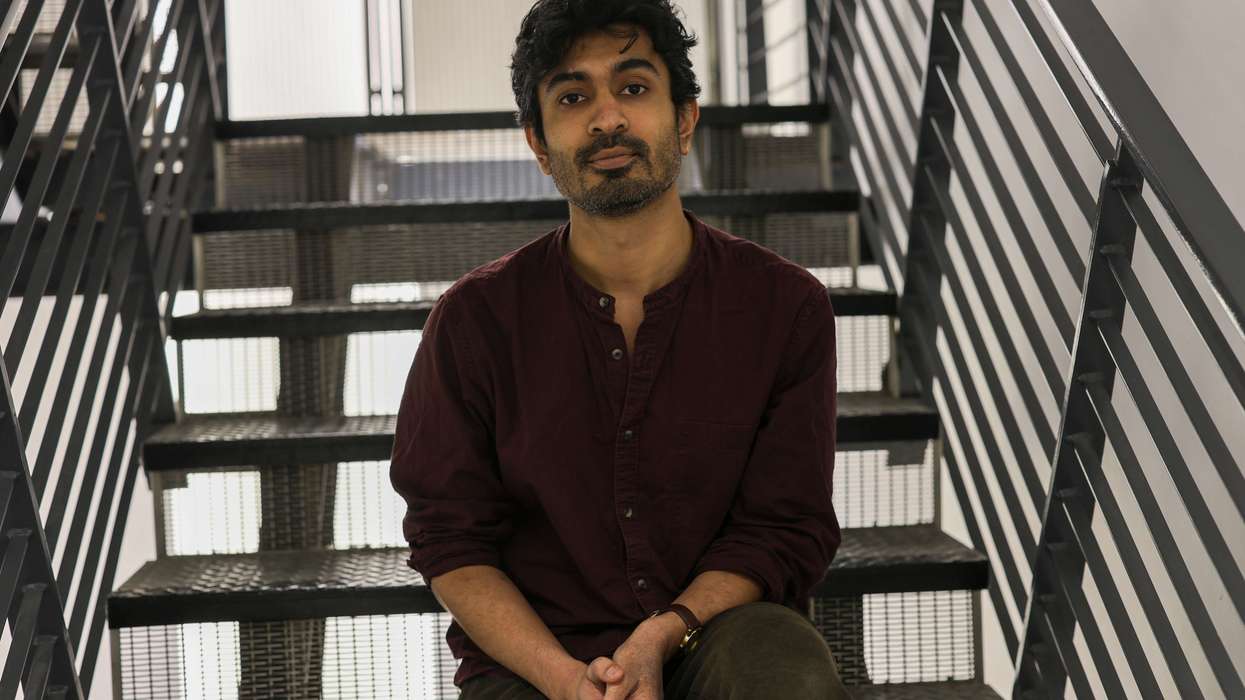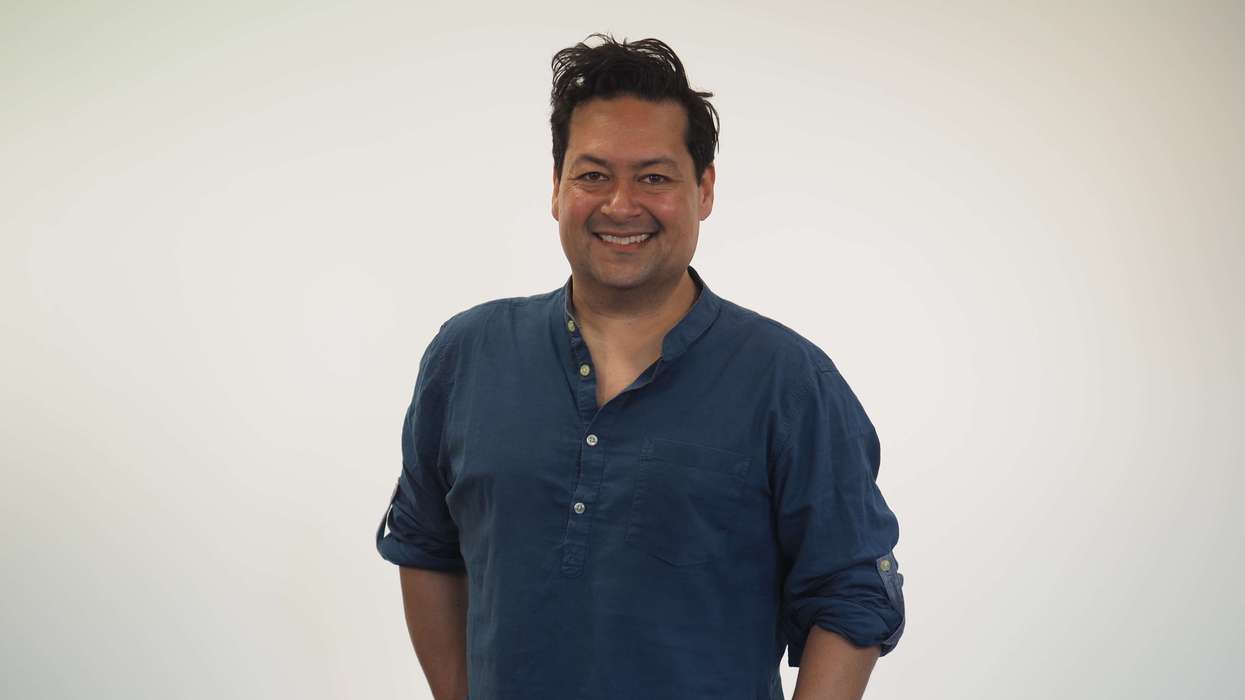

ASIAN playwright Nick Ahad hopes children’s questions in his new show will inject curiosity into ‘toxic’ debate over refugee crisis.
Ahad has brought back his adaptation of Onjali Q Raúf’s award-winning children’s book The Boy at the Back of the Class, the show opened at the Rose Theatre in Kingston upon Thames on Wednesday (11), before embarking on a UK tour.
The play tells the story of Ahmet, a nine-year-old Syrian refugee who arrives at a British school without his parents, and the children who help him.
“The show, in essence, is about friendship,” Ahad told Eastern Eye. “There’s a key line in the play where someone asks the children, ‘Why did you decide to help him?’ And the answer is, ‘Because he’s just like us, and why wouldn’t we help him?’
“For me, that’s what the play is really about… that people who have been a little bit dehumanised in the media are just like us.”
Immigration and refugees remain a hot topic in Britain, with frequent protests and marches taking place in recent years.
Ahad, who has spent nearly 20 years writing plays about race in Britain and how minorities experience contemporary life, updated this play to reflect how the debate has shifted since its first tour in 2024.
“We’ve seen protests, people marching… in this new version I’ve tried to dig deeper into the humanity of all the characters. I like to think I’ve made it a little bit funnier, too.”
The 47-year-old playwright grew up in Keighley, west Yorkshire, where he didn’t quite fit in.
Ahad’s mother is English and his father moved from Bangladesh.
Ahad recalled he didn’t know other mixed-race children at the time.
“I grew up thinking I’m not really black, Asian and minority ethnic, but I’m not really English, and I didn’t know where my place in the world was,” he said.
From the play’s first tour two years ago, Ahad found audiences saw past the political noise.
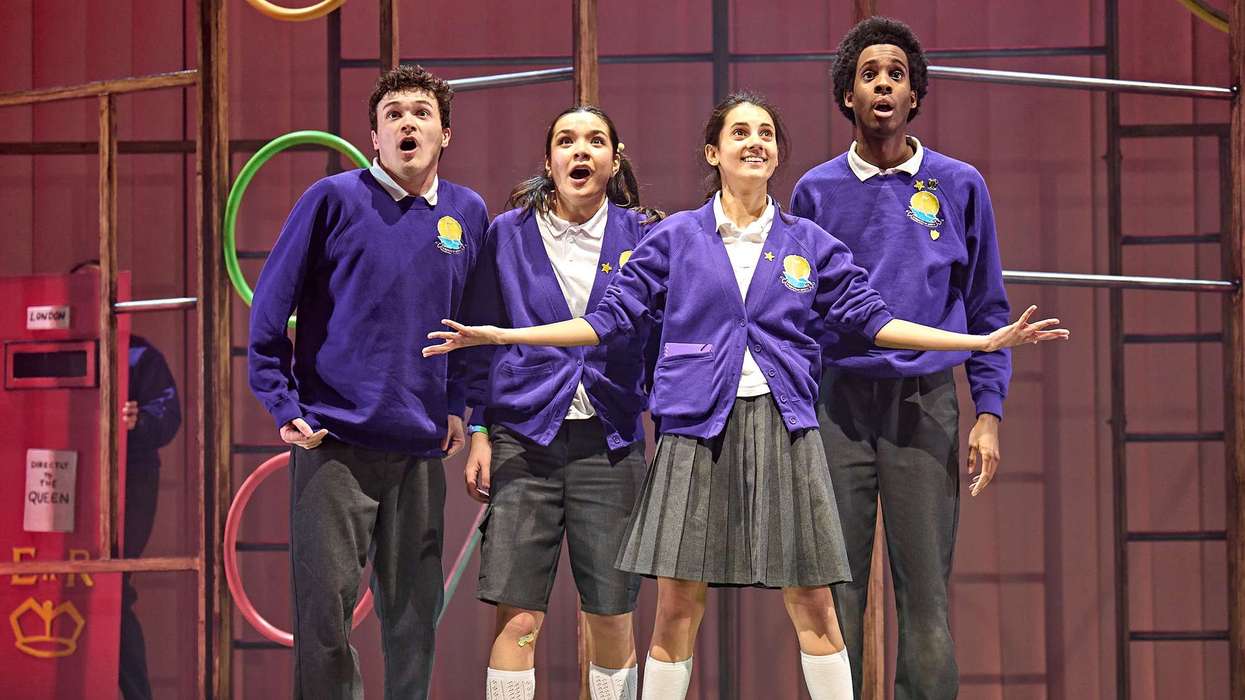 Gordon Millar, Petra Joan-Athene, Sasha Desouza-Willock and Abdul-Malik JannehManuel Harlan
He said, “People understand that the children see this as a story about a refugee... those people are humans, and they deserve human dignity.”
The play demonstrates a clear divide between how children and adults engage with refugees. “For the children, it’s very simple,” Ahad said. “There is somebody who needs a home and all the other stuff that comes with the word refugee or asylum seeker doesn’t really infiltrate their world. They just see a boy who needs some help, and it’s a lesson we could do well to remember.”
Ahad noted the conversations sparked by the play have been “powerful”.
Children asked their teachers and parents simple questions: What is a refugee? Why don’t they have somewhere to go? What can we do about this? How can we contribute?
The playwright said, “The more we can inject curiosity into a conversation that’s quite toxic, it’s really important.”
Balancing a serious subject with humour has also been crucial for Ahad.
“I’ve been writing plays for nearly 20 years. I always write about very hard subjects… and I try to be as funny as possible. The more you can make an audience laugh, and the more you can give them joy, the more they are receptive to hearing some of the harder stuff.”
Adapting Raúf’s book, however, presented unique challenges.
Ahad said, “When I first adapted this, Ahmet doesn’t speak English, and so to write a play where you have a main character who doesn’t speak English for an English audience was quite tricky.
“Then it was just taking the sense of adventure, because it’s a great, big, epic adventure of a story, and how to imagine that for the stage was quite a challenge, but an exciting and interesting one.”
On writing for young audiences, Ahad said they are “very unforgiving”.
“If your play isn’t working, or if it’s boring, they tell you by moving around and fidgeting. But if they sit wrapped with attention, then you know you’ve done a good job.”
He learned this from his own children. “I have a little boy who turned five recently, and he’s so insightful. We shouldn’t patronise young audiences. We should allow them to ask questions and let them work it out for themselves,” Ahad said.
He recalled an anecdote from a recent run-through.
“At the end of the play, I always cry. I’ve seen it a lot, and I’ve never cried,” Ahad said. “We watched the run through, and I was crying. The director was crying. It’s an incredibly emotional ending. Then we looked across at this lovely seven-year-old girl, and she was crying and hugging her mum. I went to see if she was okay, and her mum said she’s crying happy tears. To have moved a seven-year-old like that on a Saturday morning was extraordinary.”
He added, “We had hundreds of letters from young people. One girl wrote, ‘I’ve never met a refugee before, but now I’d like to be friends with one.’ That was really moving.”
Ahad’s path to playwriting began at age eight or nine when he was taken to a theatre in Bradford – the same theatre where the play will finish its current tour.
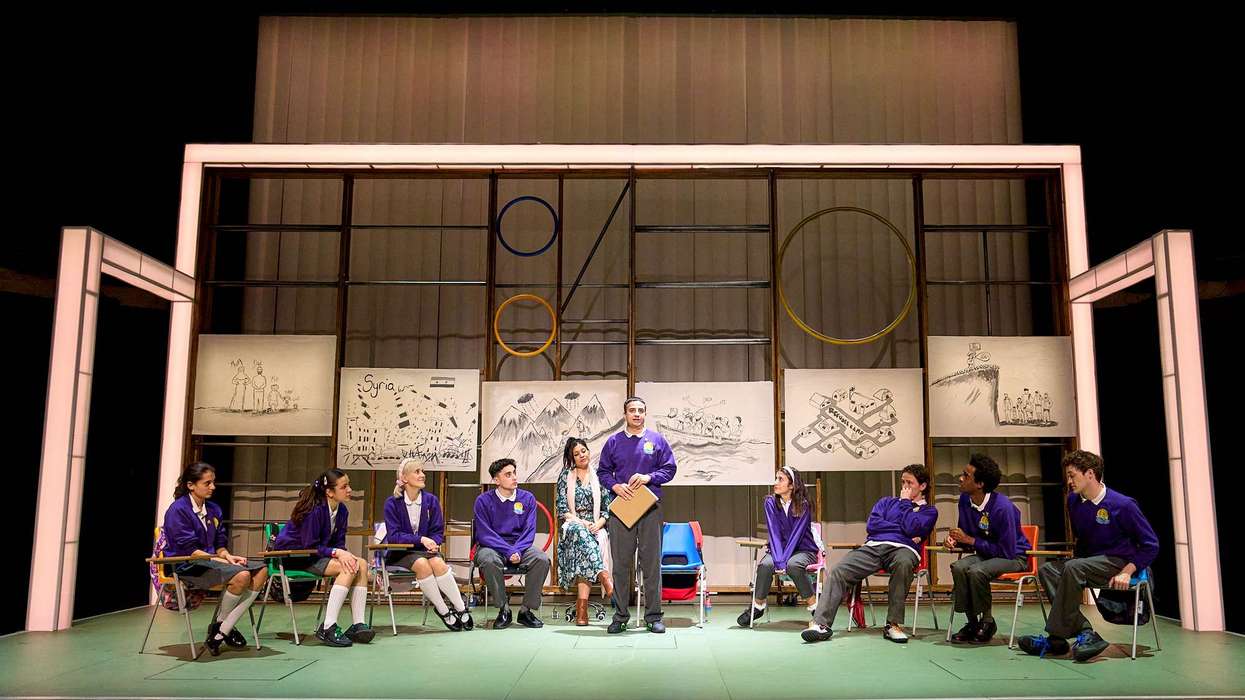 The cast of The Boy at the Back of the ClassManuel Harlan
“It was just magical, extraordinarily magical,” he said. It was a Royal Shakespeare Company production. “It just sparked something in me, and I acted in plays ever since then, all the way through school and university.”
Though he aspired to be an actor, his father didn’t think it was a good career choice, so Ahad turned to journalism.
He has presented for BBC Radio Yorkshire for a decade.
In November 2020, he joined Radio 4’s Front Row as a presenter.
As an arts journalist, he “realised the power lies with the people who create it”.
Ahad said, “I wanted to tell the stories of someone who grew up in that environment. My dad was a bus driver, my mum was a cleaner. I’m not from a literary family, but I also believe that stories of people like me deserve to be told.”
His first attempts at playwriting were not successful. “I wrote a short play, and it was terrible,” he said.
In 2009, he was commissioned to write a play about someone from Britain connecting with their Bangladeshi heritage.
“That was the moment I understood my unique perspective on the world was the thing I had to write about. I’ve been writing about that ever since.”
*The Boy at the Back of the Class runs at the Rose Theatre, Kingston upon Thames, from Wednesday (11) to February 22, then tours the country until May, including at the Bristol Old Vic, London’s Queen Elizabeth Hall and Bradford’s Alhambra Theatre.