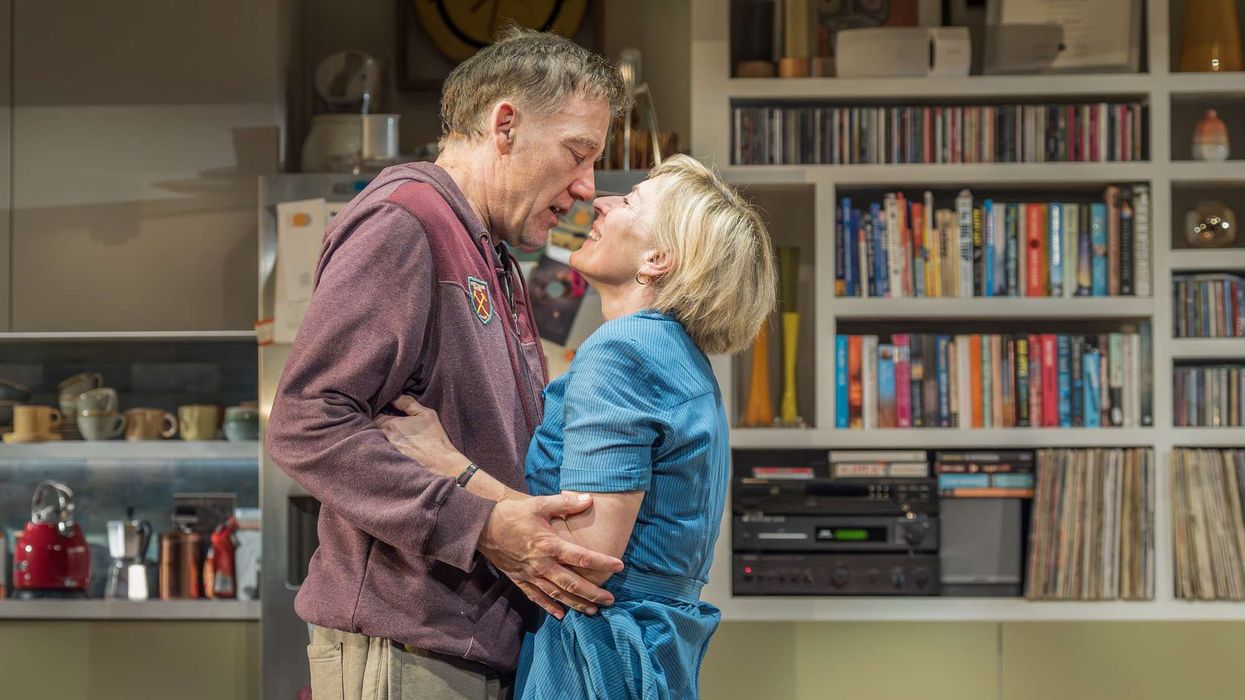

For many people in the National Theatre audience, a new play called End will come across as a bit too close to home. How do you prepare for a “good death” after a loved family member is diagnosed with terminal cancer?
This is the reality facing Alfie, a retired radio producer, who simultaneously wants to live but also depart as painlessly and quickly as possible with “dignity”. He is 58, as his long-time partner, Julie, who has taken to writing crime novels late in life. As so often happens, one life goes while another comes. They are waiting for their daughter, Annabelle, who is expecting a baby “out of wedlock”. She never actually appears on stage as the play is a two-hander. As they wait for Annabelle one morning, Alfie and Julie talk about the life they have had together.
End, set in mid-June 2016 in a large, terraced house in Haringey in London, is the third in a trilogy of standalone plays by David Eldridge, which launched with Beginning in 2017 followed by Middle in 2022.
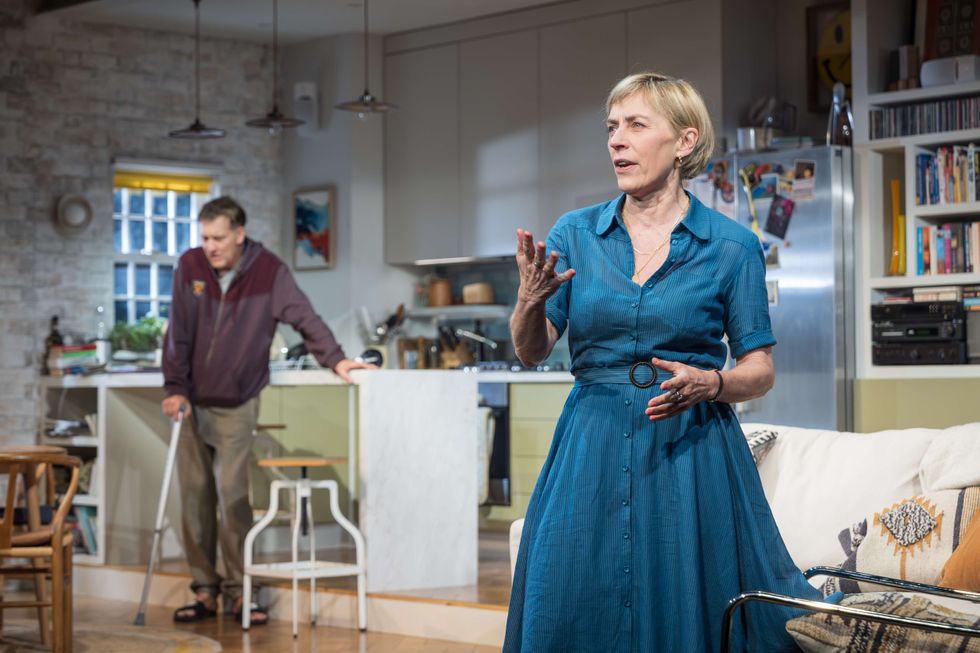 A scene from the playMarc Brenner
In End, Alfie, who appears with a metal walking stick, is played by Clive Owen, and Julie by Sakia Reeves. The play, directed by Rachel O’Riordan, is the last to be commissioned while Rufus Norris was artistic director of the National Theatre.
Some in the audience might remember a 1970 American romantic movie called Love Story. Directed by Arthur Hiller, it was adapted by Erich Segal from his eponymous novel.
The film starred Ryan O’Neal as Oliver Barrett IV and Ali MacGraw as Jennifer “Jenny” Cavilleri, who meet as students at Havard College. He is from a rich family; she is “smart but poor” and teasingly refers to Oliver as “Preppy”. Despite their differences they get married, only for Oliver to be disinherited by his ambitious father. A routine blood test reveals Jenny is terminally ill. The film was a real tear jerker. When Oliver’s father discovers the truth about his sick daughter-in-law, he rushes to hospital just as his son is leaving after the death of his wife.
The opening line in the film in a kind of flashback is: “What can you say about a 25-year-old girl who died?”
The film, with its very clever dialogue, became a classic.
It ends with the following father-son exchange:
Oliver’s father: “Why didn't you tell me? I made some calls, and when I found out I jumped in the car. Oliver, I want to help.”
Oliver: “Jenny’s dead.”
Oliver’s father: “I’m sorry….Love...”
Oliver (with the most famous line from the film): “Love means never having to say you’re sorry.”
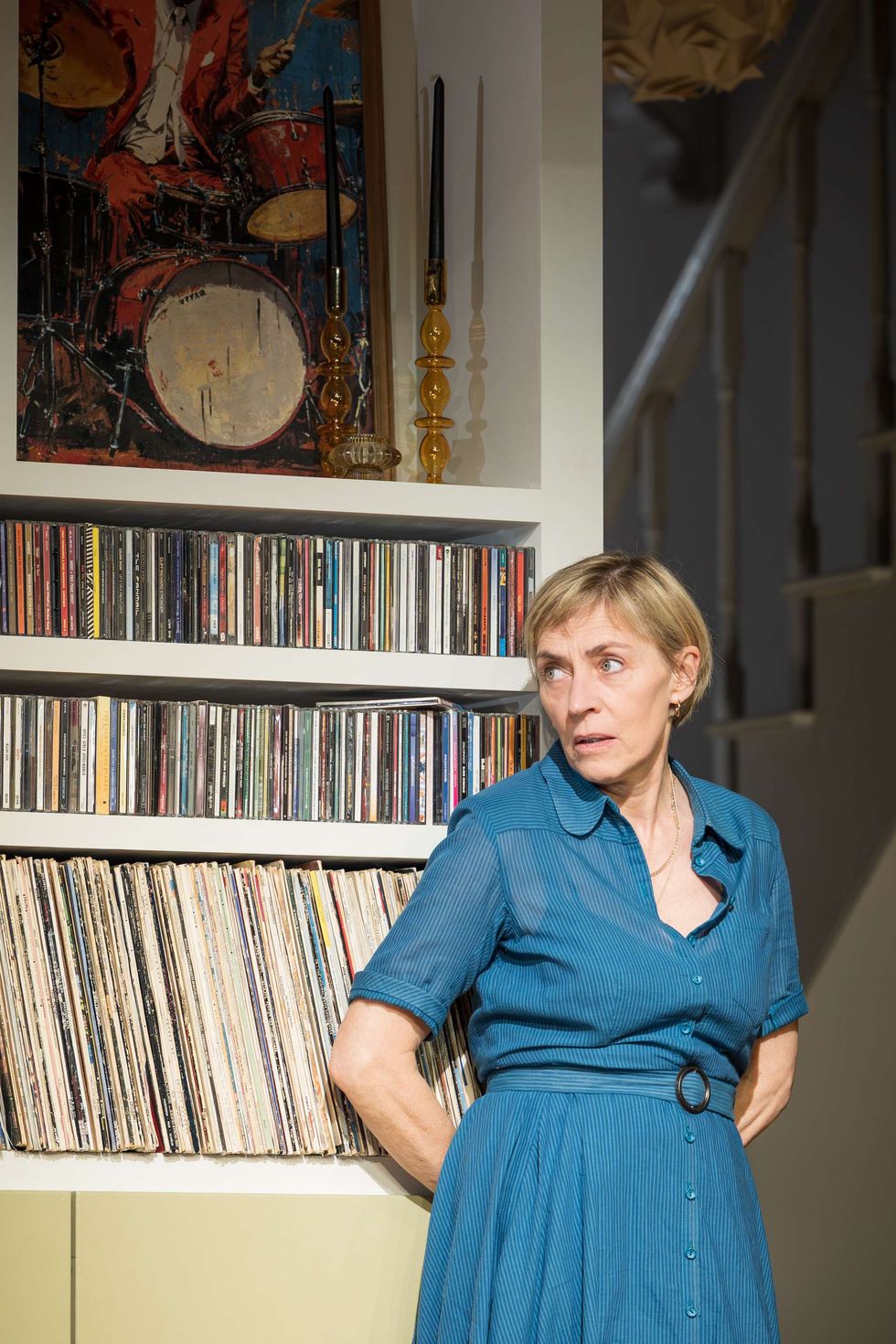 Saskia ReevesMarc Brenner
For Eastern Eye readers, it may be worth while to try an see the film, before buying a ticket for End at the Dorfman Theatre at the National.
The tone in End, a lot less sentimental, is quite different.
We learn very quickly that Alfie, fed up with his chemotherapy, has decided not to continue his treatment.
“I’ve accepted what Dr Chan said on Friday,” he tells Julie, adding, “I know Mr Rahman thinks I’ve made the right.”
Perhaps Nigel Farage’s Reform party and its fellow travellers will accuse the playwright of being “woke” as neither of the cancer specialists is “proper English”. But maybe this reflects the reality of the NHS.
“Do you wish we’d got married?” asks Alfie.
“No,” replies Julie. “I’m happy as I am.”
Alfie wonders: “Do you think we’ll ever have sex again?”
A little later, they do manage to have sex, after which Alfie observes, “That was the last time wasn’t it?”
The couple go through a whole range of emotions, from acceptance of what is to come to raging against the dying of the light.
“I want a good end,” says Alfie.
But what is a good end? For many parliamentarians it’s currently the assisted dying bill though going to Dignitas in Switzerland is one option that never comes up in conversation between Alfie and Julie.
There are flashes of humour as the couple discuss the location of his final resting place. Alfie wants to be with his family in Brentwood: “I want to go home. I want to be with Mum and Dad. And Nan……I know we’ve lived here a long time, babe….but I don’t want to be in Highgate Cemetery with Karl Marx and Malcolm – f****** – McLaren.”
Julie prefers something closer to Haringey: “But I thought we’d be together?”
Alfie thinks he has the perfect solution: “When the time comes you can be with me up at Brentwood….”
Julie doesn’t think this is such a great idea: “What your mum and your dad and your nan – and me and you – all in together?”
There is laughter from the audience as she points out: “You can only put four in one plot. Your mum didn’t like me, Alf.”
Alfie discusses the music he wants for his funeral, his choice of clothes and the actual moment of death: “I’m not actually scared of going. I know I’ll just go to sleep in the end. That’s all it is. I just won’t wake up.”
He wants to be alone in the hospice because he does not want Julie to see him suffer: “Once I’ve gone into the hospice I want to be on my own.”
He explains: “I want to say goodbye while I’ve got all my wits about me. And I’m not too weak. And that’s it. Throw a party a month or two later. I’m sure one of my mates will play some records.”
Julie sees the end rather differently: “Don’t you want me to hold your hand? Don’t you think I want to hold your hand?”
Alfie is not so sure: “I can’t think of something worse than us fading out. Me all drugged up. Except maybe I can still hear a bit. The sound of you and Annabelle. Crying.”
The one thing Julie doesn’t do is religion.
When Alfie says, “We’ll be together one day,” she reacts, “We won’t. Don’t talk nonsense, Alf. This is it.”
This, of course, goes against the Hindu notion of the body being discarded in the manner of old clothes but the atma being eternal.
Julie belongs to secular Britain: “I’ve known you since I was twenty-three years of age. And we haven’t had no religious crap once. Don’t start now. This is it.”
Other secrets come out during their exchanges. Alfie has received an email with expressions of love from a woman, a tour manager, with whom he had a six-month fling 10 years ago. Julie reveals she has a book in mind about her and Alfie, especially the last five years since he was diagnosed with the dreaded “C” word.
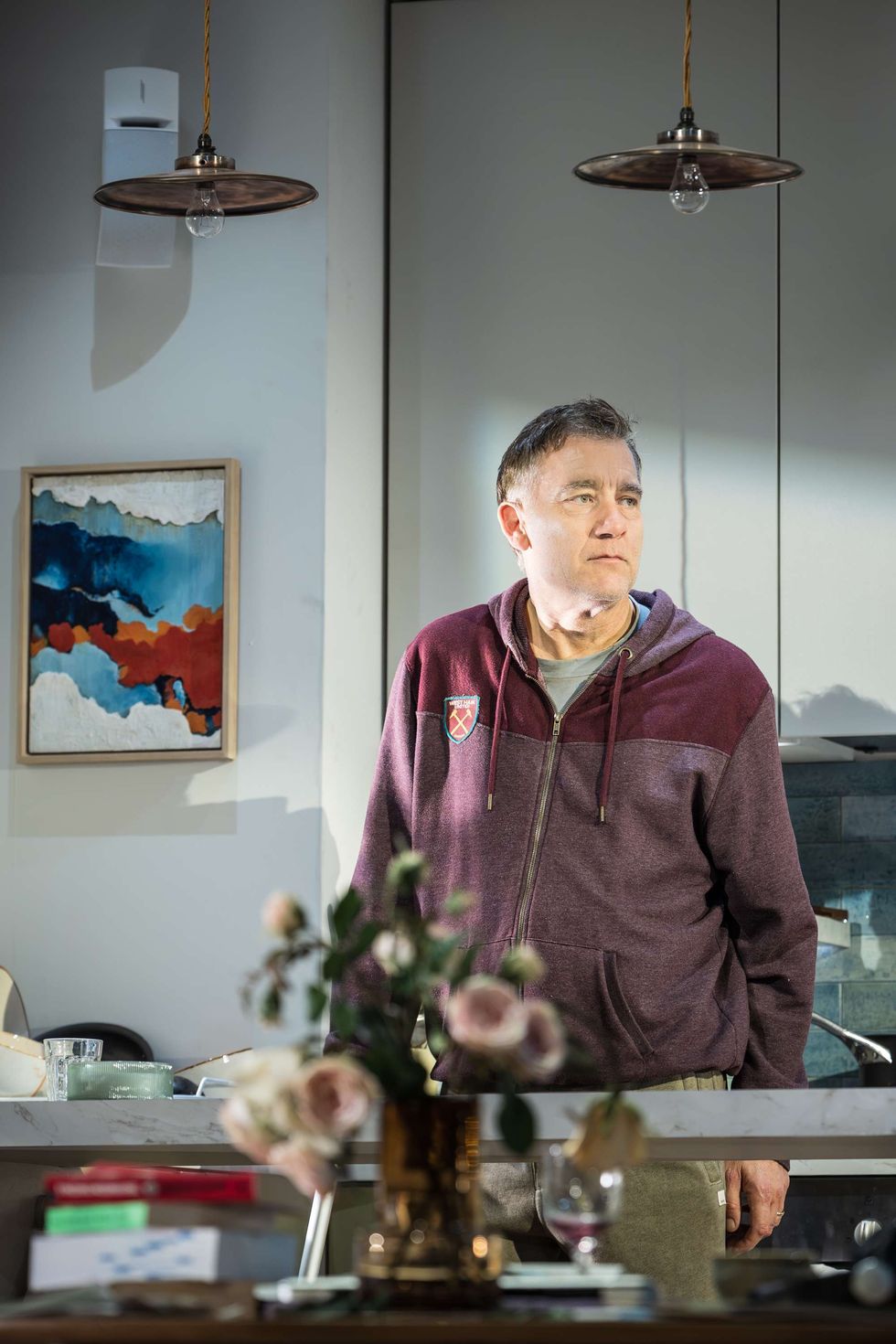 Clive Owen Marc Brenner
Julie comments, “No, that’s not fair,” when Alfie suggests he is now merely providing fodder for her book.
“I’ll tell you what’s not fair,” he protests. “Knowing you’ll never walk your daughter up the aisle on her wedding day. Or play that cheesy old Bros record she loved when she was a kid for her first dance. And come out from behind the decks and lead your partner onto the dance floor to join her and your son-in-law.”
Julie has Googled miracle cures abroad, even though that would cost £50,000.
“I want you to fight,” she urges Alfie, who says, “What, fight for more radiotherapy? And chemo? That wouldn’t even work.”
She asks him: “Don’t you want to live?”
“Of course I want to.”
“Then try!”
He sums the reality of the situation: “I’m dying, Ju!”
The door bell announces the arrival of their daughter, Annabelle, who hasn’t been told the whole truth.
“We’ll tell her,” promises Julia. “We’ll tell her we want a good end. And that’s exactly what we’re going to have.”
End is at the Dorfman Theatre at the National until 17 January 2026.