
Highlights
- Launch scheduled for Wednesday at 6.24pm ET from Kennedy Space Center.
- Christina Koch and Victor Glover make history as mission breaks barriers.
- Crew will travel 253,000 miles from Earth, surpassing Apollo 13's distance record.
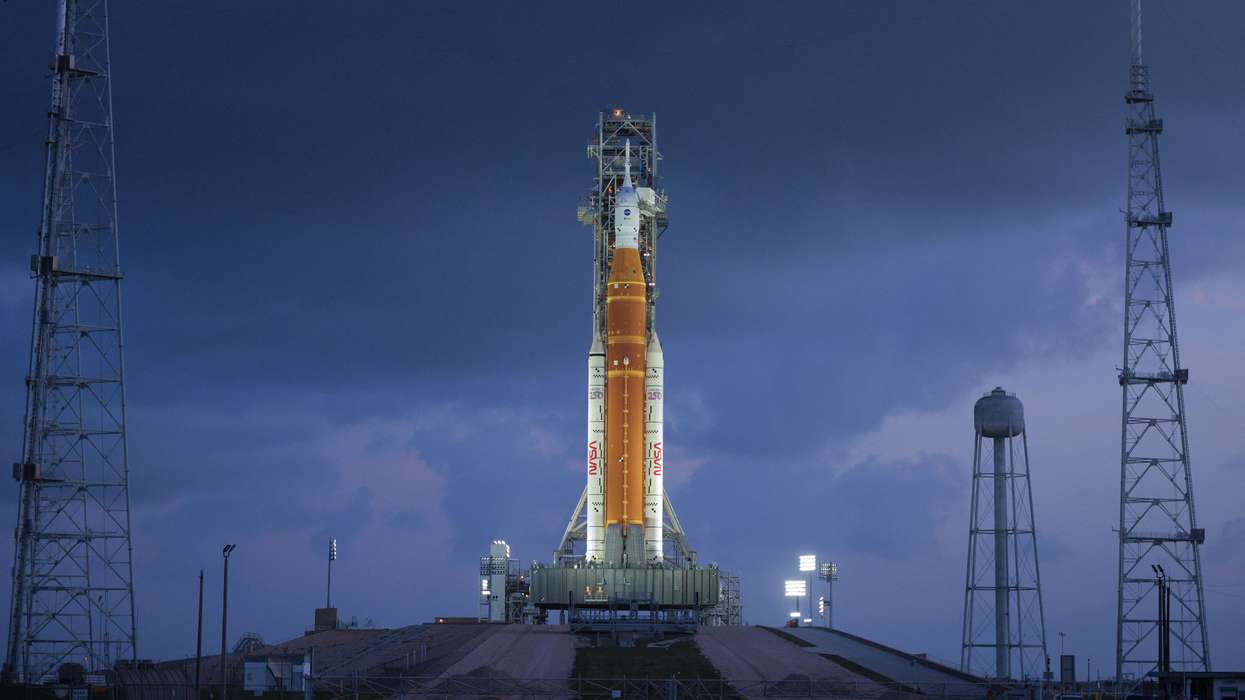
The mission, scheduled to lift off at 6.24pm Eastern Time, will send four astronauts , three Americans and one Canadian beyond lower Earth orbit for the first time since Apollo 17 in December 1972.
Commander Reid Wiseman, along with crew members Christina Koch, Victor Glover, and Canadian Space Agency's Jeremy Hansen, entered quarantine at Kennedy Space Center on Sunday ahead of their 10-day test flight.
Breaking distance records
The Orion space capsule is expected to carry the crew more than 253,000 miles from Earth, exceeding Apollo 13's 1970 record of 248,655 miles.
On flight day six, the spacecraft will reach approximately 4,600 miles beyond the moon's far side.
Koch will become the first woman to fly into cislunar space, while Glover will be the first person of colour to achieve this milestone.
Hansen will mark another first as the initial non-American astronaut to venture this far from Earth.
"If we're not going for all and by all, we're not truly answering all of humanity's call to explore," Koch said during Monday's media briefing.
The mission serves as foundation for Nasa administrator Jared Isaacman's ambitious plans for a £15 bn moon base by decade's end.
Astronauts will photograph the lunar south pole from 4,000 to 6,000 miles altitude, identifying locations for future landings.
The crew will test critical life-support systems while living in the five-metre diameter capsule during their 685,000-mile journey before splashdown in the Pacific Ocean.
Nasa reports an 80 per cent chance of favourable weather conditions, with backup launch windows available over the following five nights.
The crew will test critical life-support systems and hardware needed for future Artemis missions, including Artemis IV scheduled for 2028, which will place human footprints back on the lunar surface.