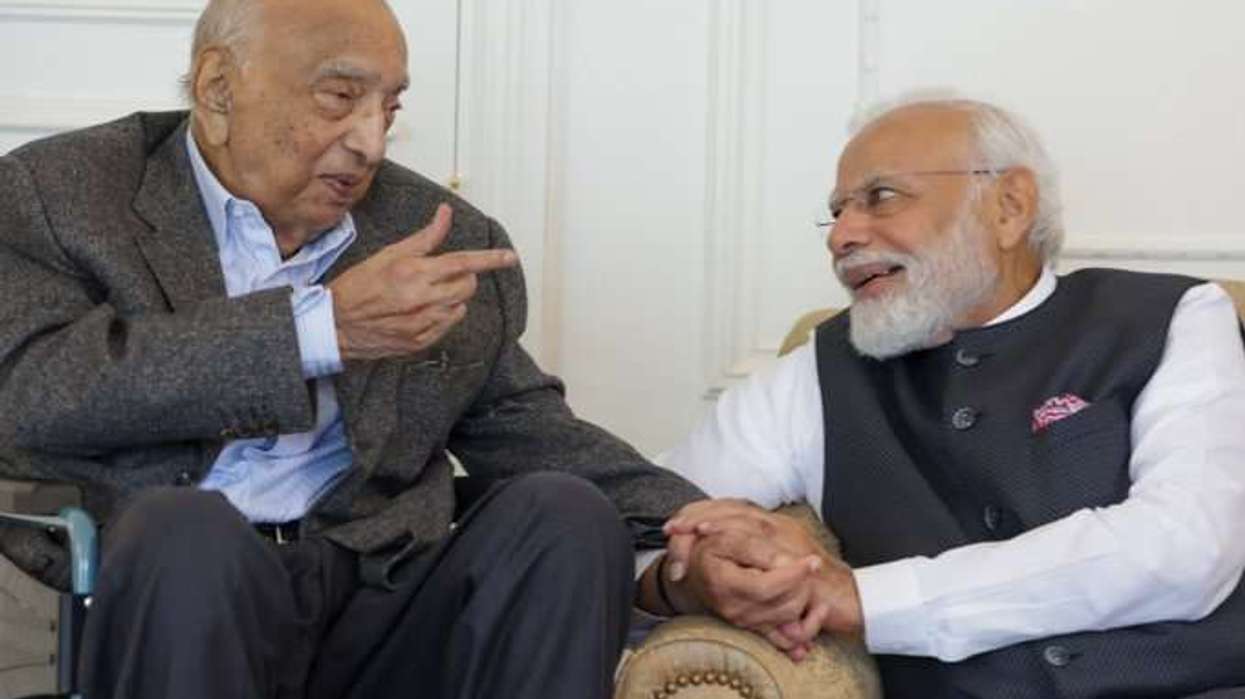

Lakshmi Mittal’s father, Mohanlal Mittal, who died on Thursday 15 January in London, aged 99, leaves behind probably the world’s foremost steel dynasty.
A businessman and philanthropist of the old school and a devout Hindu, he has been hailed as a man who was “ahead of his time”.
His passing ends a link with pre-partition India.
His eldest son, Lakshmi Mittal, 75, is executive chairman of ArcelorMittal and generally regarded as the most important man in the global steel industry.
Lakshmi’s son, Aditya Mittal, 49, is the chief executive of Arcelor Mittal.
Tributes to Mohanlal, undoubtedly the patriarch of the Mittal family, were led by the Indian prime minister Narendra Modi, who posted a message on social media: “Shri Mohan Lal Mittal Ji distinguished himself in the world of industry. At the same time, he was very passionate about Indian culture. He supported various philanthropic efforts, reflecting his passion for societal progress. Pained by his passing. I will cherish our various interactions. Condolences to his family and admirers. Om Shanti.”
Mohanlal is survived by two other sons, Pramod, 69 – his father tended to live with him at his home in London – and Vinod, 68, who is based in India, mostly in Mumbai. They are both businessmen.
Mohanlal’s daughter, Seema, 72, is married to Sri Prakash Lohia, founder and chairman of the Indorama Corporation.
Mohanlal’s wife, Geeta Devi Mittal, predeceased him.
In Eastern Eye’s 2026 Rich List of the wealthiest Asians in the UK, Lakshmi and Aditya Mittal are ranked second with £15.5bn, while Sri Prakash Lohia and his son, Amit, come in third with £12bn.
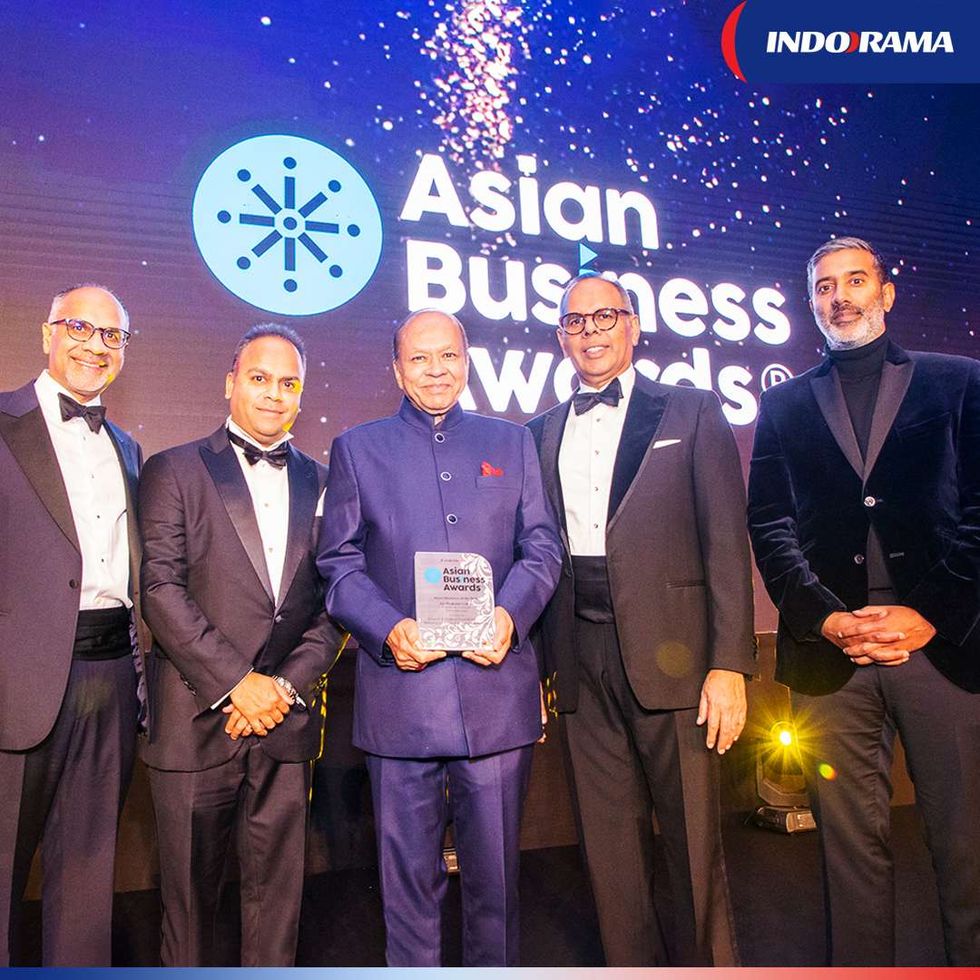 (L TO R) Shailesh Solanki, Kamal Pankhania, Sri Prakash Lohia, Kalpesh Solanki, Nihal Arthanayake during Asian Business Awards in LondonAMG
In a tribute to his “beloved father” who had died at the “incredible” age of 99 surrounded by his family, Lakshmi said: “My father was an extraordinary man, whose strong religious belief and work ethic stayed with him his whole life. He was born into a loving and modest family in a small village named Rajgarh, Rajasthan. Always someone to make the most of his circumstances, he believed that hard work was usually, if not always the answer.
“He was a natural entrepreneur, with a vision that was in many ways well ahead of his time. He inspired us to be bold and extend our horizons beyond what was safe. Throughout my life I would seek his counsel and wisdom and even till his last days as his mental strength never wavered. I never stopped discussing business issues and challenges with him – he always encouraged me to be bold and ahead of time. For all his business success, he was a great friend to me all the time, remembering, cherishing and celebrating all the important milestones in our lives. Family was everything to him; he is survived by 5 children and their spouses, 11 grandchildren and their spouses, and also 22 great grandchildren.”
Lakshmi went on: “He would always call and remember when he could be present at each one’s birthday, wedding anniversary, graduation, you name it he was there. “For those who knew him personally, he was incredibly charismatic and a great raconteur, and maintained many close friendships which had been built over the course of his very long life.
“We all love him, miss him deeply, and also we celebrate his extraordinary, very full life and his considerable legacy.”
The story of Mohanlal and his father give some understanding of how the Mittal dynasty came into being. There was a time in the 1970s when Mohanlal had to send Lakshmi out of the India because the country was too caught up in red tape known as “licence raj” and businessmen had to look overseas if they were ambitious. It is ironic that half a century later, India is proving to be the most dynamic part of the ArcelorMittal empire.
Remembering a personal encounter
Mohanlal didn’t give very many interviews but some years ago he spent a whole afternoon chatting to me about his life and times.
He was a practising Hindu, believed strongly in the family and that when it came to business, there had to be progress between generations.
He said he was proud of Lakshmi, who sent shockwaves through the steel industry when his Mittal Steel made a successful hostile bid for the much larger Arcelor of France in the summer of 2006.
“Once, Lakshmi was known as my son. Now, I like to be known as the father of my son,” quipped Mohanlal.
He added: “If you don’t feel proud, you are wrong father. If son gets credit, father gets credit automatically.”
He argued that between generations, there had to be a move upwards.
He reasoned: “If the next generation is not better than you, if my sons are not better than me, whatever I made will not stay. Second generation can reach the sky if they are capable. I started from zero. If my sons are not better than me, it will be finished there itself.”
What I especially liked was his engaging sense of humour. He had a joke about the father-son relationship.
He started with a self-deprecating remark, “I’m not an educated man,” and then recalled one his favourite jokes that referenced Jawaharlal Nehru, independent India’s first prime minister, and his father, Motilal Nehru.
Mohanlal took great delight in telling me: “Jawaharlal did barristry but Motilal was only advocate. A case was going on in High Court. The other side was barrister. ‘What do you know, Mr Motilal, you are only advocate. I am barrister.’ Motilal said, ‘You’re barrister. I am father of a barrister. I know better than you.’ ”
Mohanlal talked about his family background in the days before the partition of India and emphasised he was not born to wealth.
Relaxing at Pramod’s house in Mayfair, Mohanlal also spoke about his faith.
“Earning money is not the whole part of a man,” he said. “He must do something for others, also. I realised after retirement that I had done very little. I have made enough money and travelled the world but now want to do something for the Hindu community. I regret I did not do this sooner.”
While he found it reassuring that Hindus in Britain are “more Hindu than Hindus in India”, he expressed concern that those in many other countries knew little about their religion and were suffering a loss of identity. Something has to be done.”
What was this “something”, I asked.
He spoke of going from country to country, talking about his belief in Hinduism.
I don’t think the tours ever happened but in later years, Mohanlal made a special point of meeting HH Swami Chidanand Saraswati, president of Parmarth Niketan ashram in Rishikesh, whenever the latter came to London. Mohanlal would send a car for the spiritual leader.
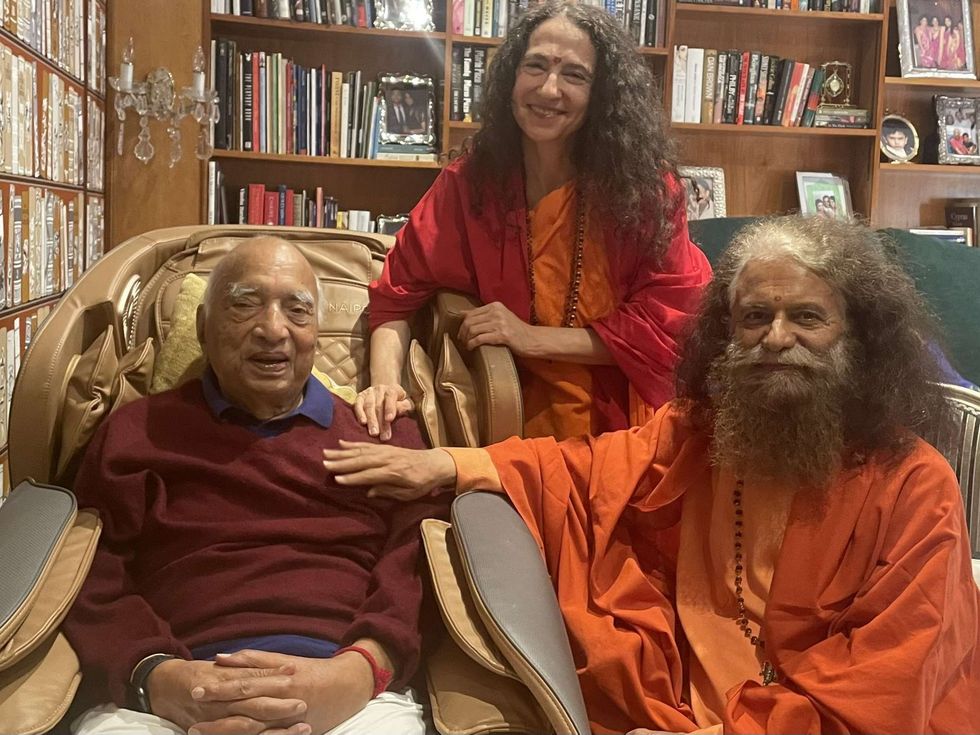 X handle/Swami Chidanand Saraswati
Giving examples of the Hindu success story, Mohanlal said: “Thirty seven per cent of the top American doctors are Hindus, and five per cent of the chief executive officers of top companies in the world are Hindus. In Britain, Hindus in jail account for a tiny proportion of the prison population and that, too, for not very serious offences. Hindus are, more or less, law abiding.”
He described how he inculcated the Hindu work ethic into his sons. “In our joint family system, both teaching and working were taught. Teaching means good education as well as working. Lakshmi did graduation from St Xavier’s, commerce section, which started at 6.30 in the morning till 10.30am in Calcutta. 10.30am he directly has to come to the office, can’t go home. And he has to lunch with me in the office, then go home for study. I say, ‘If you don’t come, I won’t have lunch.’ He has to come to the office and work two hours in the office. Started at the age of 15. He did graduation at 19. Sometimes, (his) mother feels, ‘You are pressing too much.’ But ultimately he got accustomed to that. Today also, he works 16 hours a day. If my sons are not better than me, my business is finished. Lakshmi is better than me, and Lakshmi’s son, Aditya, is even better than him.”
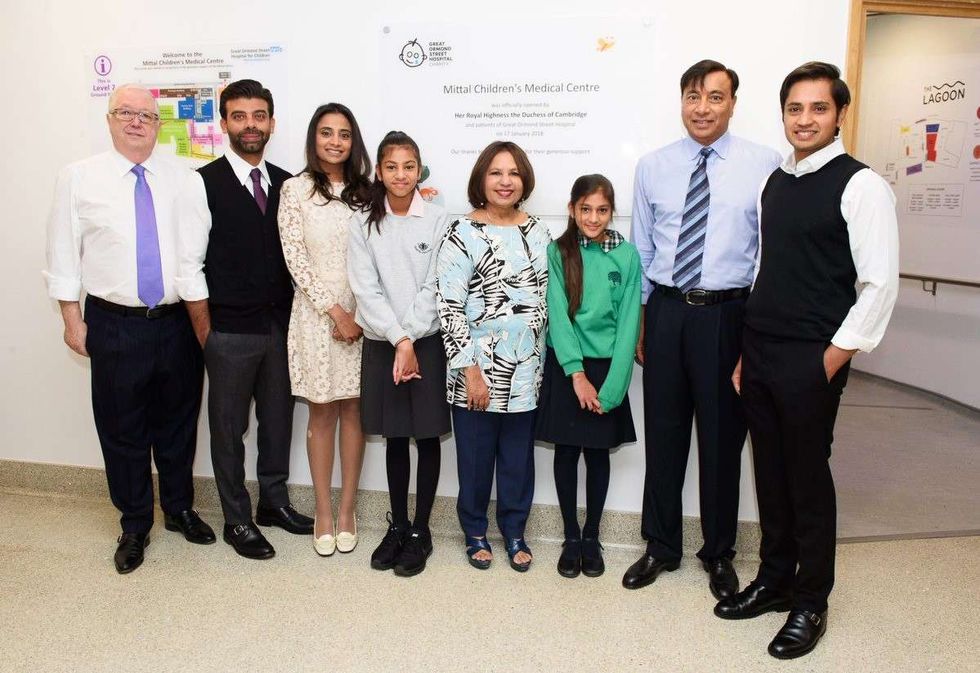 At the Mittal Children's Medical Centre at Great Ormond Street Hospital: Amit Bhatia (2nd from left). Vanisha (Mittal) Bhatia (3rd from left). Usha Mittal (5th from left). Lakshmi Mittal (2nd from left). Aditya Mittal (left)Company handout
He spoke of the long hours his son worked: “Hard work is required all the time. But if God is not on your side you cannot succeed.”
He repeatedly attributed his own success to “the kindness of God”.
“It’s possible to make £100,000 with hard work but to get into the billions, you need God,” he declared. “I believe in God 100 per cent. Otherwise, how could I have grown from zero to billionaire? I am not an educated man. I was born in a small village, no resources, no relations. Who has helped me? It’s God. You can earn a few hundred thousand by hard work. When you talk of a billion dollars, can you earn that by hard work? No.”
Over a cup of tea, Mohanlal relaxed and harked back to the days before Indian independence. He was born in Rajasthan on 24 October 1926 and as a young man he lived in what became Pakistan. But like millions of other Hindus, he had to flee across the hastily-drawn new borders after partition.
He recalled: “I was in Karachi till 1947. I started my career after matriculation in Rajasthan. My father was working as a small broker in Karachi. His name was BM Kandoi – Bhura Mal Kandoi. The surname was changed to Mittal.”
He offered nostalgic recollections of the old Punjab: “Hindus and Muslims lived happily – no one knew who was Hindu and who was Muslim. Such a relationship. I shifted from Karachi when I was 20 years old. My father said, ‘How can it (Partition) happen? We are living as brothers.’ “
Mohanlal has a theory about the business acumen of Marwaris, and why they have done especially well living alongside the more intellectual Bengalis in Calcutta (now Kolkata).
“They are just like the Jews in Europe and America,” began Mohanlal. “Marwaris have been successful in Bengal in business, though at one time Bengali zamindars were on top. But the subsequent generation of Bengalis – they wanted to enjoy only easy life. Marwaris had come from Rajasthan and had nothing to eat.”
From the age of 17, Mohanlal felt Karachi was no longer safe for the family but his father was reluctant to leave behind his business. As a compromise, Mohanlal was allowed to move to Kanpur with his mother and a younger brother. The two boys initially set up an oil mill but this was destroyed in a flood. By this time, Mohanlal was dealing in scrap iron from Calcutta. He was then offered the chance to become managing partner of British India, a steel rolling mill, without having to invest in the venture. After Lakshmi was born on 15 June 1950, in the village of Sadulpur in Rajasthan, Mohanlal thought it best to move with his family to Calcutta where there was a sizeable and successful Marwari community.
He registered a company, Mittal & Sons, started buying scrap from Hindustan Shipyard, and used it in the rolling mill as raw material to produce steel. In 1956, he established Andhra Steel Corporation and started several small rolling mills. He wanted to make sure Lakshmi was given a formal education that he himself didn’t have.
In 1974, Mohanlal set up his steel business, Ispat (Sanskrit for steel), in Calcutta. Two years later the fateful decision was taken that Lakshmi should establish Ispat International in Indonesia. It helped that his brother-in-law, Sri Prakash Lohia, who had married his sister, Seema, was already doing well in Indonesia.
Initially, in 1975 Lakshmi was hoping to sell some land in Surabaya, East Java, in Indonesia for his father, who had abandoned plans to set up a steel mill there because of government obstacles.
“I was on my way to Japan on holiday with a friend and I was supposed to negotiate with the buyer,” said Lakshmi. “But if you are a businessman you want to study these things and I realised we should not sell it. So I called my father and he said yes, okay, if you can resolve these problems that’s fine.”
Lakshmi did indeed manage to put up the plant, and settled in Indonesia with his wife Usha and children, Aditya and Vanisha.
Success did not come easily to Lakshmi.
"I was 26 when my father sent me to Indonesia in 1976 to set up Ispat International and it took 12-14 years of very hard work to build up the business," Lakshmi revealed later. “I went through great hardship and had to subsist on $250 a month.”
Indonesia was to be their family home for 14 years before Lakshmi moved to London in 1995. Within a few years, he had topped the Asian Rich List in the UK.
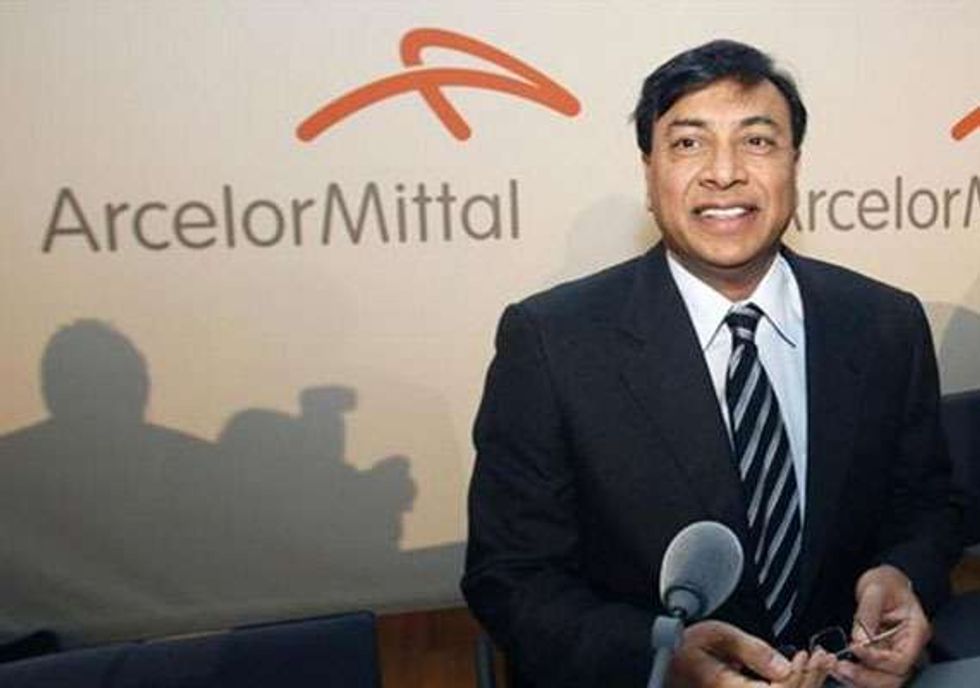 Lakshmi Mittal X handle
One of the acquisitions Lakshmi made was a sick steel plant in Mexico in 1988.
His was his father who advised Lakshmi on how he could turn round the plant.
This was part of my conversation with Mohanlal, who remembered: “There were 60 Germans in Mexico, drawing more than $250,000 each. We brought 60 Indians, paying them $40,000, and replaced all the Germans. That itself converted to profit. And they did a better job.”
Mohanlal shifted to London in 1995, a year after his retirement in Calcutta so that he could divide his time between Lakshmi and Pramod. There would be trips back to India to see Vinod.
One of the big events in the family was the 80th birthday party thrown for Mohanlal. The elaborate event was organised by Pramod’s daughter, Vartika.
One guest later provided a snapshot of the occasion: “There was plenty of Mughlai, lots of kebabs, shammi kebab, spicy lamb chops, biryani, pista dum aloo, chicken marinated with ginger. I saw the Hinduja family there led by SP (Srichand); I didn’t see (Lord) Swraj Paul but his (twin) sons, Ambar and Akash, were there. I saw Adi Godrej and Lord Bagri. The reception was in the Orangerie (a well known landmark in Kensington Palace Gardens, which adjoined Laksmi Mittal’s residence).”
Bollywood entertainment was provided by Kareena Kapoor and Akshay Kumar.
Notice to Mohanlal’s funeral on Sunday, January 18, has been issued in the name of his extended family.
There are his children and their wives: “Lakshmi Niwas and Usha Mittal; Seema and Sri Prakash Lohia; Saroj and Santosh Rateria; Pramod and Sangeeta Mittal; Vinod and Archana Mittal.”
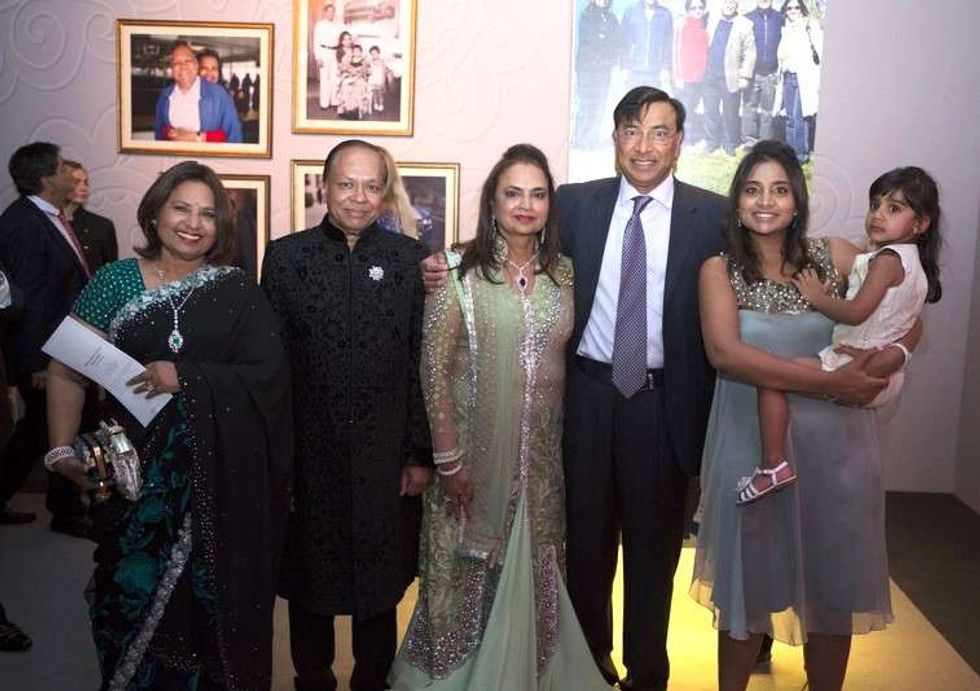 Mittal and Lohia families:left to right: Usha Mittal. Sri Prakash Lohia. Seema Lohia. Lakshmi Mittal. Vanisha (Mittal) BhatiaCompany handout
Then come his grandchildren’s generation: “Amit and Aarti; Aditya and Megha; Shruti and Vikram, Vanisha and Amit; Saurabh and Neha; Sneha and Aditya; Natasha and Varun, Vartika and Utsav, Atulya and Isheta, Shristi and Raj; and Divyesh and Jake.”
Then come the great grandchildren: “Aria, Sanaya, Riyana, Eshana, Armaan, Sohum, Siaara, Suhana, Rayaan, Yuveer, Ruhan, Ahaan, Aaryav, Trigya, Shorya, Aryaman, Jaiveer, Miraya, Anegita, Auhrim, Eka, and Vishwa.”
There will be a memorial service on Monday January 19.