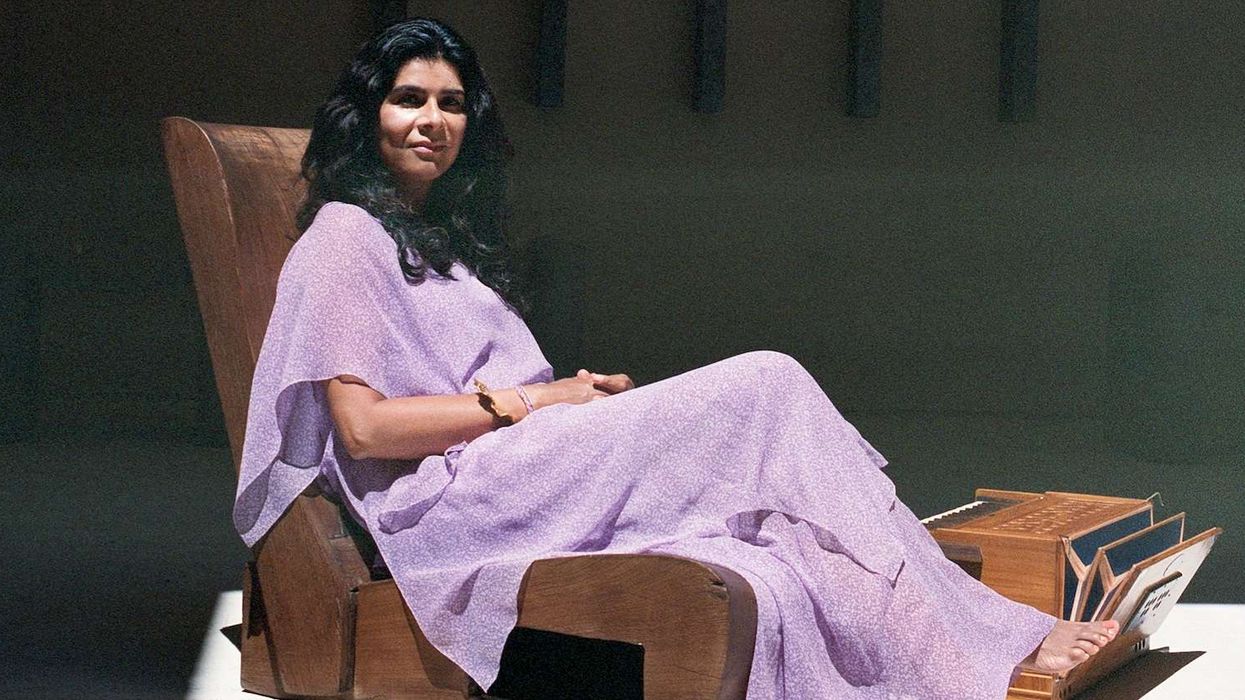

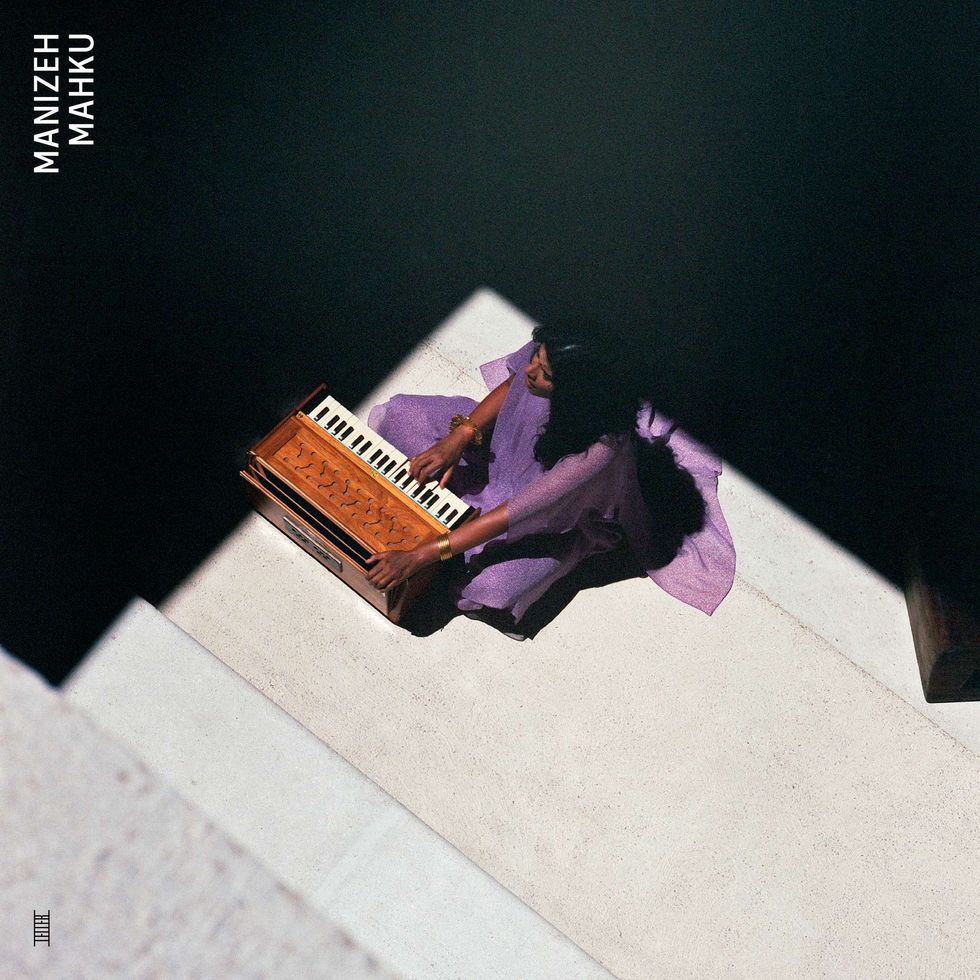
Some albums arrive as if pulled from another time. Mahku — the debut from Manizeh Rimer — feels like one of them. Named after both her grandmother and her daughter, and born from a creative kinship with artist ganavya, the record folds Zoroastrian prayers, Buddhist mantras and jazz improvisation into a luminous meditation on love, lineage and spirit. It also includes a unique reinterpretation of Fleetwood Mac’s Landslide,
Recorded at LEITER’s Berlin studio with a hand-picked ensemble, Mahku captures the devotional practice that has shaped Manizeh’s life and community for decades. Speaking to Eastern Eye, she reflects on how chanting became her way of ‘cracking the heart open’ — and why now was finally the moment to share it with the world.
Mahku is such a unique meeting point of ancient prayers, jazz improvisation, and modern sound. When you first began this project, what vision or feeling did you want to capture?
Thank you. The way you describe it is exactly what I was hoping for. I consider so much music to be ‘devotional’ music. If it quiets my mind and cracks my heart open, I consider it devotional. I hear devotion from Nusrat Fateh Ali Khan to Bill Evans, to John and Alice Coltrane to Radiohead to De La Soul. Chanting has been a life changing practice for me. The mantras are so old, they have been sung for centuries, which is partly why they are so magical. I was hoping to capture this timelessness of the chants, that makes me feel less isolated as a human being, but with a modern sound.
 Many of the tracks have a choir on them that you can sing withFlorian Schneider
Tell us about the album?
I have been chanting with people for many years, including many of the chants on the album. I am often asked if recordings of the chants we do together exist. I recorded the album so that I could finally say that “yes, they do!” My hope is for people to listen, but also to practice with the album. Many of the tracks have a choir on them that you can sing with.
How would you describe the songs musically?
I would describe them as simultaneously simple and complex. Some very talented musicians like Grammy nominated multi-instrumentalist, Jai Uttal, and jazz pianist Jay Verma, play on the album, adding in layers of complexity and beautiful
depth. The melodies are the most important thing. My favourite melodies pull on my heartstrings. They don’t need to be complex — just one note can crack your heart open.
Mahku means ‘eclipse’, and it’s also the name of your grandmother and daughter. How did that word become the album’s guiding metaphor?
The eclipse is the sun and moon coming together; right and left coming together; differences coming together, and then you just see the one. The ultimate purpose of any meditation practice, including chanting meditation practice (which is a form of meditation) is to quiet the mind, open the heart and experience your spirit.
Tell us more about that?
The heart is the doorway to spirit. When you experience your spirit, differences between us that reside on the surface, like our age, ethnicity, gender, language - all melt away. Unconditional love and an understanding that love is the tie that binds, becomes clear. You may still have bad days and not feel connected to your spirit at all, but that is where the practice comes in. You go back to it. You keep doing it. You have a tool. It’s a lot easier than sitting meditation practice — at least for me!
The album gathers incredible collaborators — including ganavya, Jai Uttal, Ben Hazleton, Doug Weiss, Jay Verma, Miriam Adefris, and your daughter Mahku. How did you build this constellation of voices and instruments?
Yes, I am grateful so many wonderful collaborators contributed to this album. ganavya, being my main collaborator and co-producer is so good at pulling a village of musicians together. Her recent, sold out show at the Barbican is a perfect example of this. Many great musicians joined her on stage, including Jay Verma and Miriam Adefris. Jai Uttal has been a teacher of mine for over a decade and has taught me so much. Ben Hazleton and I have been playing together for many years at Love Supreme Projects. But the real miracle, was my 15 year-old daughter agreeing to sing and play the guitar on the album!
Tell us about the role ganavya played as co-producer and creative companion?
I found that in the process of working with her, that she could bring things out in me that I myself did not know were there. Because I could entirely trust her, I was able to let go and trust myself. She guided me, but never told me what to do or how something should sound. ganavya is a musical virtuoso, but it is never intimidating to sing or create music with her, because she comes at it with love and boundless generosity. With Ashem Vohu we were trying to give a new form to something ancient.
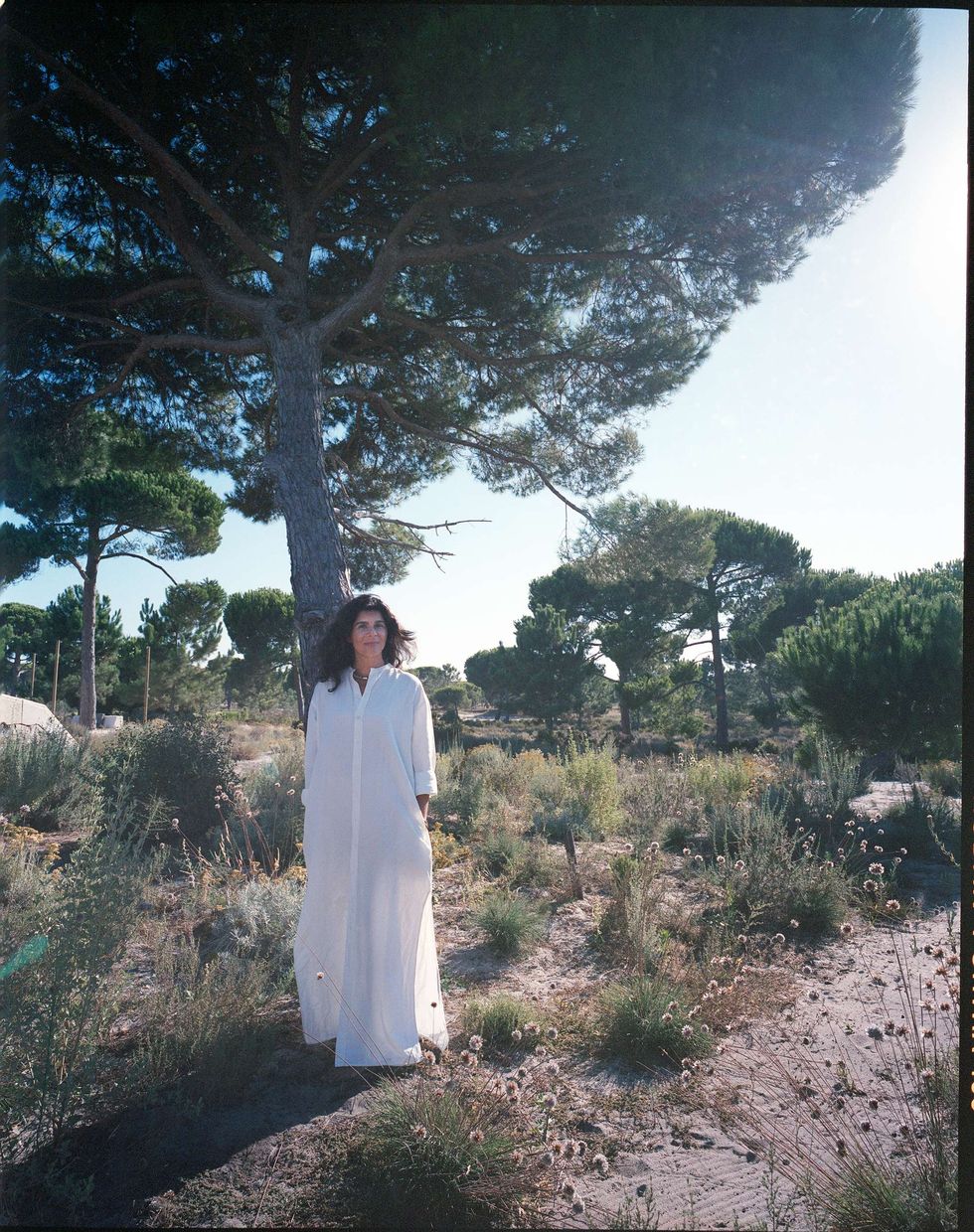 I think discipline and experimentation are like two sides of the same coinFlorian Schneider
Tell us more about how that beautiful track was created?
She asked me if there was a prayer that I grew up with and would want to record. Ashem Vohu, the first track, is a 3,000 year old Zoroastrian prayer sung in Avestan that my grandmother, Mahku, taught me. To my knowledge it has only been sung publicly by male priests. We started by singing it and then adding in different instruments to create the old but new sound. Payam Yousefi plays the kemanche on the track, a traditional Persian bowed-string instrument that we imagined you would have heard centuries ago in the part of the world the prayer comes from.
Who are you hoping connects with this album?
Anyone and everyone. Especially people who think chanting/devotional music sounds a certain way or is not for them!
How do you reconcile the discipline of spiritual practice with the looseness and experimentation of jazz?
I think discipline and experimentation are like two sides of the same coin. You do all the work and practice, practice, practice so that when the time or the moment comes you can let go and experience a love supreme, or experience that you are the blue sky or as Alice Coltrane said, feel that you can become so big that ‘sky will learn Sky”.
Is there a track on the album that feels most personal or transformative to you?
Yes. Avan’s Sita Ram is the most personal. I learned this chant sitting in Jai Uttal’s living room in San Rafael, near San Francisco, when my mother, Avan, was halfway across the world, coming to the end of her life. I did not always have an easy time communicating with my mother, so instead of trying to talk to her about what I was feeling, I would chant this Sita Ram to her. She did not know I was doing it, but it was my internal way of communicating with her and dissolving any stiffness I was feeling in my own heart.
What made you feel ready to finally record, after years of live chanting and teaching?
People kept asking for the chants we do at Love Supreme Projects and ganavya came into my life. Her and Felix Grimm, who is also a co-producer and sings on Bhaisajyaguru, encouraged me to record and supported me to make it happen. I could not have done it without the both of them.
You brought Jivamukti Yoga to the UK over two decades ago. How does Mahku reflect that practice?
Jivamukti Yoga included chanting as a key part of the practice way back when no one was really chanting in a yoga class in the west. Alice Coltrane led a satsang there in 1998. Sharon Gannon, the co-founder of the method, spent time chanting with her at her ashram in California. Many great kirtan singers came to Jivamukti Yoga in London throughout the years. I remember Snatam Kaur coming in 2010 and only 25 people showing up. She now sings with thousands of people. They are all part of the inspiration for the album.
The album moves across generations — your grandmother, yourself, your daughter. Was that inter-generational thread something you consciously built into the music, or did it emerge naturally?
It emerged naturally. The album starts with the 3,000 year old prayer my grandmother taught me and ends with my daughter, with ganavya and I, singing a reinterpreted version of Fleetwood Mac’s Landslide. The real golden thread is the unconditional love passed down from grandmother, to mother, to daughter that lasts and lives on throughout space and time.
The album feels both intimate and cosmic. What do you hope listeners will experience when they sit with it?
I have no idea, but I hope something good!