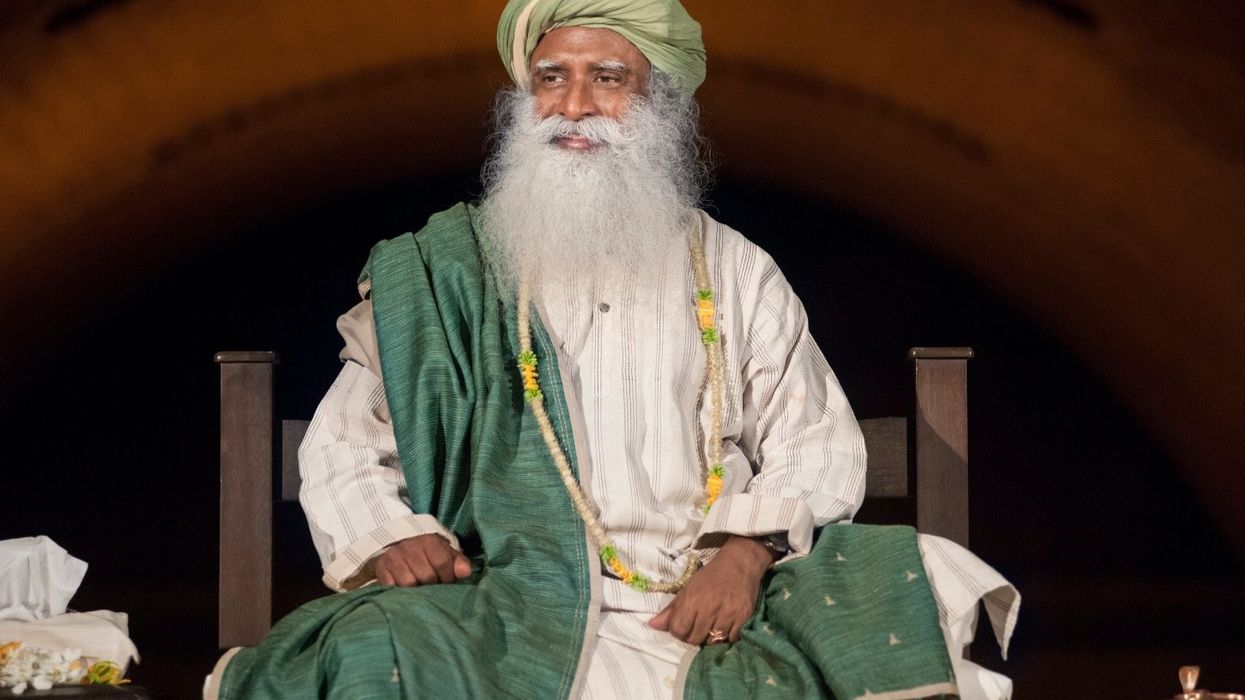
SADHGURU’S VIEW ON MAKING DECISIONS AND TAKING ACTION
IF YOU just remove the idea of what is right and wrong from your life, you will see everybody is handling their life the way they know it. Everybody is doing whatever they think is best at that moment.
Even a criminal who is killing somebody does it because he thinks that is the best thing to do at that moment. So it is not a question of right and wrong, it is just a question of whether certain actions or certain types of activities are necessary or unnecessary for our life. That is all we have to look at.
Unfortunately in every society, since childhood, people have constantly fed you with concepts of what is sin and virtue, what is good and bad. If you look at the way in which these have been imparted in society, the whole of humanity is sinning.
In such a situation, people naturally become a little deceitful while doing simple activities. The one who is performing some activity is going through guilt, and the one who is looking at it is suspicious and judgmental because if you are in this state of mind, you can’t help being suspicious.
If you take away your judgments about life, life is happening in so many ways – crazy ways. You take what you want from it and leave what you don’t want. That’s all you can actually do with life. But if you label this action as good and that action as bad, you invariably become suspicious; and there is a lot of room and scope for your suspicion because so many people are doing what you think is bad, including yourself.
You have created virtue and sin and then you wonder why guilt, why suspicion? It is a byproduct of it. You cannot help it. If you don’t want guilt and suspicion in this world, you must just take away what is sin and what is virtue, what is right and what is wrong. You just see life the way it is.
But we are not willing to take away virtue and sin. The whole world is playing a huge game based on this. We are neither conducting our lives with our intelligence and awareness nor with our humanity. Unfortunately, we are trying to conduct our life through morality. If your humanity was in full bloom, would someone have to teach you as to what is right, what is wrong, what to do and what not to do?
No, it would just happen naturally. It is only because there is no peace and joy within us that we need teaching. You are conducting your life on your morality, so guilt and suspicion is a natural outcome of that. If you conduct your life on the basis of the quality and the exuberance of your humanity, there will be neither guilt nor suspicion.
- Ranked amongst the fifty most influential people in India, Sadhguru is a yogi, mystic, visionary and best-selling author. Sadhguru has been conferred the Padma Vibhushan by the government of India in 2017, one of the highest annual civilian awards, accorded for exceptional and distinguished service.