
AFTER decades of steady expansion, Edwardian Hotels London, one of Britain’s most recognisable family-owned hotel groups, is concentrating its resources on a smaller portfolio of flagship luxury properties – a move that reflects both changing market realities and the evolving leadership of the Singh family.
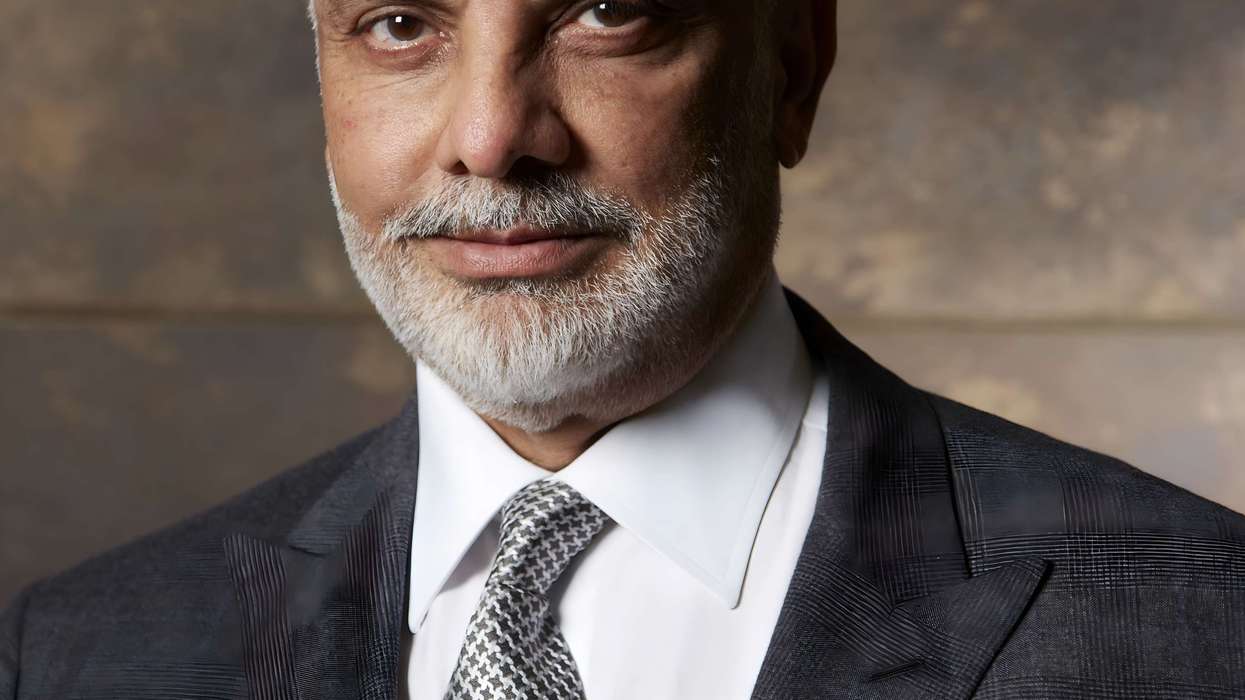
The strategy is guided by hotelier Jasminder Singh and increasingly shaped by his son Inderneel Singh, who now oversees day-to-day operations as chief executive.
The most visible sign of this repositioning came with the group’s sale of ten Radisson Blu Edwardian hotels in London to the US private equity firm Starwood Capital Group. The portfolio, comprising more than 2,000 rooms across the capital, was widely reported to have fetched about £800 million, though the parties did not disclose the exact figure.
The deal was not a retreat from the market but a deliberate consolidation, allowing the company to concentrate investment on three core five-star properties: The Londoner, The May Fair, and The Edwardian Manchester.
For Inderneel Singh, the transaction represented a generational pivot as much as a financial one. “The launch of The Londoner showed us what was possible when we poured our energy into fewer, but more distinctive assets,” he said at the time. “This sale allows us to devote our full attention to three hotels that embody what we stand for.”
Recent developments underline that focus. In April 2025, The Edwardian Manchester was admitted into Virtuoso’s exclusive global network of luxury travel partners – a prestigious endorsement that places the hotel alongside some of the world’s finest hospitality brands. The recognition followed the admission of The Londoner to the same consortium in 2024.
Membership of the invitation-only network connects both properties to more than 20,000 travel advisers worldwide and offers access to high-spending international travellers seeking bespoke experiences – long a hallmark of Singh’s philosophy.
That philosophy is perhaps most vividly expressed in The Londoner, the group’s flagship hotel on Leicester Square. Announced in 2014 and opened in September 2021, the development remains one of the most ambitious hospitality projects undertaken in the capital in recent decades. Rising 16 storeys – six of them underground – the property combines 350 rooms and suites with six restaurants and bars, private screening rooms, expansive event spaces and a grand ballroom.
Edwardian describes it as a “super-boutique” hotel: intimate in style but operating at a scale normally associated with large convention hotels. Restaurants such as 8 at The Londoner and the residents-only Whisky Room have quickly become talking points among visitors, while the subterranean wellness centre known as The Retreat offers a calm counterpoint to the bustle of the West End.
For Singh, the project represents the culmination of a lifetime in hospitality. It is also a statement of confidence in London at a time when the city’s tourism sector has faced considerable uncertainty following the pandemic and Brexit-related disruption.
Singh’s ability to adapt is rooted in his migration story. Born in 1951 in Dar-es-Salaam, Tanzania (then Tanganyika), Singh grew up during the final years of British colonial rule in East Africa. His father, Bal Mohinder Singh, worked for the East African Railways. After independence brought political and economic uncertainty, the family relocated to Kisumu in Kenya, where his father ran a small business.
Singh was educated at Saint Joseph’s School in Nairobi and showed an aptitude for mathematics before briefly training in accountancy. Like many families of Indian origin in East Africa during that period, the Singhs looked to Britain for opportunity and stability. At 17 he moved to London, arriving in the late 1960s with modest qualifications and limited capital.
Initially he found work in finance, but the routines of accountancy left him restless. A turning point came in 1975 when a maternal uncle introduced him to the hotel trade. Singh quickly realised that hospitality offered what he was seeking: a dynamic environment where interaction with guests, staff and financiers ensured no two days were the same.
Two years later he launched Edwardian Hotels with the purchase of a small property in Paddington. The hotel had only 13 rooms, but it gave him an opportunity to learn every aspect of the business. Singh immersed himself in operations, from housekeeping and reception to finance and refurbishment.
Growth followed quickly. Within a year he acquired the Vanderbilt in South Kensington and soon after the Sussex near Marble Arch. By the early 1980s the portfolio had expanded further with the addition of properties such as the Grafton, Stratford Court and Kenilworth.
Singh’s strategy was straightforward but effective: acquire underperforming hotels in prime locations, invest heavily in refurbishment and elevate standards of service. Expansion was financed conservatively, with emphasis on reinvested profits rather than excessive borrowing – a discipline that helped the group navigate recessions and high interest rates during the early 1990s.
A major milestone came in 1993 with a strategic partnership with Radisson, which branded the properties as Radisson Edwardian hotels. The collaboration provided access to global marketing channels and loyalty programmes, strengthening the group’s international profile as London’s tourism market expanded.
In 2007, Jasminder was awarded an OBE for services to the hotel industry.
Like most hospitality businesses, Edwardian Hotels faced severe disruption during the pandemic. International travel halted, events were cancelled and staffing shortages intensified as Brexit reshaped the labour market. Singh responded with a combination of technological upgrades and operational adjustments, introducing digital check-ins and workflow systems designed to streamline staff tasks.
“Labour will always be essential in full-service hotels,” Singh has often said, adding that technology allows businesses to “re-engineer processes and give staff more time for guests.”
Today Edwardian Hotels London remains firmly family-owned. Singh continues as chairman while Inderneel manages operations as chief executive. His daughters – Siraj, Krishma and Ushira – are also engaged in aspects of the business.
Beyond business, philanthropy has long been a priority. Singh was an early donor to Care International, funding education and development initiatives in India and Africa. His East African roots have also inspired support for educational programmes across the continent. In Britain he has contributed to medical research, including work at the Francis Crick Institute.
Nearly five decades after purchasing that first modest Paddington hotel, Singh’s enterprise has evolved into one of Britain’s most distinctive hospitality groups. The strategy now is clear: fewer properties, greater investment and a sharper focus on luxury experiences in prime urban locations.