
ISRAEL and Iran exchanged fresh attacks on Friday, as the conflict widened across the region and concerns over energy supplies continued.
Israel said it carried out strikes in Tehran targeting the "infrastructure of the Iranian terror regime", without giving further details. Iran responded by firing missiles at Israel, with the Israeli military saying air raid sirens sounded in Tel Aviv and explosions from air defence interceptors were heard.
The conflict, which began on February 28 with a joint attack by the United States and Israel, has killed thousands, mostly in Iran and Lebanon, and has spread across the Middle East, affecting global markets.
There were also signs of the conflict spreading further. The United Arab Emirates reported a "missile threat" early on Friday, while Kuwait said a drone attack hit an oil refinery. Saudi Arabia said it intercepted more than a dozen drones in the east and another in the north, and Bahrain reported a fire caused by debris from an "Iranian aggression", with no injuries.
ALSO READ: Energy markets react as Iran hits Qatar LNG site, Trump threatens response
Iran’s strikes on regional energy infrastructure continued to affect markets. An attack on Qatar’s Ras Laffan Industrial City, which processes about a fifth of global liquefied natural gas, caused damage that QatarEnergy said would take years to repair. The company’s chief executive said the attacks had knocked out a sixth of Qatar’s LNG export capacity, worth $20 billion a year, and repairs could take three to five years.
Saudi Arabia’s Red Sea port of Yanbu was also targeted, with a drone hitting the Samref refinery. In Kuwait, fires broke out at the Mina Abdullah and Mina Al-Ahmadi refineries. In Israel, an Iranian missile struck an oil refinery in Haifa, causing a brief power outage but no significant damage, according to Israel’s energy ministry.
Oil prices fell on Friday after Western countries and Japan said they were ready to help ensure safe passage through the Strait of Hormuz and increase output. The strait handles about a fifth of global oil supplies.
Britain, Canada, France, Germany, Italy, the Netherlands and Japan said in a joint statement that they were ready to ensure safe passage through the strait and take steps to stabilise energy markets. However, there was no indication of immediate action. German Chancellor Friedrich Merz said any contribution would come after hostilities ended, while French President Emmanuel Macron said: "I have not heard anyone here (other EU leaders) express a willingness to enter this conflict — quite the opposite."
European Union leaders also called for a moratorium on strikes against energy and water facilities and said they would act to prevent "uncontrolled migratory movements" towards the bloc.
ALSO READ: Iran vows response after Larijani killing as Israel hits Beirut
US President Donald Trump said he had warned Israeli Prime Minister Benjamin Netanyahu against further attacks on Iranian energy infrastructure. "I told him, 'Don't do that', and he won't do that," Trump said.
Netanyahu said Israel had acted alone in striking Iran’s South Pars gas field. He said: "We are winning and Iran is being decimated." He also said: "This war ending a lot faster than people think."
He added: "I'm not sure who's running Iran right now." Referring to Iran’s new leadership, he said: "Mojtaba, the replacement ayatollah, has not shown his face." He also said: "We're seeing cracks, and we're trying to propagate them as fast as we can, not only in the top command. We're seeing cracks in the field."
Netanyahu rejected suggestions that Israel had pushed the United States into the conflict, saying: "Does anyone really think that someone can tell President Trump what to do?" He added: "He didn't need any convincing."
Trump said there was no plan to send US ground troops. "If I were, I certainly wouldn't tell you. But I'm not putting troops."
ALSO READ: Fighting continues across West Asia as Israel claims key Iranian officials killed
US Director of National Intelligence Tulsi Gabbard said Washington and Israel had different objectives. "The Israeli government has been focused on disabling the Iranian leadership. The president said that his objectives are to destroy Iran's ballistic missile-launching capability, their ballistic missile production capability and their navy."
Iran warned of further escalation. Military spokesman Ebrahim Zolfaqari said: "If strikes (on Iran's energy facilities) happen again, further attacks on your energy infrastructure and that of your allies will not stop until it is completely destroyed."
ALSO READ: Trump asks allies to send warships to Strait of Hormuz as Iran vows response
Iran’s foreign minister Abbas Araghchi said there would be "ZERO restraint" if Iran’s infrastructure was targeted again.
A spokesperson for Iran’s Islamic Revolutionary Guards Corps said missile production continued during the war and that there were no concerns over production or stockpiles.
Iran also said it had asked Germany to clarify the role of the Ramstein airbase.
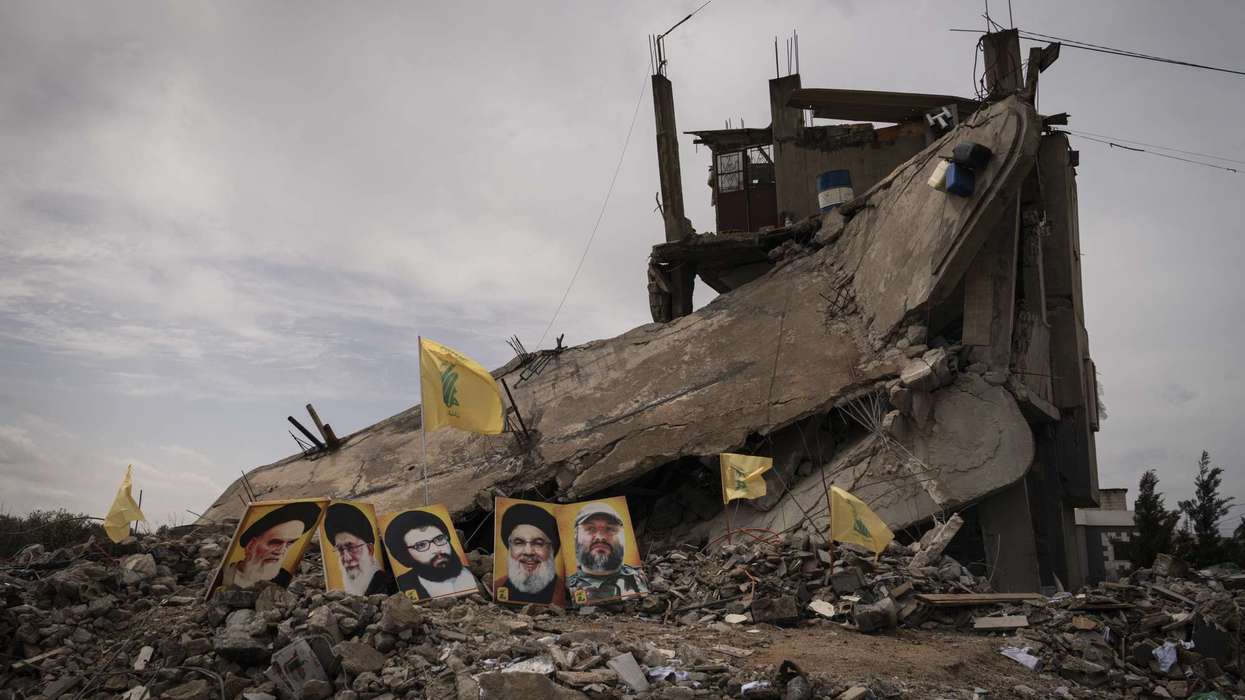
In Lebanon, the health ministry said more than 1,000 people had been killed in Israeli strikes since the war began. Lebanese President Joseph Aoun called for a truce and the start of negotiations.
ALSO READ: Oil rises, Asian stocks fall as Iran war continues
In Brussels, Macron said France would discuss with UN Security Council members the possibility of a framework to secure navigation in the Strait of Hormuz after the fighting ends. "We have initiated an exploratory process, and we will see in the coming days whether it stands a chance of succeeding," he said.
Britain warned that "attacks on critical infrastructure risked pushing the region further into crisis."
The conflict has also affected security within the Gulf. The UAE said it had arrested members of a "terrorist network" linked to Iran and Hezbollah that had "sought to infiltrate the national economy".
(With inputs from agencies)