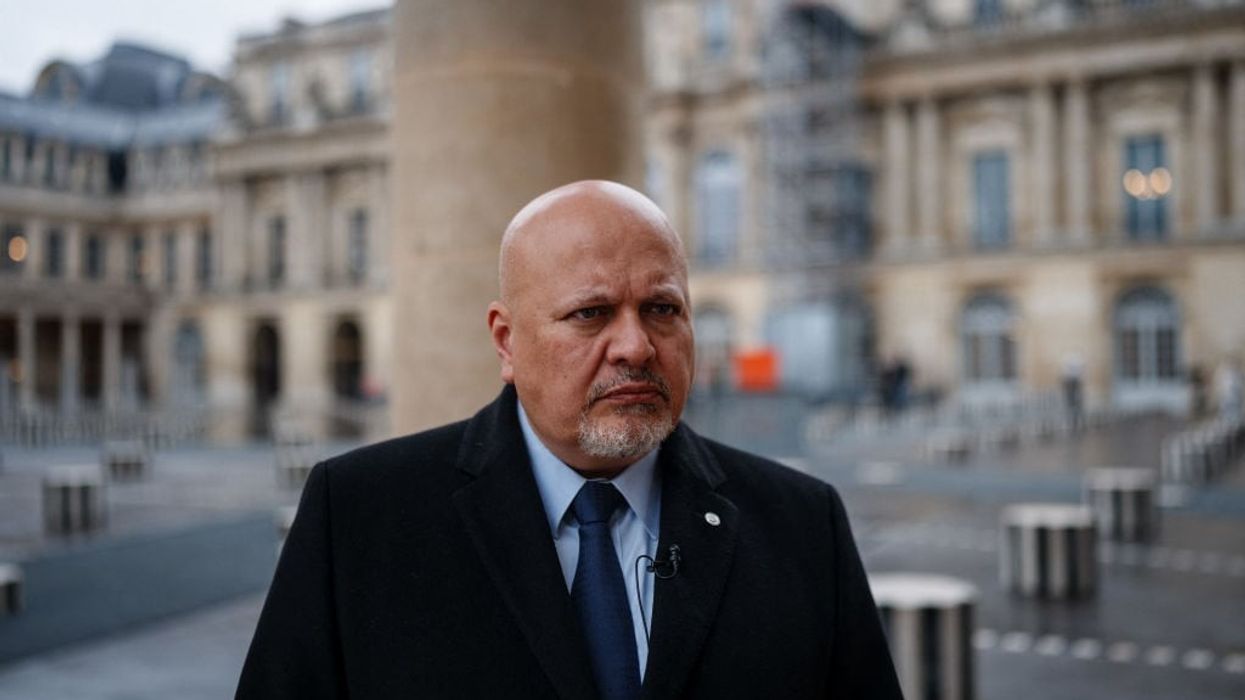

THE International Criminal Court's chief prosecutor has denied allegations of misconduct, saying he would "provide any information" should a probe be opened against him.
Karim Khan's denial follows a statement by the president of the Hague-based court's oversight body over harassment claims.
"It was with deep sadness that I understood reports of misconduct were to be aired publicly in relation to me," Khan said.
"There is no truth to suggestions of such misconduct," he said in a statement.
The 54-year-old Khan has since 2021 been at the helm of the court's prosecutions, including probes involving Russia and Ukraine and the Palestinian Territories and Israel.
"This is a moment in which myself and the International Criminal Court are subject to a wide range of attacks and threats," Khan said.
He responded after the president of the Assembly of States Parties, the body that oversees the court, issued a statement confirming it had looked into the claims "on the basis of a third-party report".
"I am aware of recent public reports regarding the alleged misconduct by the ICC Prosecutor towards a member of his office," Paivi Kaukoranta said in a statement.
The ASP's Independent Oversight Mechanism then sought "consent of the alleged victim of misconduct before proceeding with an investigation."
"Following the conversation with the alleged victim, the IOM was not in a position to proceed with an investigation at that stage," Kaukoranta said.
The IOM's annual report, released on last Thursday (24), mentioned the incident -- which it said was reported to the IOM in early May.
"The alleged affected individual declined to pursue a formal complaint with the IOM, including when it was suggested that any investigation could be referred to an external entity," the report said.
"Importantly, the alleged affected individual refused to explicitly confirm or deny to the IOM the factual basis of what had been reported by the third party to the IOM," it said.
"Accordingly, the IOM determined that no investigation was necessary at this stage, but recommended some measures to safeguard everyone's rights in the future, both that of the possible victim as well as the alleged subject," it said.
Seated in The Hague, the ICC investigates and prosecutes genocide, war crimes, crimes against humanity and the crime of aggression.
(AFP)








Netanyahu faces backlash for calling Britain ‘Islamic Republic’