Skip to content
Search

Latest Stories

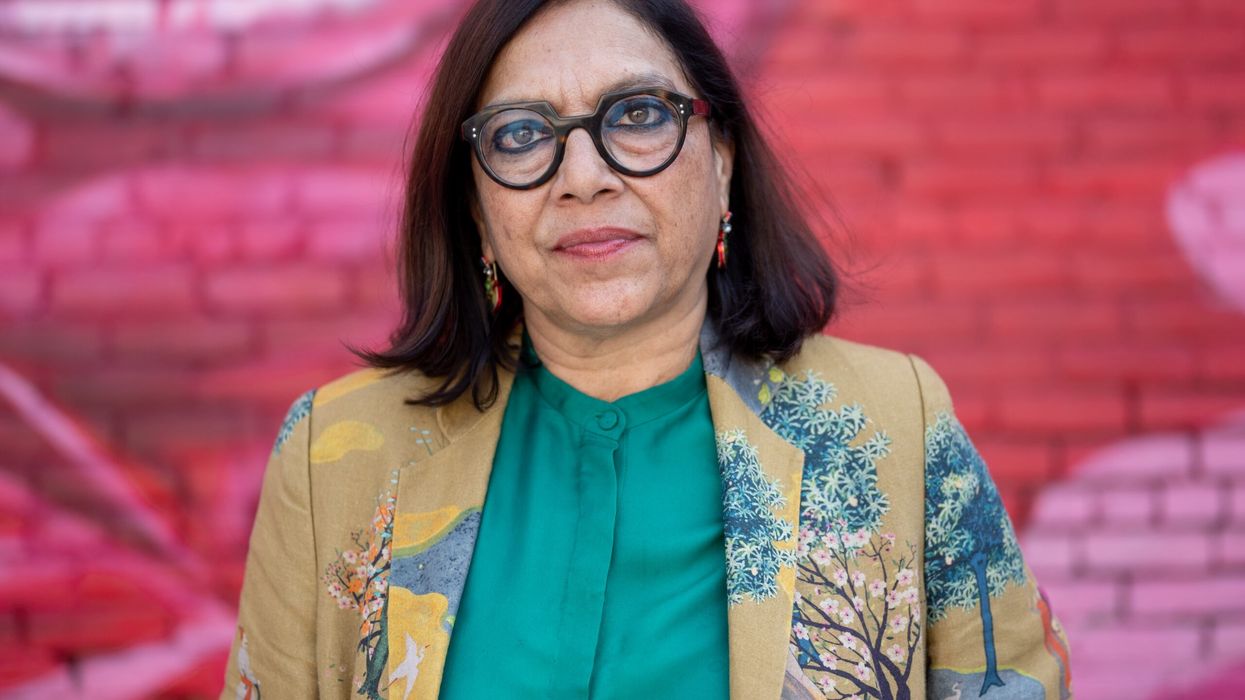
‘I didn’t want to make romcoms with white people’: Mira Nair

Nair is currently serving as Head of the Jury for the South Asia Competition at the Jio MAMI Mumbai Film Festival 2023.

‘I didn’t want to make romcoms with white people’: Mira Nair

Mira Nair, who is globally known for such notable films as Salaam Bombay, The Namesake, and Monsoon Wedding to name a few, is currently serving as Head of the Jury for the South Asia Competition at the Jio MAMI Mumbai Film Festival 2023.

During her masterclass at the festival, Nair said that she did not want to be like everyone else and did not want to make romcoms with white people.


“I deeply understand what it's like to look outside the window in New York City and instead of the Hudson River see my garden in Kampala. Cinema allows you the notion of living between worlds. Always keep your distinctiveness as your calling card. I didn’t want to be a cupcake. I didn’t want to be like everyone else. I didn’t want to make romcoms with white people. I was not interested in being in the A list of Hollywood,” she said.

The filmmaker further added, “Salaam Bombay became a smash hit and they thought they could use my sensibility to say their things and I didn’t want that. I was interested in being a brown person and telling stories that only I could tell and that became Mississippi Masala, the hierarchy of colour.”

Crediting her instinct as her guiding force, she said, ‘Don’t ever hold back with the actors. The instinct for me is very powerful. I do not give up until I get what I want from my actors. I am not Woody Allen to reshoot movies. Always listen to your intuition and don’t subscribe to what the next person asks of you. Try to steer clear of boredom and nobility. Just telling the stories of the downtrodden doesn’t sell tickets. The downtrodden are never down. They have the greatest spirit of all. Whatever moves you make it come alive.”

Stay tuned to this space for more updates!
More For You

Kerala actress assault case

Inside the Kerala actress assault case and the reckoning it triggered in Malayalam cinema

AI Generated

The Kerala actress assault case explained: How it is changing industry culture in Malayalam cinema

Highlights:

  • February 2017: Actress abducted and sexually assaulted; case reported the next day.
  • Legal journey: Trial ran nearly nine years, with witnesses turning hostile and evidence disputes.
  • Verdict: Six accused convicted; actor Dileep acquitted of conspiracy in December 2025.
  • Industry impact: Led to WCC, Hema Committee report, and exposure of systemic harassment.
  • Aftermath: Protests, public backlash, and survivor’s statement questioning justice and equality.

You arrive in Kochi, and it feels like the sea air makes everything slightly sharper; faces in the city look purposeful, a film poster peels at the corner of a wall. In a city that has cradled a thriving film industry for decades, a single crime on the night of 17 February 2017 ruptured the ordinary: an abduction, a recorded sexual assault and a survivor who reported it the next day. What happened next is every woman’s unspoken nightmare, weaponised into brutal reality. It was a public unpeeling of an industry’s power structures, a slow-motion fight over evidence and testimony, and a national debate about how institutions protect (or fail) women.

For over eight years, her fight for justice became a mirror held up to an entire industry and a society. It was a journey from the dark confines of that car to the glaring lights of a courtroom, from being a silenced victim to becoming a defiant survivor whose voice sparked a revolution. This is not just the story of a crime. It is the story of what happens when one woman says, "Enough," and the tremors that follow.

Keep ReadingShow less