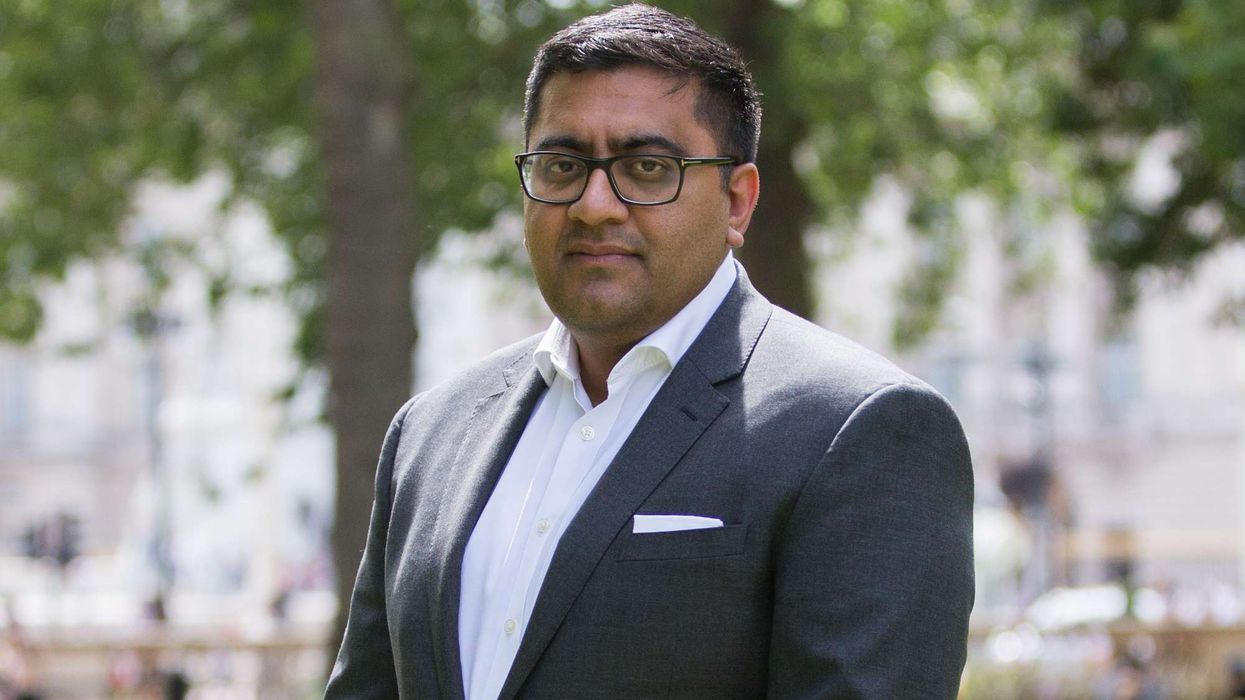

A BRITISH INDIAN philanthropist who helped establish a charity with King Charles nearly two decades ago has been appointed as its chief executive.
Hitan Mehta OBE, who became the British Asian Trust's first employee in 2007, will lead the organisation he helped create with the King.
The London-based expert in philanthropy and large-scale events received an OBE in the King's 2023 New Year Honours List for his service to Britain's South Asian community.
Mehta succeeds Richard Hawkes OBE, who is stepping down after 10 years during which the charity claims to have improved the lives of more than 18 million people across South Asia.
The British Asian Trust works to tackle poverty, inequality and injustice in the region, with King Charles continuing as its founding patron. The charity conducts programmes across India, Pakistan, Bangladesh and Sri Lanka focusing on education, health, child protection and conservation.
"It is an honour to step into this role at such a pivotal moment for the British Asian Trust," said Mehta, who previously served as the charity's executive director.
"As we enter an important period of global and UK diaspora engagement, I am deeply grateful to our trustees, our royal founding patron, and our valued partners and supporters for their continued confidence in our mission."
Mehta has been central to the charity's expansion across the UK, South Asia, the Gulf and North America over the past 18 years. He led efforts to build networks across philanthropy, finance and business to strengthen connections with the global South Asian community.
"It has been great to work alongside him; his dedication and commitment to impact have helped grow the organisation," Mehta said of his predecessor.
"I am committed to building on the strong foundations that we have created. Together with our exceptional team, I look forward to advancing our global footprint, driving innovation, and continuing to deliver meaningful and lasting change for communities across South Asia."
He has served as a volunteer with BAPS Swaminarayan Sanstha at Neasden Temple in London for 28 years, working on projects including vaccine promotion, interfaith relations and support for Ukrainian refugees.
When he received the OBE, Mehta credited his mentors at the temple, saying all he had learned came from "growing up in the Mandir among my mentors, the swamis and senior volunteers at Neasden Temple"
Lord Jitesh Gadhia, chair of the board of trustees, said: "As a founding leader of the British Asian Trust, Hitan has shaped the organisation's values, networks and global impact from its earliest days.
"His deep knowledge of South Asia, his credibility across international philanthropy, and his trusted relationships within the British Asian community make him uniquely placed to guide the Trust into its next chapter, building on Richard's decade of transformational leadership."
Hawkes said: "After an amazing 10 years at the British Asian Trust, now is the right moment for me to explore new challenges and pass on the baton to Hitan, who I have worked with closely for the last decade."
(with inputs from PTI)