
In many countries modern life has improved people's standard of living, but people nevertheless seem generally not happier with their lives. In fact, one of the greatest paradoxes of modern society is that while comforts have increased, calmness has decreased. Technology has connected the world but, in many cases, disconnected the individual from his own inner self. The race to achieve more has quietly become a race without a finishing line. In such a situation, happiness cannot be found by running faster but by pausing more often.
There is no doubt in it that every human being has the right to live and, therefore, the right to find the wherewithal to feed, to clothe and to house himself as well as his dependents. Besides these three, one has to fulfil some other needs as well, the aim being to avoid pain and to have a reasonably comfortable life. Civilisation has advanced precisely to make such basic security possible for a larger number of people, and this achievement should certainly be valued. But the trouble starts when one adopts that economic philosophy which states that multiplication and fulfilment of wants leads to higher standard of living and to greater happiness, and one then sets to accumulate whatever and as much as one can by fair as well as foul means. When this pursuit of comfort turns into the endless pursuit of possession, the line between need and greed begins to blur. Perhaps, therefore, World Happiness Day should remind us not merely to ask how much we have, but how well we live; not how much we consume, but how much we value; and not how successful we appear, but how peaceful we feel within.
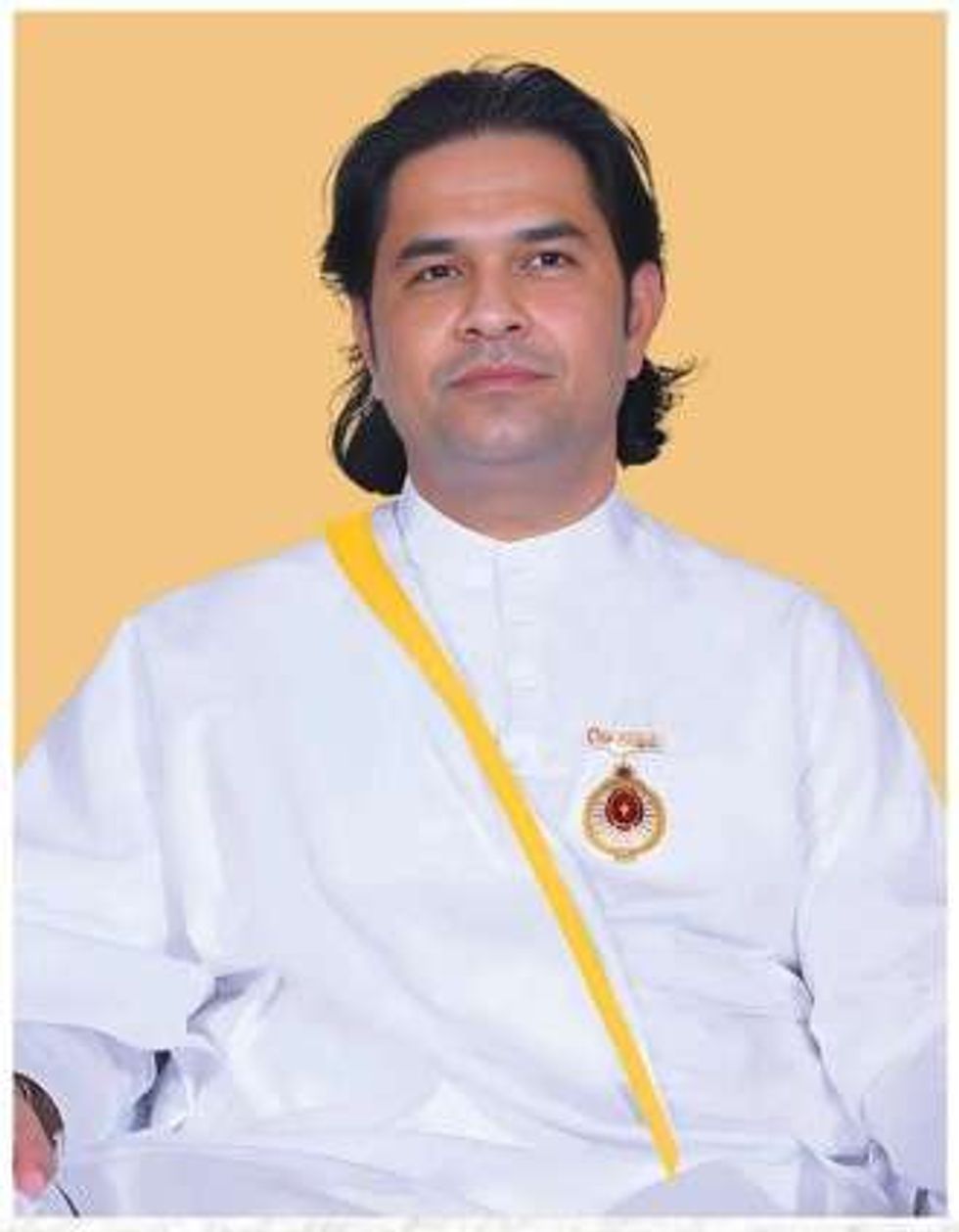 Rajyogi JiBrahma Kumaris
True happiness is hard to define as different people may have very different concepts of happiness, but directly correlating standard of living with happiness is likely oversimplifying their relationship. While good life conditions certainly contribute to happiness, people in poor countries frequently express surprisingly high levels of happiness in opinion polls. For some people fulfilling work and social relationships probably add more to happiness than being able to afford luxury goods. We should also understand one thing that happiness is not the same thing as pleasure. Happiness depends more on the mental state of a person than on the fulfilment of desires and the gratification of senses. A man who is fabulously rich may have all sorts of comforts and yet may remain worried. By no stretch of imagination can such a man be called a happy man. On the other hand, a person not living in luxury, or even in comfort may be found to be happy as well as content. So, there may be a man whose hands are full but whose soul is empty. Also, it would be wrong to measure one's standard of living on the scale of luxury goods. It would also be wrong to dissociate this term from the intellectual, moral and cultural aspects of a person. There may, for instance, be a person with high moral character who leads a life of voluntary non-possession or minimum possessions. He may be an intellectual of a high order, content in mind and refined in the cultural sense. Hence, it would be wrong to say that his standard of living is not high. We should remember that just as food sustains the body so does the mind find sustenance in happiness. So, the saying goes: there is no food as good as happiness. And, to be happy, you have to be content. Just as, for bodily well-being, man seeks food, so should he maintain the state of contentment to ensure happiness of mind. As Alfred Nobel has rightly said that ‘Contentment is the only real wealth’ , we should therefore not run after securing another kind of wealth to lose the wealth of contentment because contentment is as good a means of happiness as wealth is considered to be. Acts of kindness, a sense of purpose, gratitude for small blessings and the ability to share with others often create a deeper and more lasting satisfaction than personal consumption ever can. Hence it can safely be concluded that, beyond a limit, the multiplication of wants and their satisfaction does not promote happiness and certainly not in that proportion. Perhaps the real challenge before modern society is not merely to increase prosperity, but to rediscover the balance between material progress and inner well-being.
(Writer is a spiritual educator and popular columnist for publications across India, Nepal & UK)