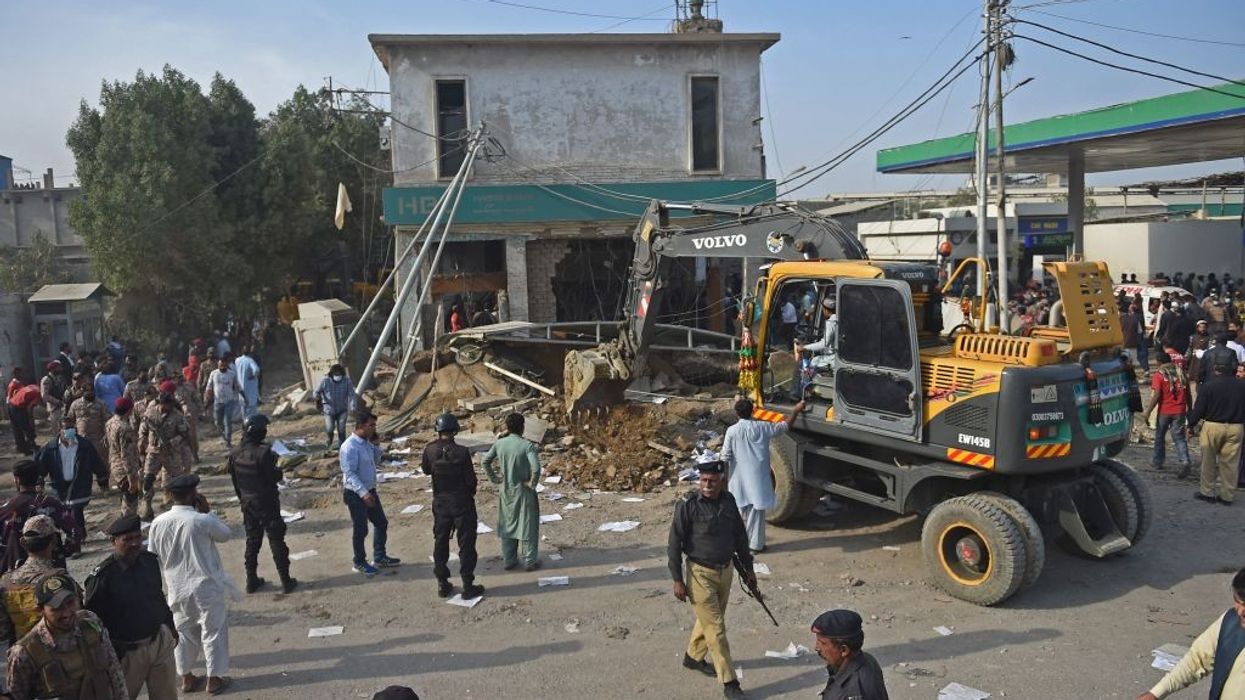

THE DEATH toll in a powerful blast that ripped through a building of a private bank in Pakistan's Karachi has gone up to 17 after another injured person died at a hospital on Sunday (19).
The blast took place in a gas pipeline running through a sewage line on Saturday (18), a spokesperson for the Karachi Police said, adding that there was no lead suggesting that the incident might be linked to terrorism.
The dead also included the father of Alamgir Khan, a member of the ruling Pakistan Tehreek-e-Insaf party.
Sindh chief minister Murad Ali Shah has directed the commissioner Karachi to conduct an inquiry into the incident, his spokesperson said.
The explosion occurred a day before Pakistan was hosting the 17th extraordinary meeting of the Organisation of Islamic Cooperation (OIC) foreign ministers in Islamabad to tackle the situation in Afghanistan.
The police believe that the blast occurred inside the sewerage line in Shershah due to the accumulation of gas.
According to the Dawn newspaper, the blast emerged as a grim reminder of unchecked encroachment on government and municipal facilities for commercial purposes, unplanned expansion of concrete structures in Karachi and illegal use of government land and facilities continuing unabated for the past many years.
Investigators, rescue operators and municipal authorities strongly believe that the explosion is caused by the sewer gas accumulated in the sewage drain over which a two-storey structure was raised, it said.
(PTI)