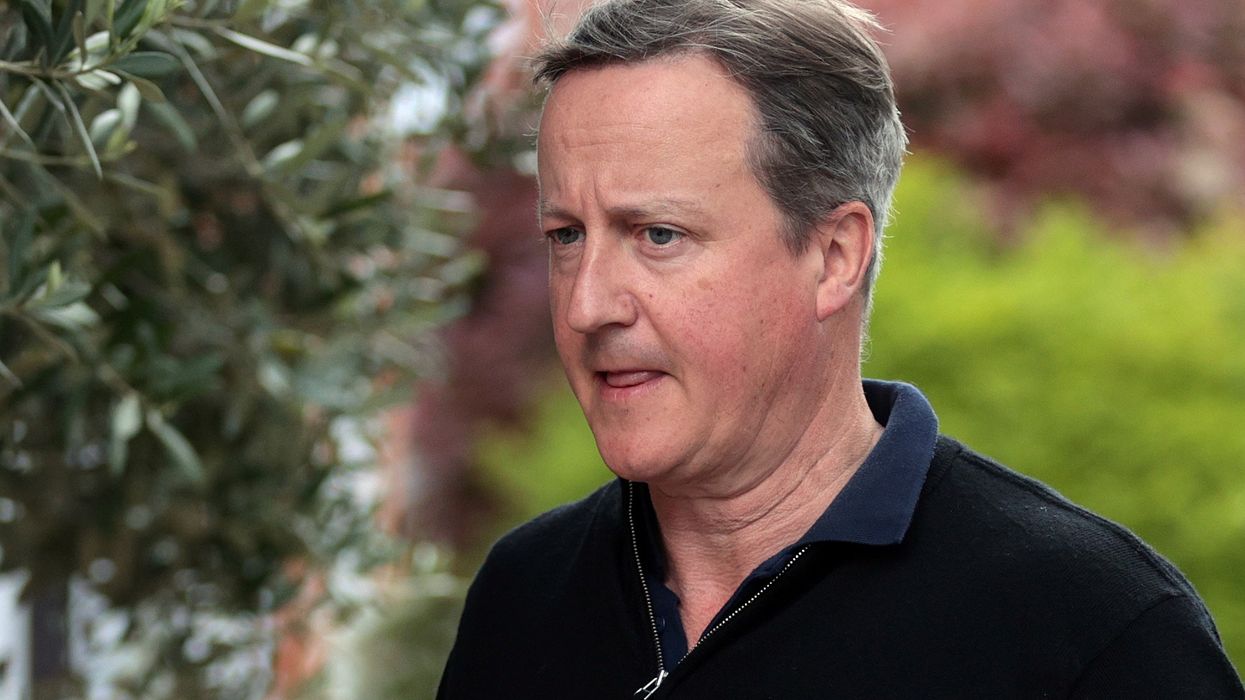

FORMER British prime minister David Cameron repeatedly contacted senior ministers over a four-month period in 2020 to lobby for the now-failed, supply-chain finance firm Greensill Capital, according to documents published on Tuesday (11).
Cameron's involvement in efforts to secure access for Greensill Capital to the government's pandemic funding schemes have fuelled wider questions about lobbyists' influence over British government decision-making.
The communications log released on Tuesday included texts, WhatsApp messages and telephone calls to finance minister Rishi Sunak, cabinet office minister Michael Gove and health minister Matt Hancock. He also contacted several officials.
"Again Greensill have got a 'no'," Cameron wrote to top finance ministry official Tom Scholar on April 3, 2020 according to documents provided by Cameron to parliament's Treasury Committee.
"Am genuinely baffled ... This seems bonkers. Am now calling CX, Gove, everyone. Best wishes. Dc."
'CX' refers to Sunak.
Cameron was lobbying the government to allow Greensill, founded by Australian banker Lex Greensill in 2011, to access a Covid-19 financing scheme.
The Bank of England said in April that no changes were made to the Covid Corporate Financing Facility as a result of communication between Cameron and Bank officials.
Cameron has denied breaking any code of conduct or government rules and the government has repeatedly said the outcome of his discussions on Greensill's proposals for access to a Covid-19 loan scheme were not taken up.
Nevertheless, the opposition Labour Party say Cameron's involvement is evidence of a wider culture in which those with privileged access to ministers can gain an unfair advantage.
Current prime minister Boris Johnson is also facing investigations over his conduct on several unrelated issues concerning donations and funding. He denies any wrongdoing.
'Contacted six ministers'
Later on Tuesday, Lex Greensill appeared for more than three hours before a parliamentary inquiry into the collapse of the firm and its lobbying efforts.
Greensill was brought in as an adviser to the government while Cameron was British prime minister from 2010 to 2016.
Asked about his relationship with Cameron, he said the two were not close during his time working for the government.
"I wouldn't say that Mr Cameron and I were friends," Greensill said. "I met him a couple of times in the time that I worked with the Cabinet Office."
After leaving office, Cameron became an adviser to Greensill Capital, which filed for insolvency protection in March.
The data release showed Cameron contacted six different ministers and a similar number of government and Bank of England officials. The messages ranged from arranging calls to listing the merits of Greensill's business.
"Am sure goodwill and common sense can fix this. In the end substance is what matters (help for SMEs) - the form can always be sorted," one message from Cameron to Sunak said.
The Treasury Committee will interview Cameron on Thursday (13).