
- The BAPS Hindu Mandir briefly shut its doors amid security advisories linked to Gulf tensions.
- Despite the closure, prayers inside the temple continue.
- For Indian expats, the temple has become a cultural and spiritual touchpoint.
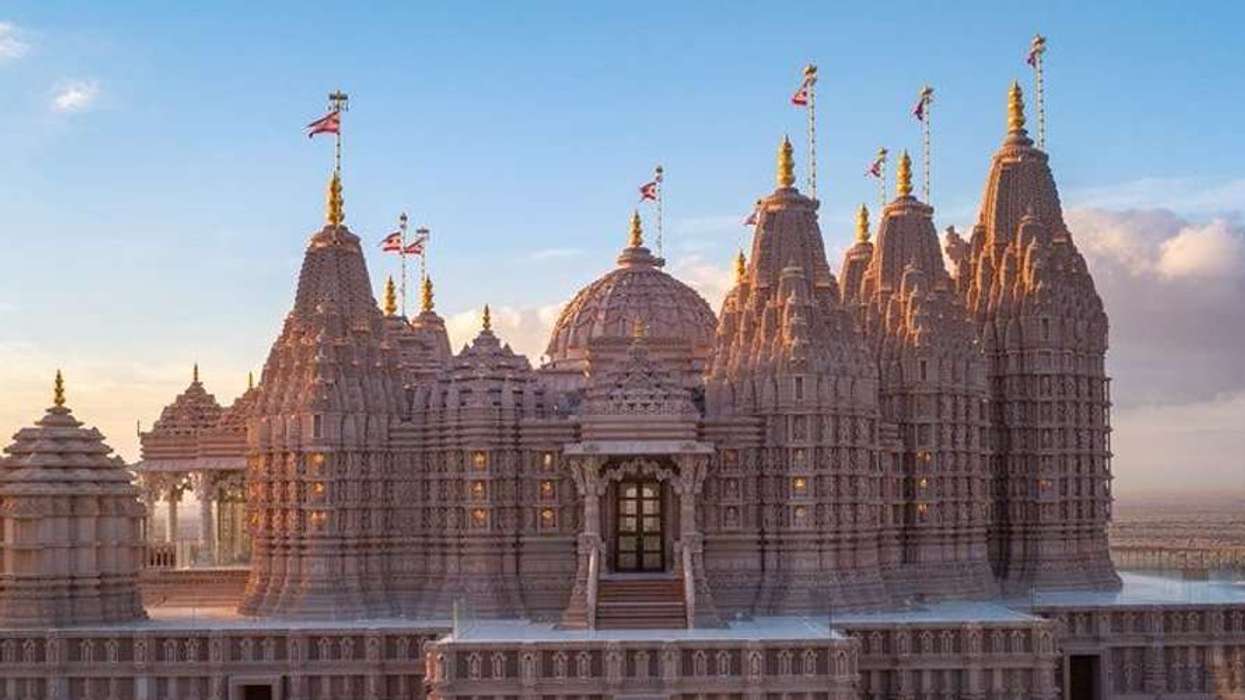
The BAPS Hindu Mandir in Abu Dhabi has quickly grown into more than just a place of worship. For many Indian expats in the UAE, it feels closer to a slice of home. The temple, which opened in February 2024, has drawn thousands of visitors since then, offering a familiar space for prayer, festivals and community gatherings.
Set against Abu Dhabi’s modern skyline, the stone temple stands out in a city better known for glass towers and highways. For many Indians living far from their families and traditions, the Mandir seems to offer something simple but powerful — a place to reconnect with culture and faith.
But the temple recently found itself in the news for a different reason.
Closure amid rising regional tensions
The BAPS Hindu Mandir temporarily suspended public access until March 9 after security advisories were issued amid rising tensions in the Gulf region.
According to temple authorities, the move followed missile strikes reported in the region, explosions in Dubai and temporary airspace closures. The closure appears to be a precautionary step rather than a long-term disruption.
Even with the gates shut to visitors, priests and swamis have continued performing daily prayers inside the Mandir.
Temple authorities asked devotees to remain calm and avoid spreading unverified information while following official advisories.
Despite the uncertainty outside, religious rituals inside the temple have continued quietly.
For many Indian expatriates in Abu Dhabi, the temple has come to represent more than architecture or ritual. It has turned into a social and cultural meeting point where people celebrate festivals, volunteer and stay connected to their roots.
Swami Brahmaviharidas reportedly said the Mandir represents harmony and devotion, adding that faith can flourish even in the desert.
The temple sits in Abu Mureikha along Sheikh Zayed Road and was built using pink sandstone brought from Rajasthan along with Italian marble. The structure follows traditional temple-building techniques and reportedly does not use steel in its superstructure.
Around 402 pillars inside the complex feature detailed carvings of animals, plants, mythological scenes and ceremonial processions. According to reports, some of these pillars took teams of artisans nearly a year to complete.
The temple reportedly cost about £67 million ($84.2 million) to build, excluding the land that the UAE government provided.
Seven spires crown the structure, representing the seven emirates of the UAE. Water features in the complex symbolise India’s sacred rivers including Ganga, Yamuna and Saraswati.
Inside the temple complex, shrines honour several Hindu deities including Radha Krishna, Ram Parivar, Shiv Parivar and Ayyappa.
Festivals, community and a sense of belonging
Beyond religious rituals, the Mandir has become a venue for major festivals celebrated by the Indian community in the UAE.
Events such as Diwali, Navratri and Janmashtami attract thousands of visitors. During the Diwali celebrations in 2025, more than 60,000 people reportedly attended festivities at the temple complex.
Janmashtami events have also drawn large crowds, with around 15,000 devotees attending prayer ceremonies and cultural programmes last year.
Apart from festivals, the Mandir also runs educational activities including classes on Indian languages, music and philosophy. These programmes appear designed to help younger generations born outside India stay connected with their heritage.
Even as tensions continue to shape the wider region, the temple’s role within the diaspora community seems unchanged.
For many Indian expats living in the UAE, the Mandir has quietly become a place where culture, faith and community meet — even during uncertain times.